
Ancient fortification of Alobre
About this heritage
This settlement, located in the core of the historic district of Vilagarcía, presents different stages of occupation in the final phase of the Iron Age, in the 1st century B.C. Its strategic position, both in the Arousa estuary and at the mouth of the river Ulla, allowed for access of the commercial circuits of the Phoenician merchants.
To learn more
The materials documented in the discoveries reflect the relationship the ancient fortification of the Alobre had with the Mediterranean world, particularly with the south of the Iberian Peninsula, the Italic Peninsula and the Balearic Islands. A large number of imported Punic materials (from the 8th century B.C.) and late Punic (from the beginning of the 2nd century B.C., to the middle of the 1st century B.C.). The metallic remains, mainly bronze, are especially relevant, with more than 400 pieces. In addition, fragments of ceramics from Bellinzona, an askos, common ceramics (pots, cups and pitchers) several calathos and attica ceramic vases have been found.
The Phoenicians were polytheists and each city had its own pantheon, with the omnipresence of female deities such as Astarte or Tanit, who embodied the principles of fertility and prosperity, well established in Mediterranean culture through the figure of the Great Mother Goddess. The interchangeable character of the goddesses also extends to the names of the masculine gods such as Baal (in masculine) and Baalat (in feminine), which also means "lord" and "lord", respectively. Baal is revered as the god of mountains and high places, storms, springs and rivers.
When the Phoenicians chose a promontory, a peninsula or an island to locate the port and the zone of commercial trade, they consulted the oracle, building a temple in the zone to sanctify it. This was necessary to carry out the relevant oaths in any commercial exchange and to be able to carry out rituals and offerings to ask for protection along the journeys. These also served as a neutral space for transactions.
The alphabet is the most important cultural contribution of the Phoenicians. The excavations at Ra's Samra have revealed the existence of an alphabet that used cuneiform signs, of Mesopotamian origin, to write in Semitic language, a direct and immediate precedent of the Phoenician of the classical period. The inscription of King Ahiram of Byblos shows that in the 13th century B.C., Phoenician writing had already reached its almost definitive form and in the first centuries of the first millennium there are several evidences of inscriptions with the complete system of 22 symbols. This alphabet was later adopted by the Greeks, with adjustments, and from these it passed to the Romans.
To know it better
The Alobre castrum, located close to Pazo de Vista Alegre in Vilagarcía de Arousa (province of Pontevedra), is a coastal region with a lot of history. According to research, it was occupied during different stages of the Iron Age, 1st century B.C.
Given its coastal location, the settlement was situated in a perfect and strategic position for encouraging trading. Furthermore, Italic ceramic remains and items from the Mediterranean have been found, which confirms trading took place between the Atlantic and the Mediterranean.
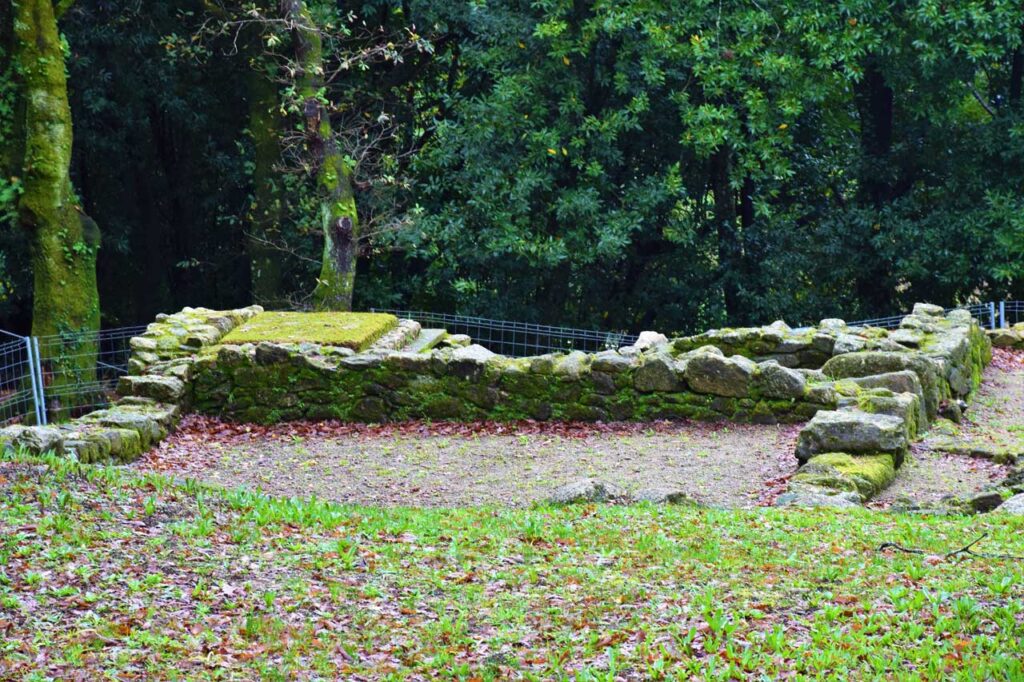
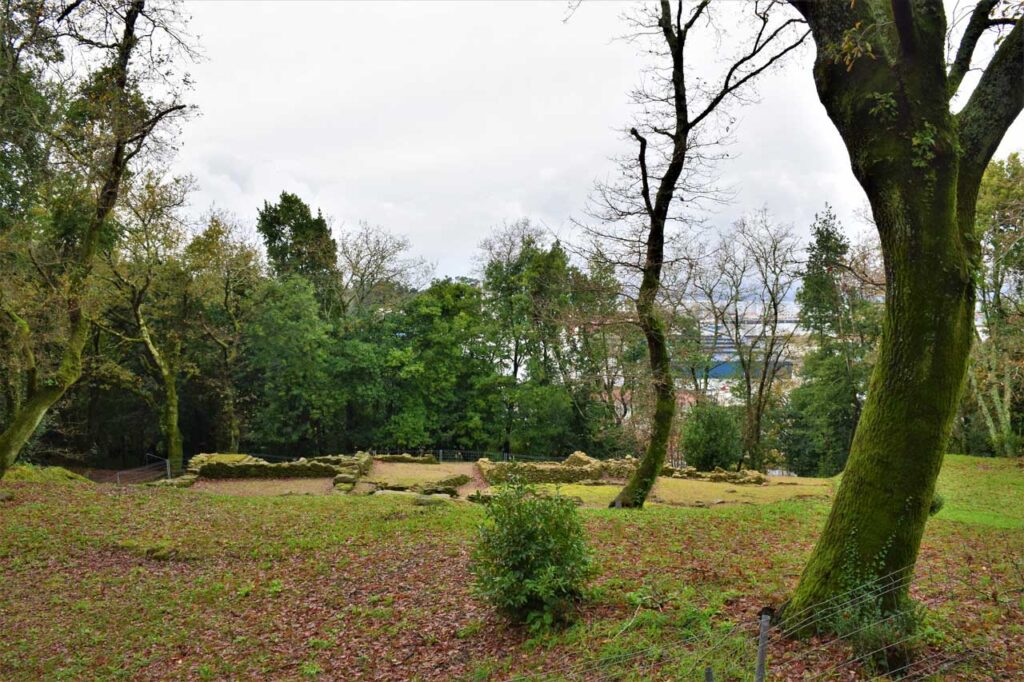
The ruins of a castro villa are located in the castro. This culture was characterised by the way they took up residence, making round and oval stone dwellings. This ancient fortification was perhaps the beginning of what we know to be Villagarcía de Arousa.
Adjacent to the fortification is the San Cristovo de Alobre chapel from the 10th century. This is why the ancient fortification is called San Cristovo or Vistalegre castrum.
Research and excavations have lead to the findings of about 20,000 items from different eras, the highlights of which are the following: bronze items, coins, ceramics, necklaces, hairpins and an armour buckle.
Gallery
Location
- Town
- Vilagarcía de Arousa
- Municipality
- Vilagarcía de Arousa
- Province
- Pontevedra
- Country
- Spain
The asset
- Type
- Castro
- Eco-destination
- Ría de Arousa
- Environment
- Urban
- Relevance
- International
How to get there
- Access
- By sea By land
- Distance
- 0 km
The visit
- Visitable
- Yes
- Accessible
- No
- Parking
- No
Coordinates
- Latitud
- 36.59209200
- Longitud
- -6.22919680