
Ons island. Oceanic bottoms. Fauna

About this heritage
Ons, together with Onza and the Freitosas islet, is one of the archipelagos belonging to the Maritime-Terrestrial National Park of the Atlantic Islands of Galicia (PNMTIAG) because of its exceptional conservation values. The ocean bottom surrounding the National Park has a high biodiversity and represents an example of Atlantic ecosystems.
Within the National Park, 86% of it is made up of the ocean bottom as opposed to the 14% of the land area. In Spain there are 15 National Parks and the Atlantic Islands of Galicia constitute, together with the Archipelago of Cabrera in the Mediterranean, one of the two Maritime-Terrestrial National Parks that currently exist in our country.
The presence of living beings in the coastal zone is determined by a series of factors such as the substrate, light, currents, waves, nutrients or relationships with other species. Within the coastal area, there are various benthic environments such as the supra-littoral, located at the highest level of the high plains, where only the waves splashes reach. The intertidal which is a tidal zone. The subtidal from the lower limit of the intertidal to the lower limit of the distribution of photophilic algae. And the circa-littoral, that poorly lit area below the lower limit of the infra-littoral to the edge of the continental shelf.
Depending on the substrate, there are different types of bottoms, such as rocky and sandy bottoms, maërl bottoms - formed by calcareous algae Lithotammion corallioides and Lithotammion calcareum - , or gravel bottoms formed by the remains of mollusc shells, especially bivalves and gastropods.
To learn more
Depending on the substrate, there are different types of bottoms such as sandy bottoms, maërl bottoms or gravel bottoms formed by the remains of mollusc shells, especially bivalves and gastropods.
Boulders are areas heavily populated by organisms capable of surviving the onslaught of waves and water turbulence, which erode and shape the coast. It is saturated in oxygen and is an area with a lot of organic matter. The adaptations that these organisms have developed are protective elements such as winkles-shells or mussels, which are intended to prevent them from being crushed by the sea; elements for anchoring to the substrate, as in the case of algae or mussels, which are intended to prevent them from being washed away by currents.
Another type of background is formed by sand as a substrate. They are formed in areas where the water loses strength and deposits the sandy sediments that it drags along with it as it erodes.
Maërl bottoms, a word of Breton origin, refers to a type of bottom formed by calcareous algae in the shape of more or less free and strongly calcified bushes. The species that form maërl are Lithotammion corallioides and Lithotammion calcareum.
Their shape and vertical accumulation offer an intricate network of shelters that allows these bottoms to house a great animal´s diversity.
Thus in these bottoms are populations of bivalves such as the blonde clam Venerupis rhomboides, the rayed artemis Dosinia exoleta, the queen scallop Aequipecten opercularis or the scallop Pecten maximus.
There are also gastropods such as the great top shell Gibbula magus, hermit crabs of the species Anapagarus hyndmany, or the porcelain crab Pisidia longicornis. Due to their variety and abundance, polychaetes and small crustaceans such as amphipods and isopods are also noteworthy, and among the fish, the sand lance Ammodytes tobianus and the amphibian European lancelet Branchiostoma lanceolatum, stand out.
The maërl beds are considered as a coastal habitat of high ecological value at European level, due to its fauna and algae high diversity and for being areas of high productivity.
The gravel bottoms are formed by remains of mollusc shells, mainly bivalves and gastropods. These remains form a layer of several centimetres thick in which most of the animals that live in are buried.
In this substratum there is a varied bivalve fauna such as the escallop Pecten maximus, the variegated scallop Chlamys varia, the pullet carpet shell Venerupis romboides, the cockle Cerastoderma edule, the razor clam Ensis spp or the mature dosinio Dosinia exoleta; cephalopods such as the cuttlefish Sepia officinalis or the octopus Octopus vulgaris; hermit crabs Eupagurus spp; and a variety of polychaete worms, echinoderms, sponges, officious and sea cucumber, as well as flatfish, rays Raja spp, and lesser weever Echiichtys vipera.
To know it better
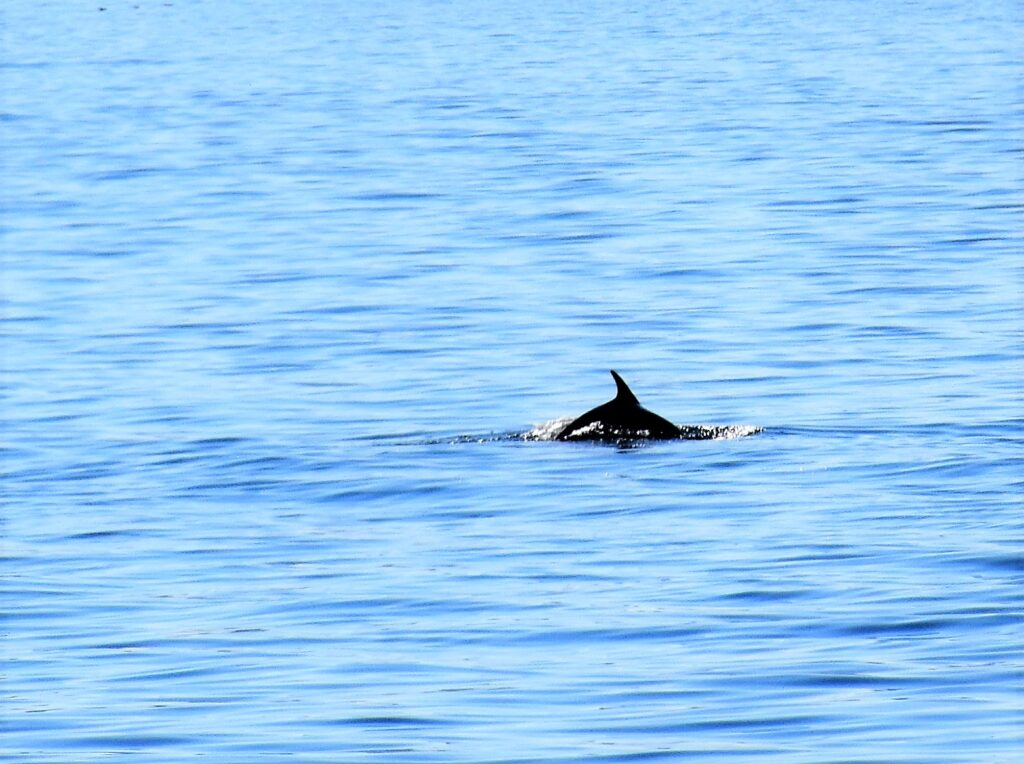
In the Ons island´s waters there is a wide diversity of habitats and bottom-dwelling organisms. In its rocks, you can find mussels, barnacles and limpets that live with different fish and algae species. The brown algae outcrops on the rocks and on the seabed and reaches a height of about two meters. In addition, they serve as food for spider-crabs, conger eels, crabs, octopuses or rainbow wrasses, among other marine species.
You can also find other fish such as rays, cuttlefish and turbot. On the other hand, on island beaches sand, we can see bivalves such as scallops, clams, cockles and razor clam.
Maritime-Terrestrial National Park of the Atlantic Islands of Galicia is made up of the archipelagos of Cíes, Ons, Sálvora and Cortegada and the maritime waters of their natural surroundings. Ons archipelago, is located in front of the Pontevedra estuary and is formed by two islands: Ons, larger and still populated and Ons, smaller.
Gallery
Location
- Town
- Bueu
- Municipality
- Bueu
- Province
- Pontevedra
- Country
- Spain
The asset
- Type
- Fauna
- Eco-destination
- Ría de Pontevedra
- Environment
- Natural
- Relevance
- International
How to get there
- Access
- By sea By land
- Distance
- 0 km
The visit
- Visitable
- It can be visited all year round, previously they must have the authorization of the Xunta de Galicia to visit the natural park.
- Interpretation
- At the end of the access dock there is an information panel with a map of the archipelago,with services, points of interest and itineraries. A map and route catalog of the Natural Park can be downloaded from the website of the Islas Atlánticas National
- Accessible
- No
- Parking
- No
Coordinates
- Latitud
- 42.37720200
- Longitud
- -8.93143100