


Valle-Inclán Museum
About this heritage
Ramón María del Valle-Inclán (1866-1936) is one of the most representative Galician writers of the literature in the Spanish language, characterized by his innovative vocation, social resentment, his literary style - Esperpento, and his eternal memory of the rural world of Galicia. He was part of the literary trend known as modernist.
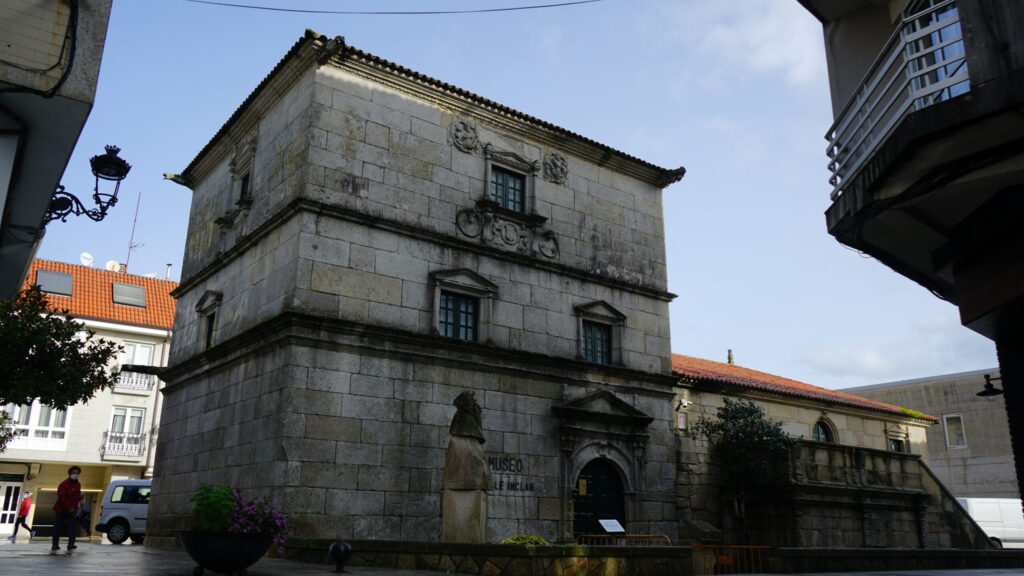
In the municipality of Pobra do Caramiñal is the Valle-Inclán museum, more specifically in the Bermúdez Tower in the Cantón da Leña Square. This tower dates back to the 16th century, declared a Historic-Artistic Monument in 1976. It is linked to the Valle-Inclán family since it had belonged to their grandparents. The museum center was created in 1986 by a municipal initiative to preserve and promote the writer's body of work, life, and artistic production, including references to the period in which he lived and the personalities with whom he shared his concerns and his art.
In the museum, one can find first and rare editions of his books, original manuscripts, period photographs, fine art objects, such as sculptures, paintings, or caricatures, as well as costumes, scenographic drawings, and theater posters. It also has a room for temporary exhibits and an auditorium when they organized different cultural activities throughout the year.
Valle-Inclán was very fond of this family heritage. After returning from his first trip to America in 1893, he declared, "My house in the Torres de Bermudez. The most beautiful house in Galicia, very 16th-century style, architecturally very genuine, with beautiful gargoyles. All in Renaissance style."
In Pobra do Caramiñal, there is also the Valle-Inclán route, where the different places in the village linked to the life and work of the writer are made known.
To learn more
The Bermudez Tower is the location of the museum of the Spanish playwright, poet, and novelist Ramón María del Valle-Inclán considered one of the leading authors of 20th-century Spanish literature. He was also the creator of Esperpento, a literary genre in which reality is systematically deformed, overloading its grotesque and absurd features, while degrading the already established literary values. To this end, the writer artistically dignified a colloquial and broken language, in which cynical expressions and jargon abound.
Ramón María del Valle-Inclán was the author of "Divine Words," "Bohemian Lights," and "Tyrant Banderas," among other relevant works. The writer spent frequent periods in Pobra do Caramiñal, for which he devised the name Viana del Prior. His parents, Mr. Ramón del Valle-Inclán Bermúdez and Mrs. Dolores de la Peña y Montenegro were the last ones to live in this building. The promoters of the Bermúdez Tower were Juan Domínguez Giance and Constanza Domínguez de Búa, a couple of great fortune and members of the nobility of the time.
This civil building of Renaissance style shows the affluence of Pobra do Caramiñal in the 16th century, a place that was then elevated to the category of a Town. Over time, this tower became the main house of the village. Built between 1540 and 1545, the architectural trace in the building is related to the collaborators of an eminent architect of the Spanish renaissance, Rodrigo Gil de Hontañón, who at that time was working in Santiago de Compostela.
The building belongs to the renaissance artistic trend known as the plateresque style. Highlight that it is one of the few Galician Renaissance palaces that still exists today. It consists of three parts, two older principal sections, and a third adjacent construction. In the case of the first two, one of them is smaller and has two doors, one with a lintel and the other with a semicircular arch, on the staircase ledges. Attached to this structure is the tower, with three heights and a door of the semicircular arch, flanked by pilasters and pediment, which give access to the current museum. Later, in modern times, they added a third section as an adjoining building. After the acquisition of the property by the town hall, they built a stone baluster on the exterior stairs with plant motifs. Everyone can appreciate the system of proportions and geometrical games throughout the entire building.
In the Royal Decree 249/1976, of January 9, this palace was declared a "historical-artistic monument of national character." After its restoration, it became the permanent home of a significant heritage collection focused on the literary field. Inaugurated on May 16, 1987, the Valle-Inclán Museum was a pioneer in its time throughout the country.
To know it better
One of the most recognized Galician writers in literature is Ramón María del Valle-Inclán. The author spent some seasons of his life in Pobra do Caramiñal, which is why, in the center of the town, there is a museum named after him.
The Valle-Inclán Museum is a cultural center located in the 16th-century Bermúdez Tower, declared a Historic-Artistic Monument in 1976 and linked to the Valle-Inclán family since it belonged to their grandparents. In 1986, they created the museum in this enclave to divulge the works of this well-known author. Apart from sharing his publications, in this cultural center, one can find data about the writer's life and artistic production, as well as images of him in landscapes of the region and references to the time he lived in Pobra. In the museum, they hold a variety of activities, such as conferences, exhibits, and theater, among others.
The strong relationship of Valle-Inclán with this town was such that they created a route that passes through different decisive sights for the author. It is called the Vital and Literary Route of Ramón del Valle-Inclán.
Pobra do Caramiñal is a coastal municipality belonging to the Barbanza Region in the province of Coruña. The word "Caramiñal" comes from a plant that used to be very easy to find in Galicia, the Caramiña but has lost its presence today.
Location
- Town
- A Pobra do Caramiñal
- Municipality
- A Pobra do Caramiñal
- Province
- A Coruña
- Country
- Spain
The asset
- Type
- Museum
- Eco-destination
- Ría de Arousa
- Environment
- Urban
- Relevance
- National
How to get there
- Access
- By sea
- Distance
- 0,240 km
The visit
- Visitable
- Yes
- Accessible
- No
- Parking
- No
- Signposted
- Yes
Coordinates
- Latitud
- 42.60346300
- Longitud
- -8.93767800