


Vigo. Teis. La Guía lighthouse. Chapel. ETEA
About this heritage
Teis neighbourhood is popular in Vigo because it’s a crowded working class district. To its credit, multiple examples of traditional commerce are integrated around the street Sanjurjo Badía where we can also find the food market. This is one of the oldest locations in the olive growing city, where the sea and mountain come together. Long before Vigo´s port was the epicentre of the arrival of large ships, the wives of the fishermen climbed A Guía mountain to illuminate with their bonfires the way back home for their husbands, the fishermen.
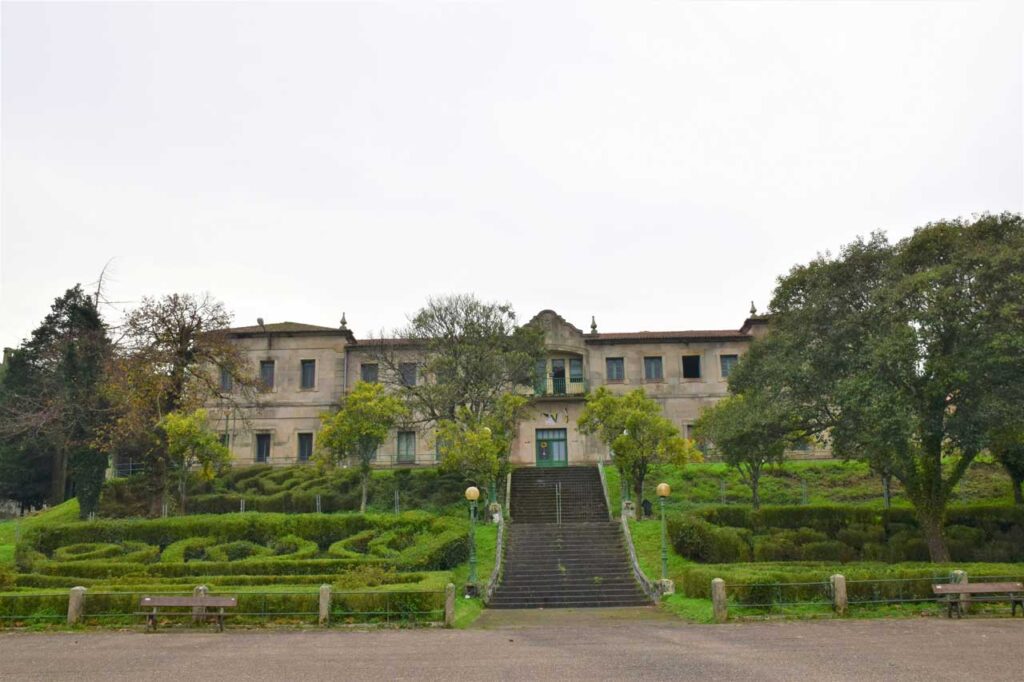
Teis is identified with this past as a seafaring village, which maintains three green areas in its territory: A Riouxa, A Madroa, and A Guía. There are two natural trails: the water path and the GR trail. Descending towards the coast is the School of Transmission and Electronics of the Navy (ETEA), founded in 1916 and nowadays a space of enjoyment for the neighbours next to its beach of A Punta.
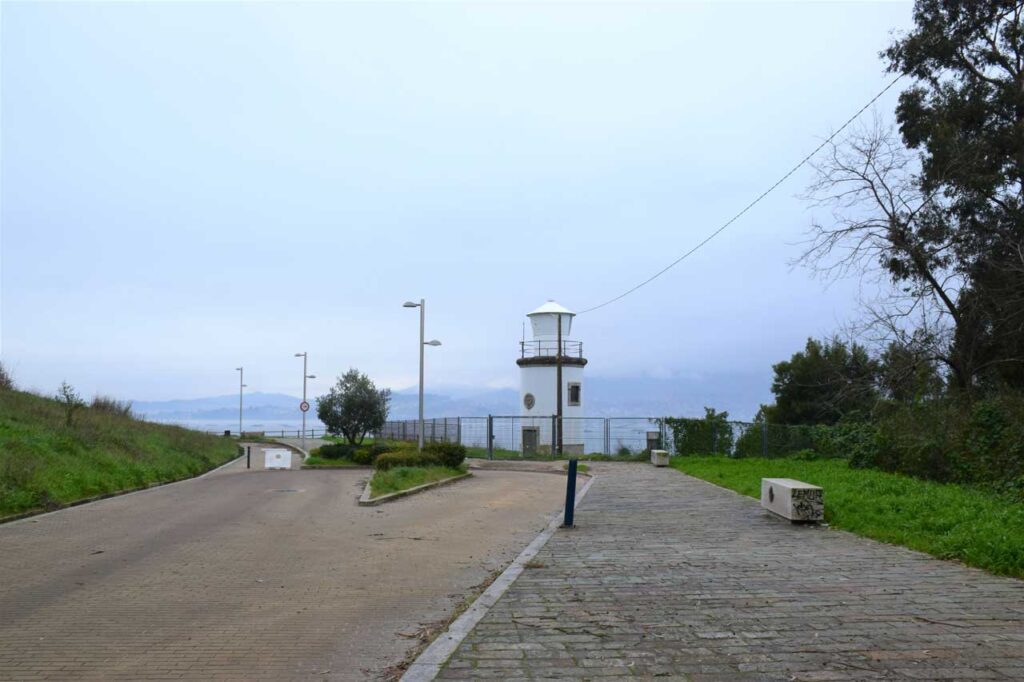
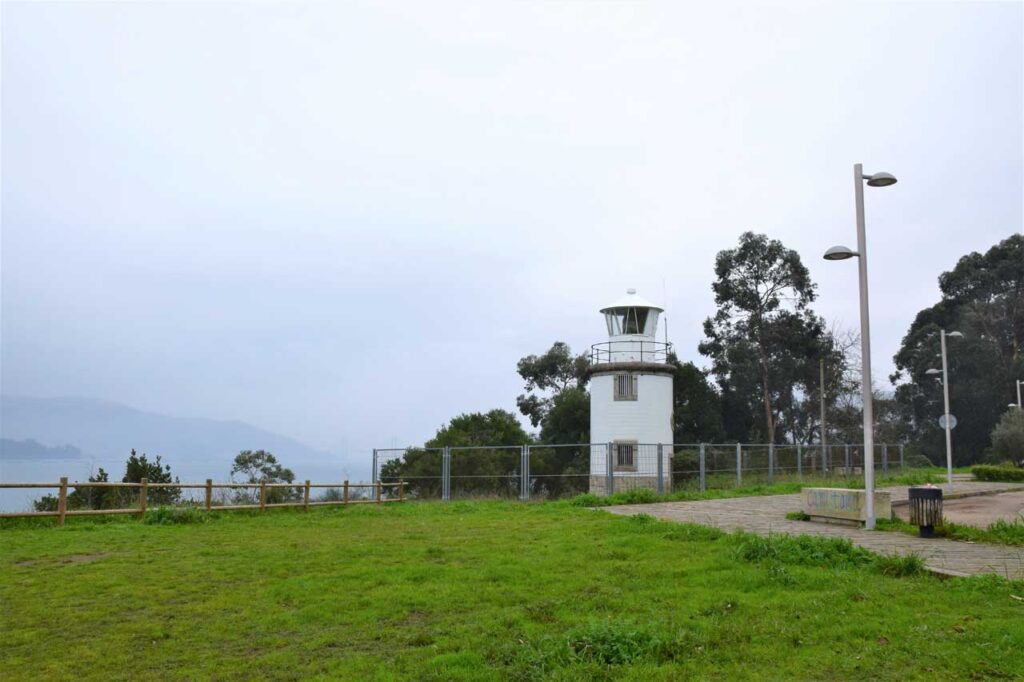
Shortly before arriving at the San Simon inlet, we observe a promontory called A Guía mountain. This forms a point - from which the aforementioned beach takes its name – and ends in a lighthouse, key to maritime signalling in Galicia and the second to be built in the autonomous region after the Hércules Tower and in the middle of the nineteenth century. Thanks to the interest of local merchants, who vehemently demanded it construction for two reasons: the entry into service traffic of steam ships and the rise of Atlantic maritime trade, it was able to illuminate the bottom of the estuary.
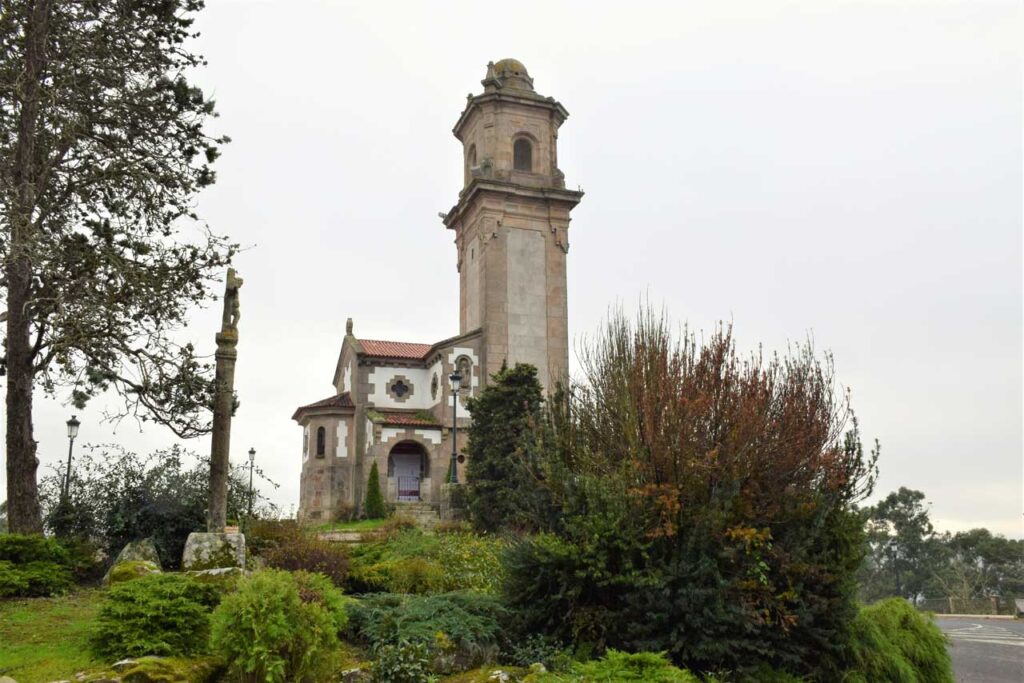
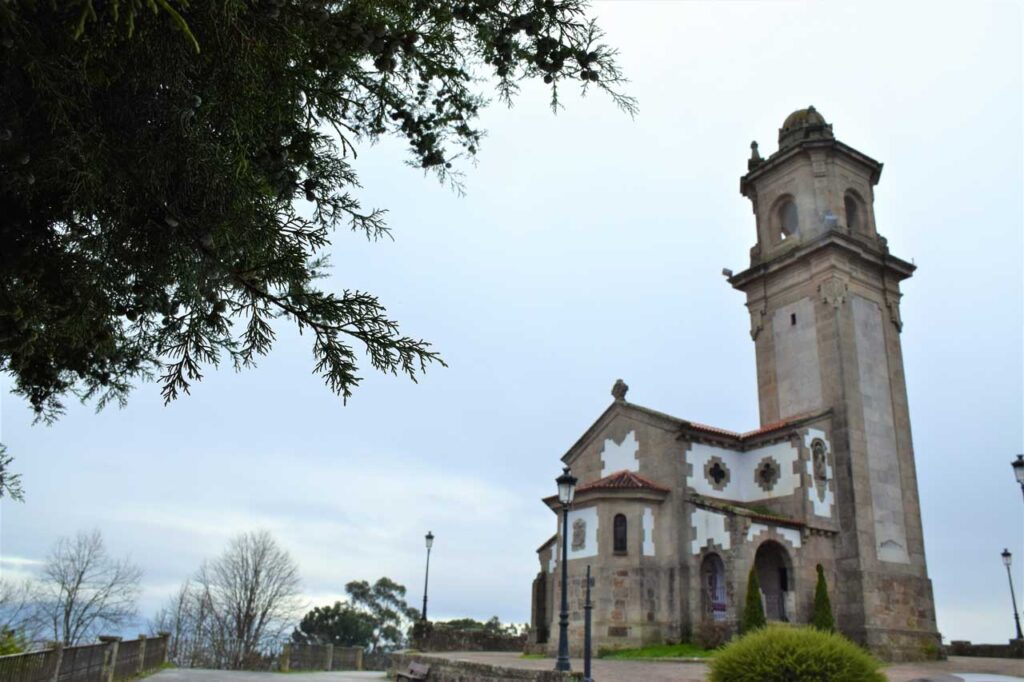
Crowning the mount is the Chapel of “Nosa Señora da Guía”. Built in 1951 by the architect Manuel Gómez Román. It focuses its reference point on an identifying central tower. The hermitage is entrusted to the A Guía´s holy virgin and the Sacred Heart of Jesus.
To learn more
Teis is one of the oldest and most populated neighbourhoods in Vigo, which preserves its seafaring past in a territory of several kilometres, in which sea and mountain come together. Along the length and breadth of part of the estuary coastline and flowing in land, this district offers a great variety of traditional commerce around Sanjurjo Badía street, containing its famous food market.
Integrated in the urban centre it still mantains three green areas: A Madroa, A Guía and a Riouxa, in which vestiges of Neolithic and castreña culture have been found.
In Teis we can find the old headquarters of the School of Transmission and Electronics of the Navy, also known as ETEA. With more than 100.000 square meters and founded in 1916, this current recreational area abandoned its activity in 2002. In 2013 and as a result of its remodelling, it was opened to the public for use and enjoyment. Thus, its visitors can walk along the breakwater, walk among its buildings or swim on its beaches of A Punta and Ríos. The ETEA is open from 8 am to 10 pm, with a bicycle lane, a skate court, a children´s playground, two sports courts and several pergolas for protection from the sun.
The walk through the shore allows you to contemplate the Rande bridge, the Morrazo peninsula and, of course the coastal façade of Vigo. The walk continues to Punta Areíño, where you can turn back or continue towards two paths: to A Lagoa, or the mountain and lighthouse of A Guía. Two paths run through Teis, the “Senda del Agua” in its route to Redondela and the “Sendero GR”.
Before Vigo became the epicentre´s port of Galicia, with docks for large ships, the wives of the fishermen of Teis used to climb A Guia´s mountain to light their bonfires on the closest nights, helping their husbands to return back home safely to their homes. Crowned by the unmistakable mountain of A Guía and its hermitage of “Nuestra señora de las nieves”, it ends on the coast with the small beaches of A Manquiña, A Fábrica, A Lagoa, Cala do Faro and A Punta. Towards the south rivers: Etea, Pilón, Ríos, Rampla, O Mende, and A Suacasa
This promontory stands out towards the sea forming an indisputable part of the landscape of the estuary and was the place chosen to build a lighthouse. Just at the point that underlies a maritime sign posting was installed, the second in Galicia after the Hércules Tower. This lighthouse, one of the oldest in Galicia dates from 1904, although it started operating in 1844. Its mission: to guide the boats coming from the Atlantic ocean that entered through Cíes and went to the interior of the San Simón´s cove, which once is passed the Rande´s strait, constituted one of the conflictive points of greater traffic of the estuary by the Lazareto of its islet. The claim arouse from the English steam consignees, who asked to install a light on the balcony of their house to guide the ships. The petition was rejected in exchange for two lighting signs to guide the entrance to the estuary: one in Cíes and the second in A Guía.
From the top of A Guía´s mountain stands the hermitage of “A Nosa Señora de A Guía”, built in the fifties on some remains dating from the sixteenth century. Its architect was Manuel Gómez Román and its dedicated to the A Guía´s holy virgin and the sacred heart of Jesus, who in the original project was going to be the main character finishing this construction with his image. Finally, and due to the economic situation the brotherhood decided to reduce its size. The temple has a rectangular floor plan with a polygonal apse. It is erected on a contained platform with a sturdy wall of gadgets. The exterior combines this last material with fine stone work and splendid white in some shelves and porches. The main façade has its cornice sectioned through an original composition of plates. These opens the way to the church´s entrance with a slip pediment with central veneration.
To know it better
Teis is one of the oldest neighbourhoods in Vigo, a municipality in the Pontevedra province with sea and mountains. Bordering A Guía mountain, you will find the small beaches of A Manquiña, A Fábrica, A Lagoa, Cala do Faro and A Punta.
Neolithic findings and remains of the castreña culture were found in Teis. However, the first references to the parish date back to 1145. On the other hand, in the 16th century, Teis began to suffer invasions from the corsair Drake´s ships.
In A Guía there is a lighthouse also known as Faro de la Punta, which is the second oldest in Galicia after the Hércules Tower (located in the A Coruña province). A Guía´s area was rehabilitated in 2010 and is now heavily visited, as it is a good choice for a day between family and friends.
Next to this mountain, there was also a military complex from the late 50´s of the last century known as the School of Transmission and Electronics of the Navy (ETEA). It was a centre where officers of the Spanish navy studied. It consisted of several buildings with endowments, breakwaters and powder magazines. Today, it is abandoned, although there is a project to create an area where you can enjoy nature.
On the other hand, on the mountain itself, we find a hermitage dedicated to the A Guía´s Holy Virgin and the Sacred Heart of Jesus. This temple has a rectangular floor plan and a polygonal apse.
Gallery
Location
- Town
- Teis
- Municipality
- Vigo
- Province
- Pontevedra
- Country
- Spain
The asset
- Type
- Lighthouse
- Eco-destination
- Ría de Vigo
- Environment
- Natural
- Relevance
- Internacional
How to get there
- Access
- By sea By land
- Distance
- 0,800km
The visit
- Visitable
- Yes
- Accessible
- Sí
- Parking
- Sí
Coordinates
- Latitud
- 42.25954000
- Longitud
- -8.70212000