


Illa de Arousa and Phoenician Trade. Phoenician Remains
About this heritage
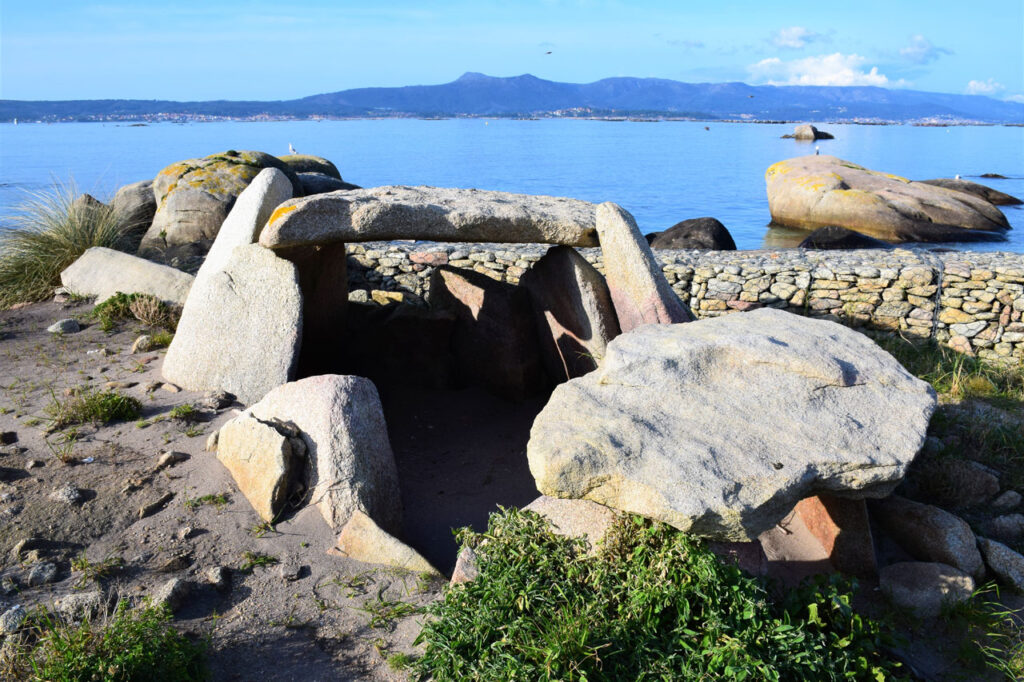
For centuries, Phoenicians, Romans, Saracens, and Vikings came to the O Salnés region in the Rías Baixas, attracted by its riches. Today it is still possible to trace the footprints of their passage through the region, sheltered by the ría de Arousa, dotted with castros that attest to the long history of the area. The Phoenicians usually chose islands to carry out their commercial transactions with the inhabitants of the places they visited. One of the reasons was the security these islands provided them.
To learn more
The Phoenicians were exceptional navigators and traders. Their specialization in certain manufactures allowed them to engage in highly profitable trade in the surrounding kingdoms and overseas territories. From their own production, the Phoenicians offered cedar wood, fabrics (including the famous purple ones), carved ivories, furniture made of noble woods, pendants, bowls and jars of gold and silver, and generally high-value handcrafted products. They exchanged silver, lead, and tin obtained in Spain; wheat and flax from Egypt; balsams and honey from Israel; horses and mules from Anatolia; ivory and slaves from Africa; and oil and cereals from Greece. Metals were the main target of their Atlantic route. They were the maritime spreaders of the new metal, revolutionary in war and agriculture: iron, which was first used in the Hittite country. The Phoenicians also sought tin, an essential material for making bronze by alloying it with copper, reaching the Casitérides islands. Tin could be found just 30 kilometers from the Galician coast. Additionally, the Rías Baixas area had a river route, the Miño River, to penetrate inland, and the rías had excellent natural ports to anchor and trade with indigenous communities. According to Herodotus, the Phoenicians lit bonfires on the beaches and left goods there to exchange their products. It is difficult to know if this is true, although Punic and Neo-Punic ceramics from the 6th to 1st centuries BC have been found on the fossil beaches of O Arenal in Vigo. Trade between the Phoenicians and the northwestern peninsula intensified after the First Punic War (264-241 BC). The loss of some Mediterranean territories and the rise of Rome as a new power forced Phoenician merchants to seek other destinations where they could obtain raw materials in exchange for their products. It was during this search that the trade routes were established, bringing a large number of materials and objects of Mediterranean origin to the northwest.
To know it better
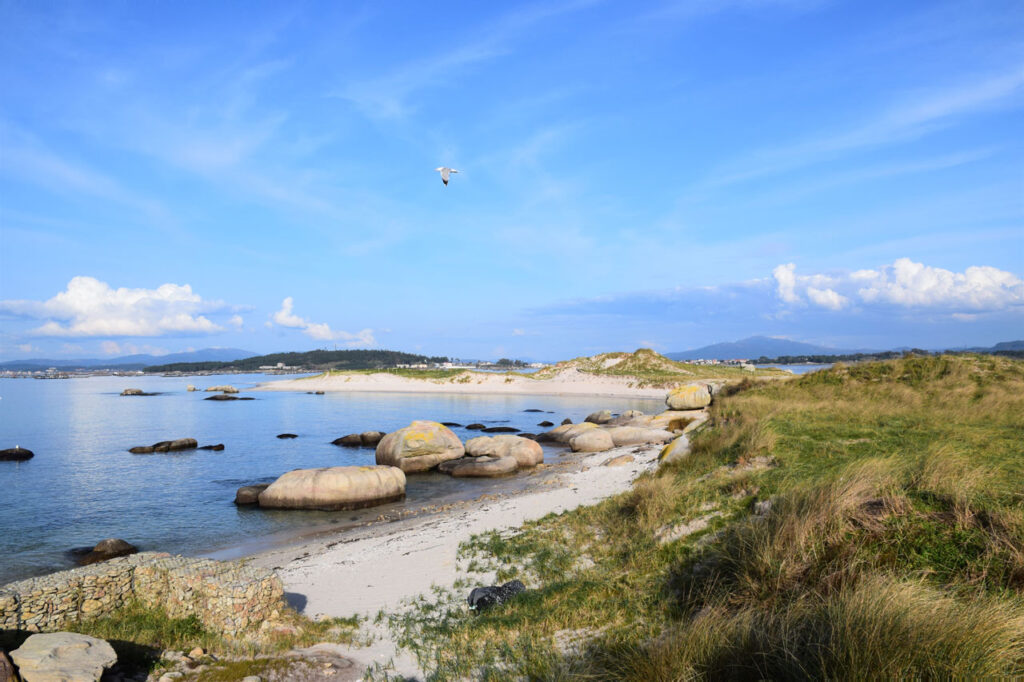
Illa de Arousa is an island (and municipality) located in the ría de Arousa (province of Pontevedra). The Phoenicians, taking advantage of their great navigational skills, usually chose islands to carry out their commercial exchanges with the inhabitants. The island, which has an area of 7 kilometers and nearly 5,000 residents, is connected to the peninsula by a bridge inaugurated in 1985. It is declared a Natural Reserve and its economy focuses on fishing, shellfishing, and commerce. Additionally, the Carreirón Natural Park, located in the southern part of the island, stands out and is declared a special protection area for birds such as herons. Throughout the island, different species of wild animals—lizards, rabbits, frogs, or birds—as well as various plant varieties can be seen.
Gallery
Location
- Town
- A Ila de Arousa
- Municipality
- A Illa de Arousa
- Province
- Pontevedra
- Country
- Spain
The asset
- Type
- Island
- Eco-destination
- Ría de Arousa
- Environment
- Maritime
- Relevance
- International
How to get there
- Access
- By sea By land
- Distance
- 0 km
The visit
- Visitable
- Yes
- Interpretation
- Yes
- Accessible
- Sí
- Parking
- Sí
- Signposted
- Yes
- Website
- ailladearousa.com/
Coordinates
- Latitud
- 42.55044400
- Longitud
- -8.86861000