


Cangas. Hío Cross
About this heritage
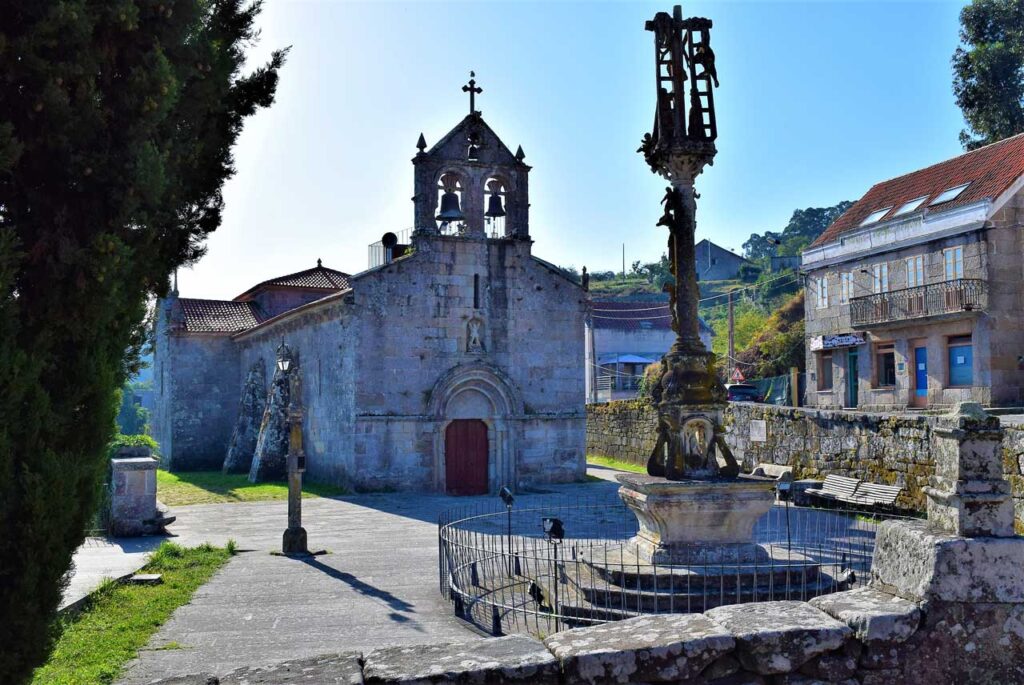
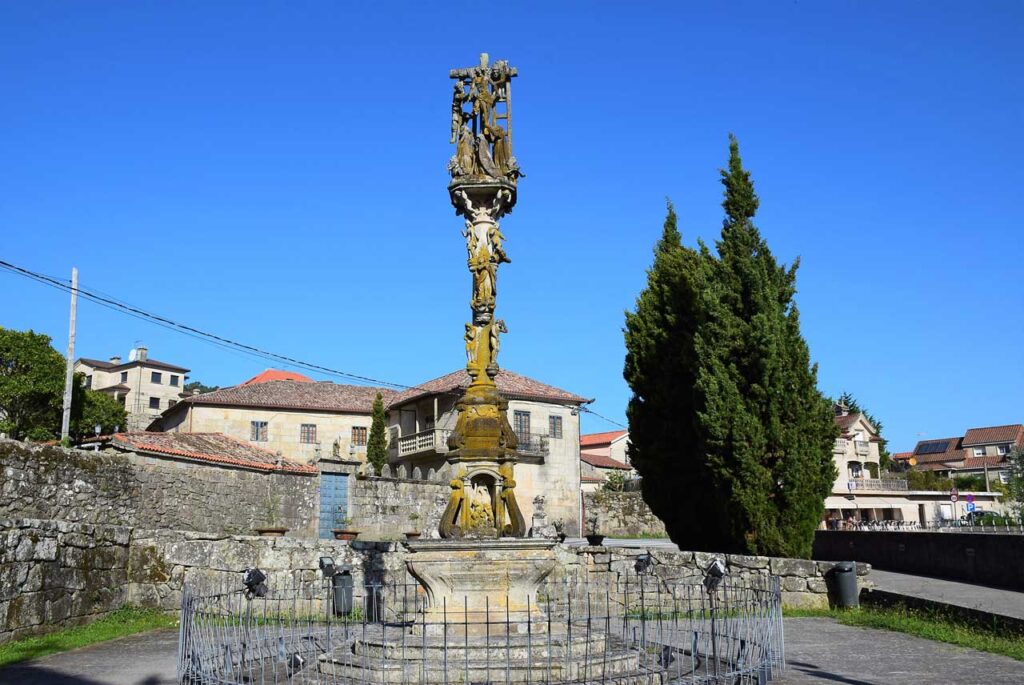
The Hío Cross was sculpted by José Cerviño and symbolically and dramatically depicts significant moments of Christianity, from creation to redemption. Using Baroque iconography, the symbolism of the figures themselves is debated. It was created in 1872 and is divided into three large stone blocks. The first represents Adam and Eve committing original sin, the second corresponds to the shaft with the image of the Immaculate Conception, and finally, there is a representation of Christ's descent from the cross. The Hío Cross is considered one of the most important crosses in Galicia. It is noteworthy that it was practically made from a single piece of granite. To visit it, you must go to the plaza of the Church of San Andrés in the parish of Hío, and if the visitor also wants to enjoy the famous Dance of San Roque, which is danced right in the parish atrium in front of the famous cross, save this date: August 16. Besides its history and monuments, Hío is a source of rugged nature. It is essential to visit the cliffs of the Costa de la Vela up to Cabo do Home, the Dunas de Barra natural park. If you are one of those who do not need excuses to start walking, the hiking route along the path leading to Monte do Facho will allow you to contemplate the Cíes and Ons Islands from a surprising setting.
To learn more
The oldest cross in Galicia dates back to the 14th century and is located in the municipality of Melide, in the province of A Coruña. In contrast, the most famous cross is the one we are discussing, and as you know, it is in Hío, Cangas, next to the Church of San Andrés. In the specific case of the Hío Cross, the main scene is the descent from the Cross, and this can be clearly appreciated in the depiction. Up to 30 characters appear on this cross. There are various types of crosses classified as boundary crosses, stopping crosses, crossroads crosses, devotional, and penitential crosses. Crosses are one of the hallmarks of the Galician landscape; they stand at crossroads or near religious buildings, whether churches, hermitages, or cemeteries. There are up to 12,000 crosses counted in Galicia, so if we listen to Castelao, Galicians are not doing badly in terms of sins since he said that each cross was a pardon from heaven. It is also said that crosses were meant to protect travelers, so if you come to Galicia, protection is included along with leisure options. Its proximity to the Atlantic Islands National Park, the Cíes and Ons Islands, the cliffs of Costa da Vela, and the Dunas de Barra are more than enough reasons for this unique destination to have a special place in your next getaway.
To know it better
Hío is a parish within the municipality of Cangas, located very close to the Cíes and Ons Islands (Atlantic Islands National Park). This location offers spectacular views, as it is surrounded by sea: the Atlantic Ocean to the west, north, and south, and the Ría de Aldán to the east. One of its most important monuments is the Hío Cross. In fact, it is considered the most relevant in all of Galicia. Crosses were works built by master craftsmen and were placed in church atriums, cemetery entrances, or crossroads to sanctify different spaces. The Hío Cross was the work of master Cerviño in 1872. This structure starts from the ground with a staircase followed by an altar. On it rests the main structure of the work: base, shaft, and cross. At the top of a column, there is a little angel holding a scroll that reads: "Alms for the Most Holy Christ of the Light 1872." Cangas is a municipality in the province of Pontevedra that belongs to the Morrazo region. It is made up of five parishes: Aldán, Cangas, Coiro, Darbo, and Hío.
Gallery
Location
- Town
- O Igrexario O Hío (Santo André)
- Municipality
- Cangas
- Province
- Pontevedra
- Country
- Spain
The asset
- Type
- Monument
- Eco-destination
- Ría de Pontevedra
- Environment
- Rural
- Relevance
- International
How to get there
- Access
- By land
- Distance
- 2,500 km
The visit
- Accessible
- Sí
- Parking
- Sí
Coordinates
- Latitud
- 42.27016500
- Longitud
- -8.82947200