About this heritage
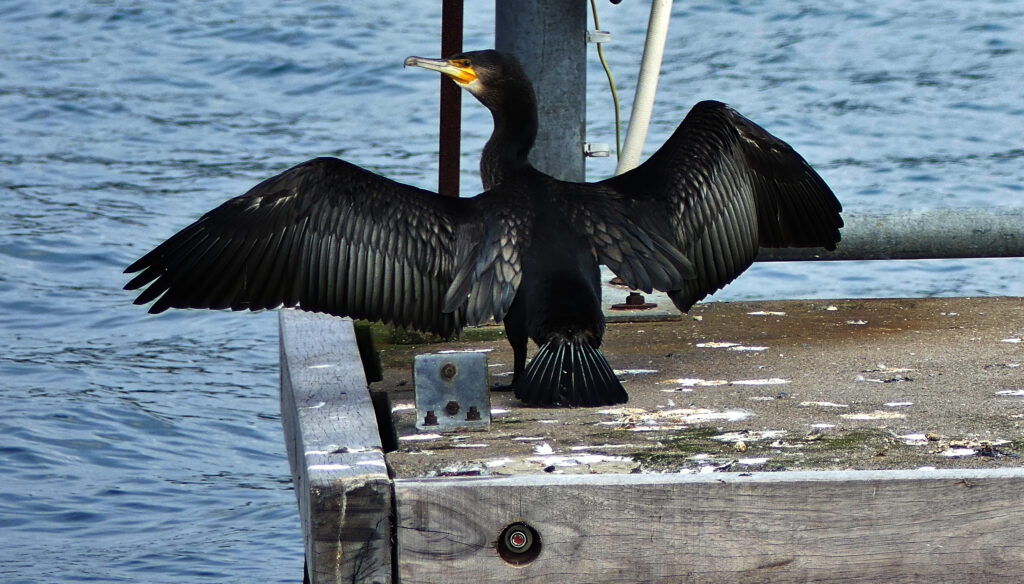
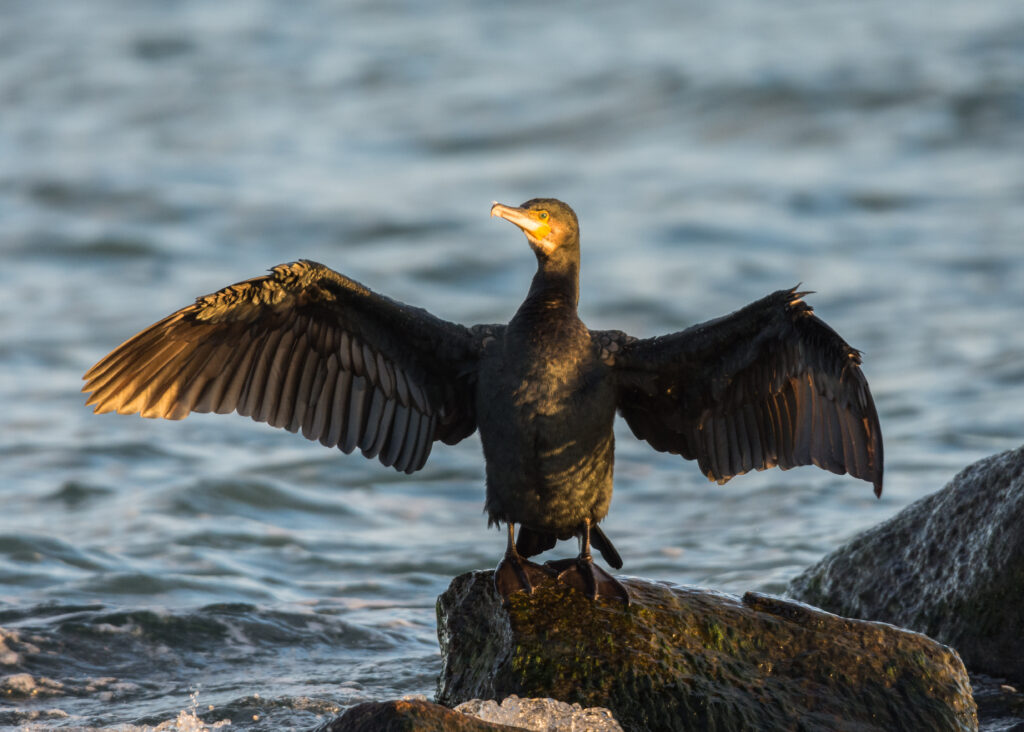
The large cormorant, Phalacrocorax carbo, does not belong to the Anatidae or Charadriiformes families, but to the Phalacrocoracidae family. It is easily recognized by its iridescent black plumage, with bronze or purple reflections, its sea-green eyes, and its robust, slightly curved beak with yellow skin at the base. It can be easily observed, even with the naked eye, in rocky areas and estuaries of the Miño.
Its feeding is very active: it dives in coastal waters, rivers, and estuaries, chasing fish — including eels — as well as crustaceans and occasionally amphibians.
It nests in colonies, building nests with branches, algae, or vegetation in trees, reed beds, and also on cliffs near the water.
It does not stay all year in the breeding areas of northern Europe. During winter, many populations migrate to milder regions. In the Miño estuary, it is commonly seen during wintering and as a visitor during its migratory passages.