


Castro de Cálago
About this heritage
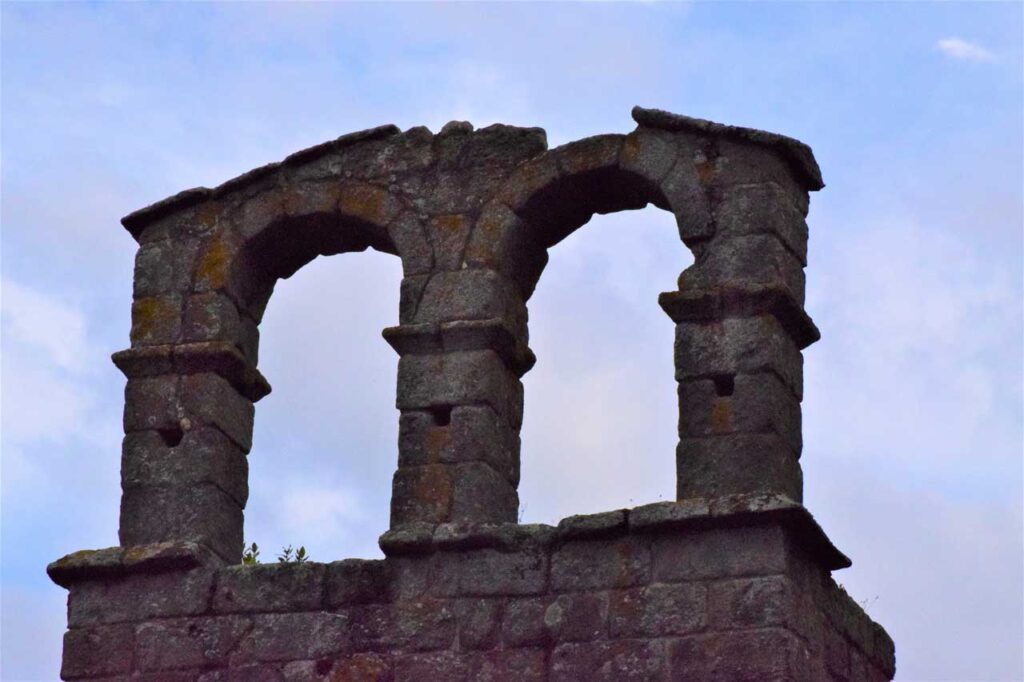
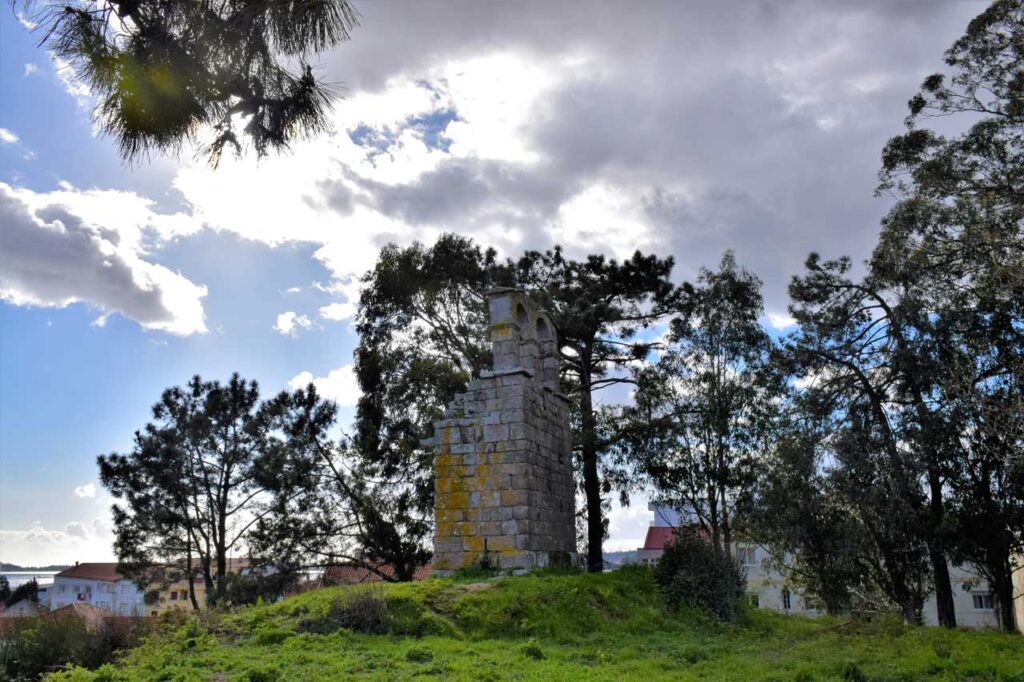
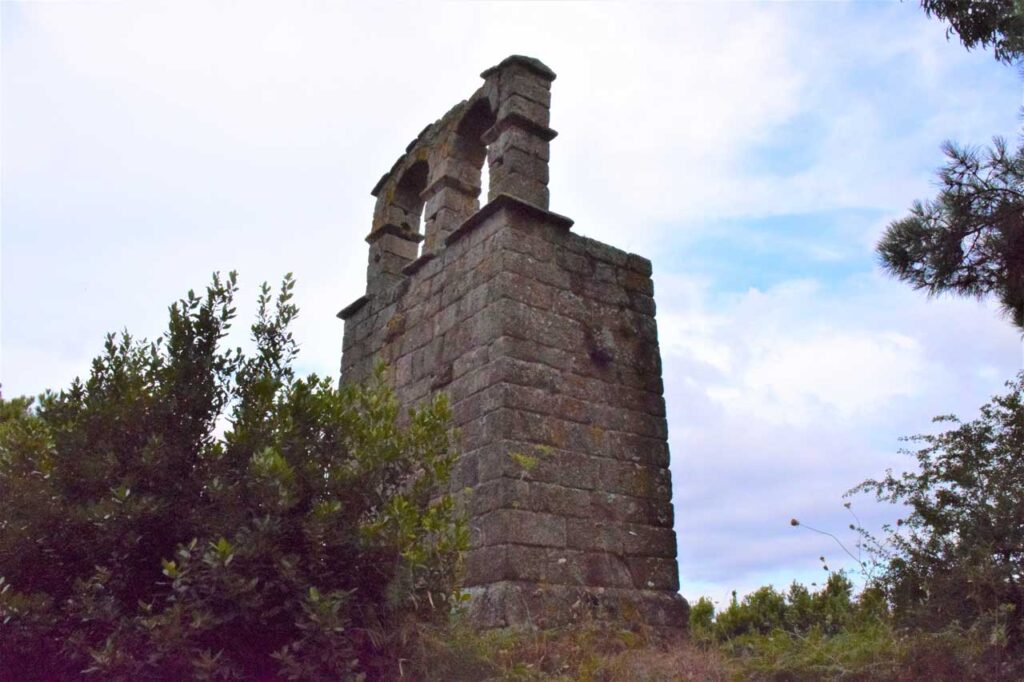
Contrary to what its name might suggest, Vilanova de Arousa is a place with antiquity, as evidenced by Paleolithic remains found on As Sinas beach and Bronze Age findings located in Tremoedo and Baión. There are also remains of a castro culture in Baión and a Roman occupation such as the small treasure of 717 coins found in Tremoedo and the Roman bridge of Ponte Arnelas. Right in the urban center is the castro of Cálago. It is an Iron Age castro that has an elliptical shape, with axes of 105x80 meters, in which its crown and a first terrace are clearly identified, although it is very likely that it had a second terrace, where the Cálago cemetery is currently located. Later, in the Middle Ages, the monastery of Cálago was established in this place, of which its tower-bell tower is preserved today.
To learn more
The Phoenicians lived in independent cities and, although they shared a series of unifying elements such as language, customs, religion, and culture, Phoenicia did not exist as a territorial entity and never constituted a unified state. The Phoenician cities were often at odds due to commercial rivalries, and none of them managed to impose its hegemony over the others. They were located on peninsulas, like Byblos and Sidon, or on islands, as in the case of Tyre. Each of them had a territory on the mainland that allowed them to obtain agricultural and livestock products necessary for their subsistence. However, their economy was mainly based on industry and trade, especially maritime trade.Politically, these city-states were hereditary monarchies. They were governed by a king assisted by a council of elders, which included representatives of the great families of the powerful mercantile social class. In fact, it was a regime halfway between monarchy and oligarchy, which also had a large body of officials.Unlike other neighboring cultures, the Phoenicians never had the ambition to conquer territories and subjugate other peoples to increase the power of their rulers. Therefore, they did not focus on excelling in the military field. They based their defense on the location of their cities in places difficult to access and on the protection of their walls. Regarding their powerful Assyrian and Babylonian neighbors, they preferred to negotiate and become their tributaries rather than fight.
To know it better
The Castro de Cálago archaeological site, located in the urban center of Vilanova de Arousa (province of Pontevedra), is included in the Cultural Heritage Catalog of Galicia, as remains of castro or pre-Roman origin dwellings have been found there. Castros were mainly characterized by circular-shaped houses, built of stone with thatched roofs. However, some of them had a more elliptical shape. This is precisely the case of the Iron Age castro of Cálago.Thanks to various excavations, it can be said that there were human settlements in Cálago from the 4th century BC to the 4th century AD. Evidence of this includes the remains of the foundation of a circular house with a wall 40-50 centimeters thick made of granite, where its crown and a first terrace can be identified. Additionally, a bracelet over 2,000 years old has also been found.
Gallery
Location
- Town
- Vilanova de Arousa
- Municipality
- Vilanova de Arousa
- Province
- Pontevedra
- Country
- Spain
The asset
- Type
- Castro
- Eco-destination
- Ría de Arousa
- Environment
- Urban
- Relevance
- International
How to get there
- Access
- By land
- Distance
- 0 km
The visit
- Accessible
- No
- Parking
- No
Coordinates
- Latitud
- 42.56690900
- Longitud
- -8.82833300