


Castro de Chandebrito and the Phoenician Society
About this heritage
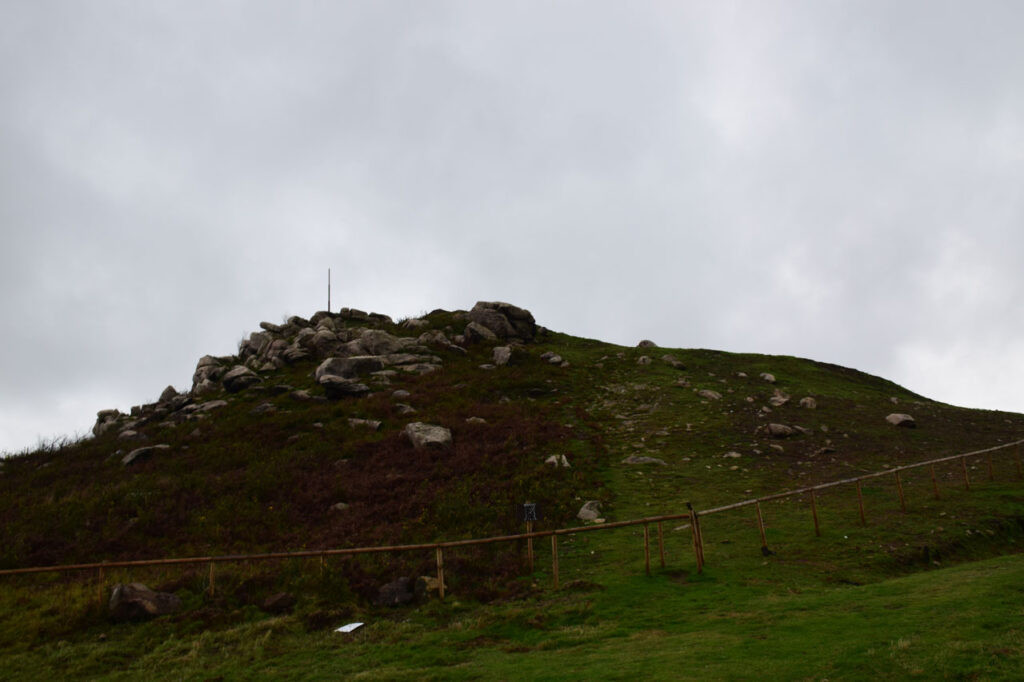
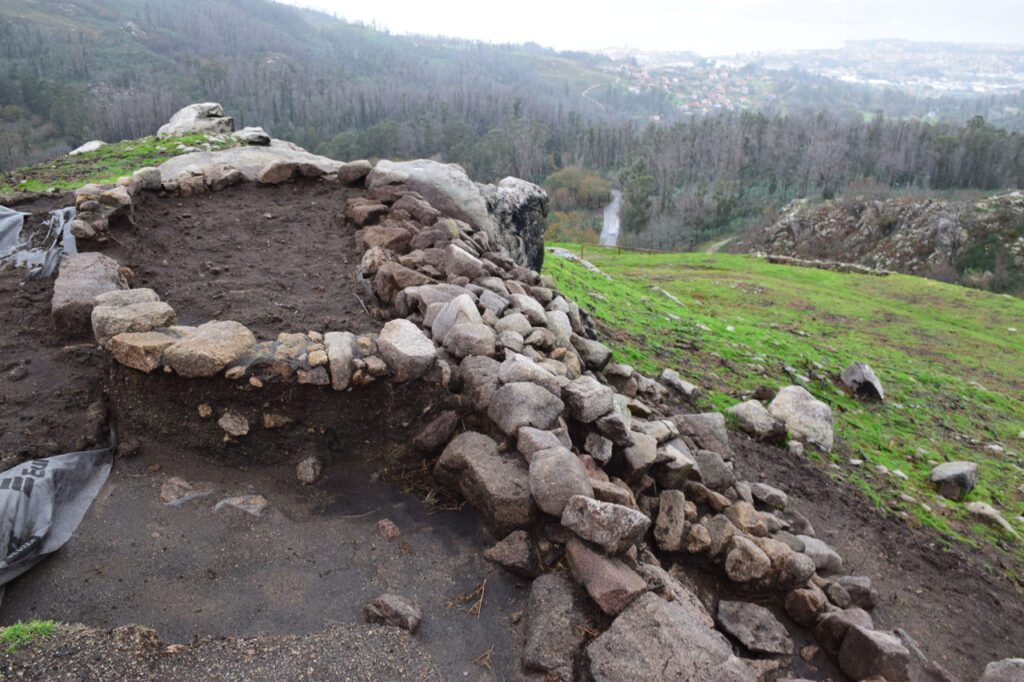
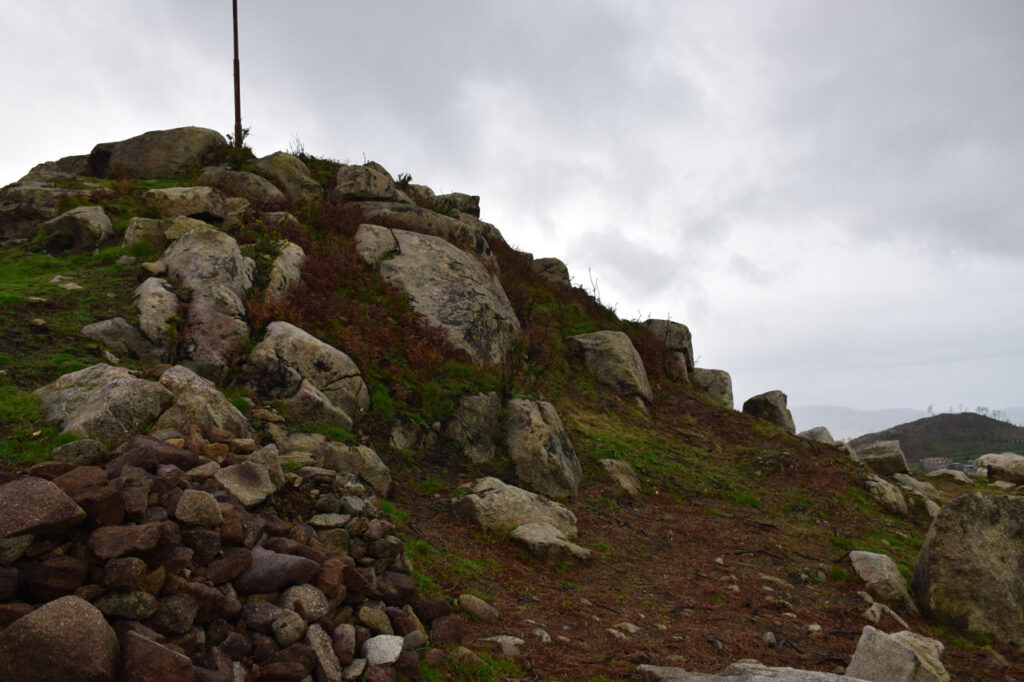
The Castro de Chandebrito is located in the parish of San Xosé de Chandebrito, situated in the Pontevedra municipality of Nigrán, on Mount O Castro, at 376 meters above sea level, which gives it a strategic geographical position. It is one of the castros that best preserves its original configuration. This castro is visible from numerous places in the Fragoso and Miñor valleys and also from the mouth of the Lagares River, at the southern end of the Vigo beach of Samil. Located in the zero zone of the severe wave of fires that devastated Galicia in October 2017, the Castro de Chandebrito was discovered 75 years ago by archaeologist Luis Monteagudo. The first serious excavation of the area took place a decade ago, although it was closed due to lack of funding a decade ago. Recent excavations date the origin of the settlement to around the 8th century B.C., at the end of the Bronze Age, at the beginnings of the castro culture, which would spread throughout the rest of Galicia three centuries later with the construction of most of the known settlements. They also indicate that its occupation lasted until at least the first millennium of our era, well into the Roman period. A necklace of Punic origin, made of blue glass paste, a jewel that did not exist in Galicia, and an amphora handle found during the excavations confirm the commercial relationship of this settlement with Mediterranean peoples, who possibly came in search of cassiterite, the mineral form of tin oxide, with which they made bronze.
To learn more
The Phoenicians lived in independent cities and, although they shared a series of unifying elements such as language, customs, religion, and culture, Phoenicia did not exist as a territorial entity and never constituted a unified state. The Phoenician cities were often at odds due to commercial rivalries, and none of them managed to impose its hegemony over the others. They were located on peninsulas, such as Byblos and Sidon, or on islands, as in the case of Tyre. Each of them possessed a territory on the mainland that allowed them to obtain agricultural and livestock products necessary for their subsistence. However, their economy was mainly based on industry and trade, especially maritime trade. Politically, these city-states were hereditary monarchies. They were governed by a king who was assisted by a council of elders, representing the great families of the powerful mercantile social class. In fact, it was a regime halfway between monarchy and oligarchy, which also had a large body of officials. Unlike other neighboring cultures, the Phoenicians never had the ambition to conquer territories and subjugate other peoples to increase the power of their rulers. Therefore, they did not focus on excelling in the military field. They based their defense on the location of their cities in places difficult to access and on the protection of their walls. And regarding their powerful Assyrian and Babylonian neighbors, they preferred, rather than fighting, to make pacts and become their tributaries.
To know it better
The Castro de Chandebrito is located on Mount O Castro, in Nigrán (province of Pontevedra). There, remains of the castro culture can be observed, characterized by circular constructions and remains of walls that served to protect the population. This Castro is one of the oldest in Galicia, dating approximately to the end of the Bronze Age, around the 7th century B.C. At that time, utensils made of this metal were manufactured thanks to the combination of copper and tin. Thanks to the investigations of ceramic remains found underground, it has been confirmed that people lived in the Castro de Chandebrito during different periods. Through research and excavations, a necklace was found that experts relate to Mediterranean peoples. The Phoenician society sought raw materials to later sell them along with other minerals and different products through the barter system, using product exchange.
Gallery
Location
- Town
- Nigrán
- Municipality
- Nigrán
- Province
- Pontevedra
- Country
- Spain
The asset
- Type
- Castro
- Eco-destination
- Ría de Vigo
- Environment
- Rural
- Relevance
- National
How to get there
- Access
- By land
- Port
- Puerto de Canido
- Distance
- Distancia: 8,5 KM / 17 minutos en coche
The visit
- Visitable
- Yes
- Accessible
- No
- Parking
- No
Coordinates
- Latitud
- 42.16488200
- Longitud
- -8.75453700