


Catoira. Pedra Miudas lagoon and mills
About this heritage
To visit the Pedras Miudas Lagoon and the mills, we will have to go to Catoira. It is a town located in the province of Pontevedra, more specifically in the Arousa´s estuary. Its location is privileged as it is very close to Vilagarcía, Santiago and Pontevedra.
The tourist offer of Catoira and the whole area of the Galician Rías Baixas is very extensive. You can enjoy a gastronomy made with fresh seafood or its endless beaches of fine sand and crystalline waters awarded in many cases with the blue flag.
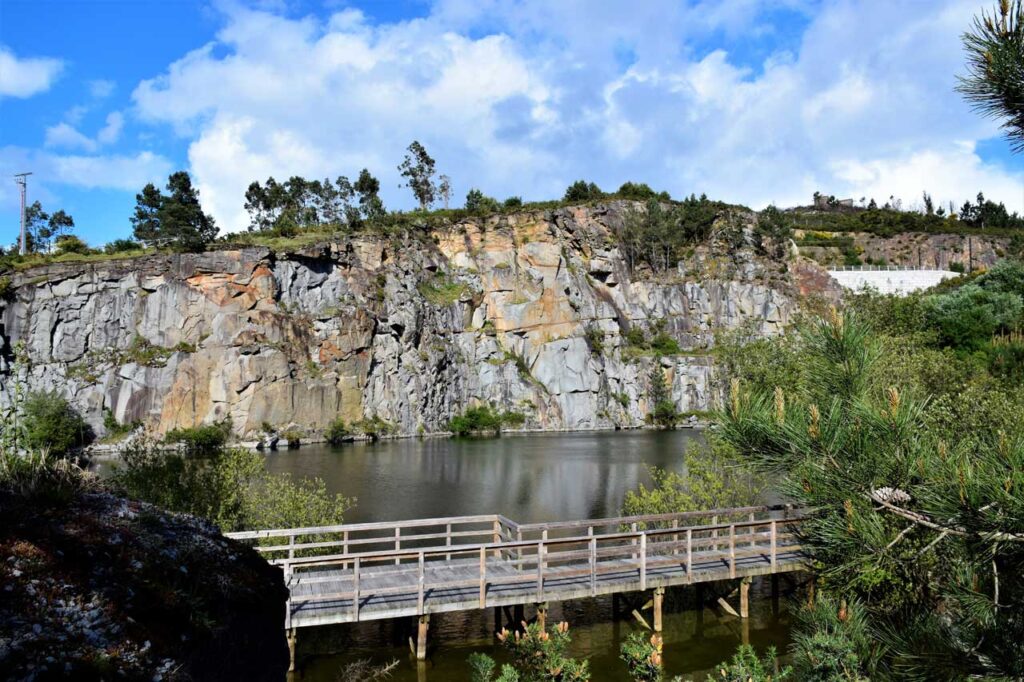
The Pedras Miudas Lagoon (small stones lagoon) is catalogued as Outeiro da Vila in the Wetlands inventory of Galicia. This natural space was formed in the empty basin of the Catoira quarry and is an example of how nature is capable of generating new spaces.
Part of this lagoon is visible from the Windmill Viewpoint of Catoira in the place of Outeiro da Vila. Catoira is also known for having the 3 types of traditional mills.
Windmills, Tidal Mills and Watermills. The windmills of Catoira are located in a place of great scenic interest, are restored and they are located in the hiking trails layout.
The tidal mill, known as Molino del Curo or Molino de Machón, is located at the mouth of the Catoira river. It is one of the few examples of the use of tidal energy in the environment.
Finally, river mills, which take advantage of the water´s force of the rivers to grind the cereals and in this town are located up to 45.
To learn more
In Catoira you can also enjoy different trekking routes such as: the Catoira River Route, the San Cibrán Rego Route and the River Walk Route. Walking these trails, we will go through a good part of Catoira, we will get to know its landscape, its flora, its fauna and its abundant heritage.
Catoira is one of the municipalities which participates in the Jacobean Route of the Sea of Arousa and the river Ulla. From the Mirador Ruta Xacobea located on Avenida Mirador da Ria you can see a good part of the only maritime Via Crucis that exists.
Returning to the lagoon and its history, it is also a story of the neighbours struggle and the town hall itself to stop the quarry and protect the lagoon, whose water is of excellent quality. In 2008 this lagoon was declared a Natural Area of Local Interest.
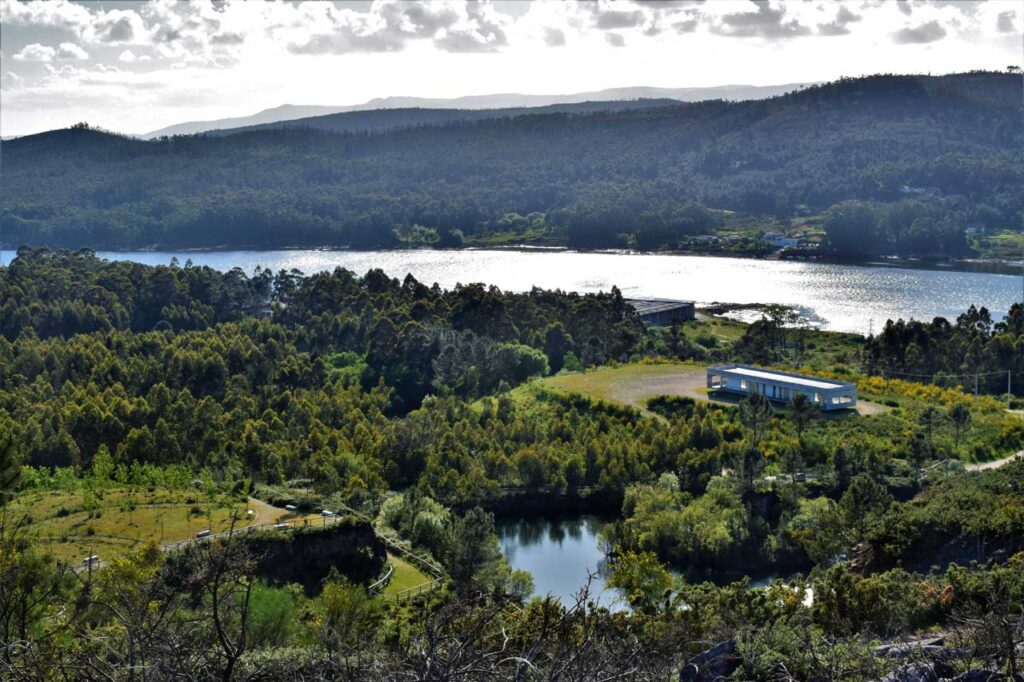
To reach this natural area we will have to take the detour on the left that we find on the PO-548 road towards Vilagarcía, at the height of the high-speed train bridge. Precisely, in 2015 the Ministry of Public Works, as compensation for the works of the high-speed train, built a building in the area for an environmental classroom. The installation is completed with a car park, a green area with native species, paths and pedestrian walkways.
One more point, the Jacobean route of the Sea Arousa and River Ulla, reminds us of the arrival of Santiago Apostle´s body to our shores. This fluvial route crosses 22 municipalities belonging to the provinces of Pontevedra and A Coruña, that in addition, are members of the Patronage Foundation - Jacobean Route of the Sea of Arousa and the river Ulla.
To know it better
The landscape of Catoira municipality in Pontevedra is full of forests, trees, marshes and river beaches. It also has windmills, known as Abalo. These mills are located at the top of the mountain and are unique in Europe because of their double blade system. There were eleven windmills: three in Abalo, five in San Miguel and three or four in Monte Cebreira. They are fixed and consist of a single-planned cylindrical tower with stone walls.
Behind the Abalo mills, we can find Pedras Muidas lagoon, a natural paradise. This is a lake that was formed from an old quarry on the mountain from which stone was extracted. The quarry was abandoned and the accumulation of rain created this lake. Catoira is a Galician municipality located in Arousa´s estuary, in the province of Pontevedra. Its privileged location has witnessed different stories that have become a part of this town´s life.
Gallery
Location
- Town
- Catoira
- Municipality
- Catoira
- Province
- Pontevedra
- Country
- Spain
The asset
- Type
- Lagoon
- Eco-destination
- Ría de Arousa
- Environment
- Rural
- Relevance
- National
How to get there
- Access
- By land
- Distance
- 15,500km
The visit
- Visitable
- Yes
- Accessible
- No
- Parking
- No
Coordinates
- Latitud
- 42.66092000
- Longitud
- -8.73119500