


Cíes Islands. Alto del Príncipe Viewpoint. Flora and Cliffs
About this heritage
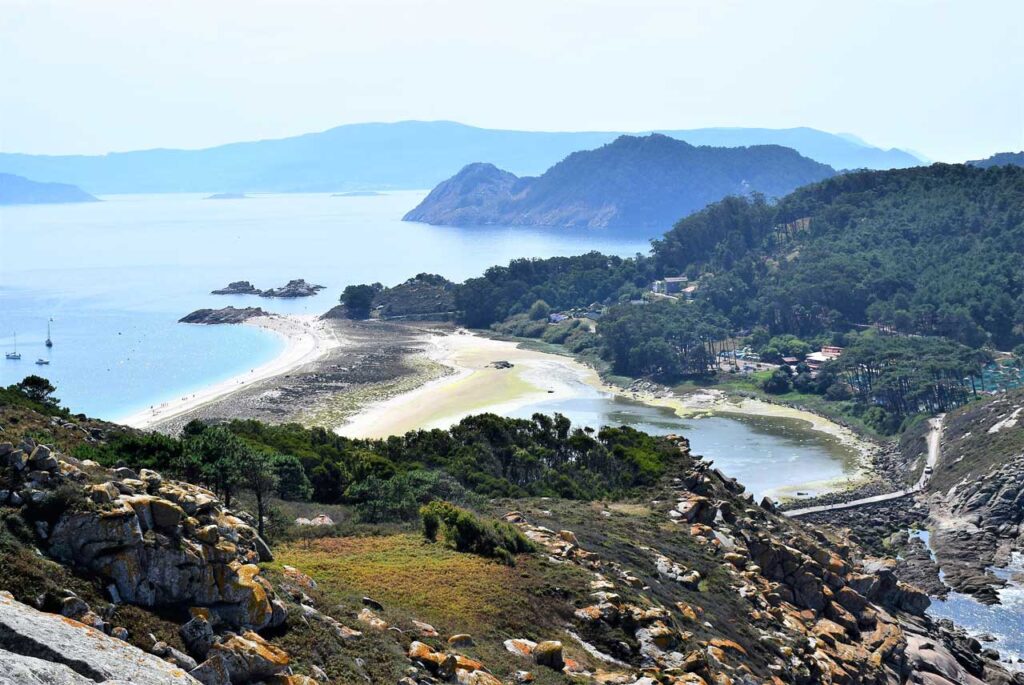
Alto do Príncipe viewpoint is located on the North island or “Monteagudo”. The route to this viewpoint is the shortest route that can be done in the Cíes archipelago. To do this, from the information booth at the end of the wooden foot bridge, take the path on the right and start the ascending route to the viewpoint. During the tour you will border the Muxieiro dune complex and the Figueiras beach. It also crosses a forest where eucalyptus, black acacias, oaks, sweet oaks, laurel and strawberry trees are found, among other types of trees. In the view point is the famous Queen´s chair, a rocky formation shaped like a seat. The rocky formations called “Pías” with rounded shape stand out due to the erosion produced in the rock by the accumulation of rain water.
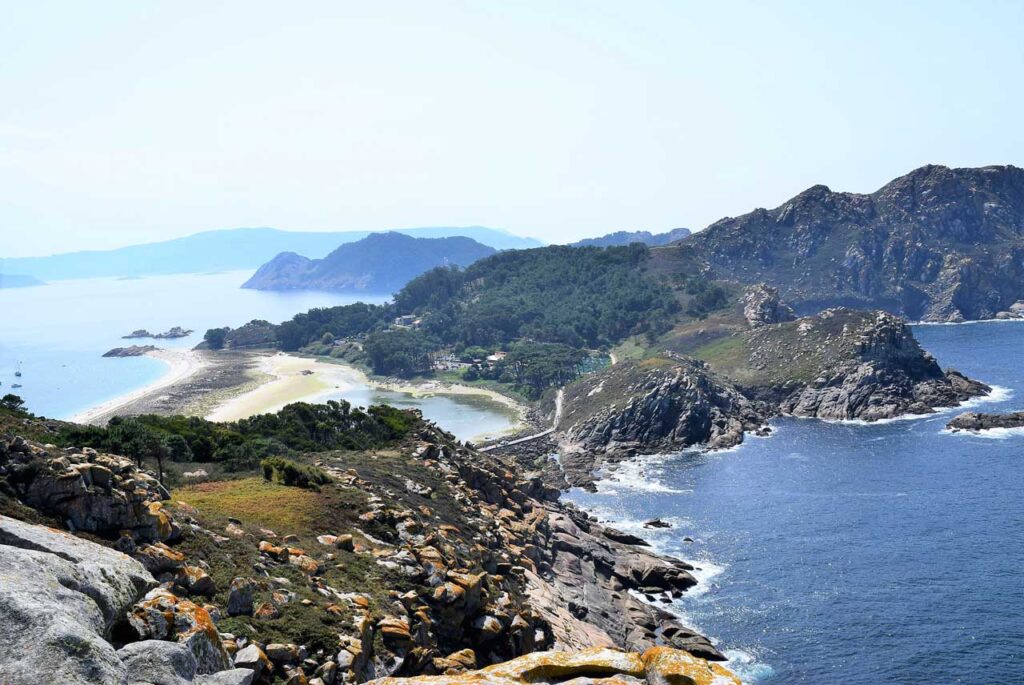
From this viewpoint you can observe the two faces of Cíes islands. On the first hand, the west face of the island is formed by cliffs sculpted due to the erosion of the high-sea waves. On the other hand, the east side of the island is where the beach is found, it is also where most of the vegetation is located, as it faces the interior of the estuary and does not directly receive the impact of waves and wind. This is why there are only a few plant species that live in the cliffs, all of them of low scrub type.
To learn more
The Alto do Príncipe viewpoint is the place with the best views to observe the contrast of the two faces that characterize the Cíes archipelago. It is located on the north island or “Monteagudo”. It is approximately one and a half kilometres from the quay. The two sides of Cíes archipelago are the western side facing the open sea where the cliffs are impacted by waves and wind, and the eastern side where the forest and the beach are located.
The cliffs are heavily influenced areas by the collision of the waves of the sea, making the surface achieve a high salinity level. They are areas where the wind blows too much, which complicates in some ways how do plants growth, making species adopt cushioned forms. The yellow-legged gull communities that live on the island also influence the growth of these plants as their excrements enrich the soil with fertilizing substances.
There are different vegetation belts according to the proximity to the sea: in the lower areas and close to the sea is the sea parsley (Crithmum maritimum). In higher areas the greater development of the soil allows the installation of a pasture dominated, according to zones, by sea thrift (Armeria pubigera), or by the sea campion (Silene uniflora) and orchard grass (Dactylis glomerata). In the upper part of the cliff is the coastal scrub area, less influenced by marine splashes and its mainly a subspecie of endemic Galician- Portuguese gorse (Ulex europaeus subsp. Latebracteatus).
To know it better
In Monteaguado island we have different routes that we can do to appreciate the wonderful views of the Atlantic. One of the routes, not to say the best of all, is the Alto do Príncipe one. This starts in the camping area, crosses “Lago dos nenos” (lake) and its natural aquarium up to Rodas beach. After passing the forest full of eucalyptus, we head towards the Alto do Príncipe Viewpoint.
From this enclave you can enjoy breath-taking views of the cliffs from the Queen´s chair. These are rocks with a seat shape.
Most of the vegetation is made up of shrubs and gorses, forest vegetation, which suffered alterations with the introduction of exotic species such as pine, eucalyptus and acacia, which occupy a quarter of the park´s surface. On the other hand, in the autoctonous zones, two types of oak “melojo” or “rebollo” and the blackthorn brush.
The Cíes islands are located in Pontevedra province. They have nine beaches of fine white sand and crystal clear water.
Gallery
Location
- Town
- Vigo
- Municipality
- Vigo
- Province
- Pontevedra
- Country
- Spain
The asset
- Type
- Island
- Eco-destination
- Ría de Vigo
- Environment
- Natural
- Relevance
- International
How to get there
- Access
- By sea By land
- Distance
- 0,500 km
The visit
- Visitable
- Yes
- Accessible
- No
- Parking
- No
Coordinates
- Latitud
- 42.22923000
- Longitud
- -8.90624100