
Dena. “Telleiras” and galleons. “Telleiras” in general
About this heritage
The county of Meaño is in the heart of the Salnés, with about 28 km2 and a population of just over 5,000 inhabitants making Dena the most populated of its parishes, and it is the only one in contact with the sea. Precisely, its access to the sea as a mean of transport, along with the existence of clay and kaolin deposits, allowed the handmade production of tiles and bricks.
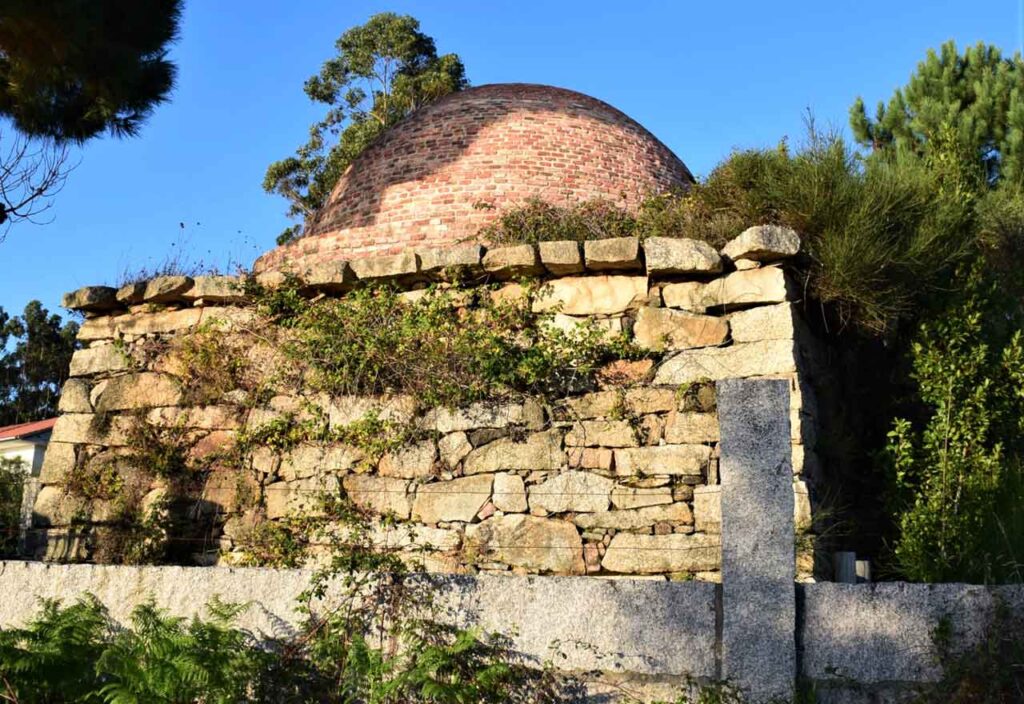
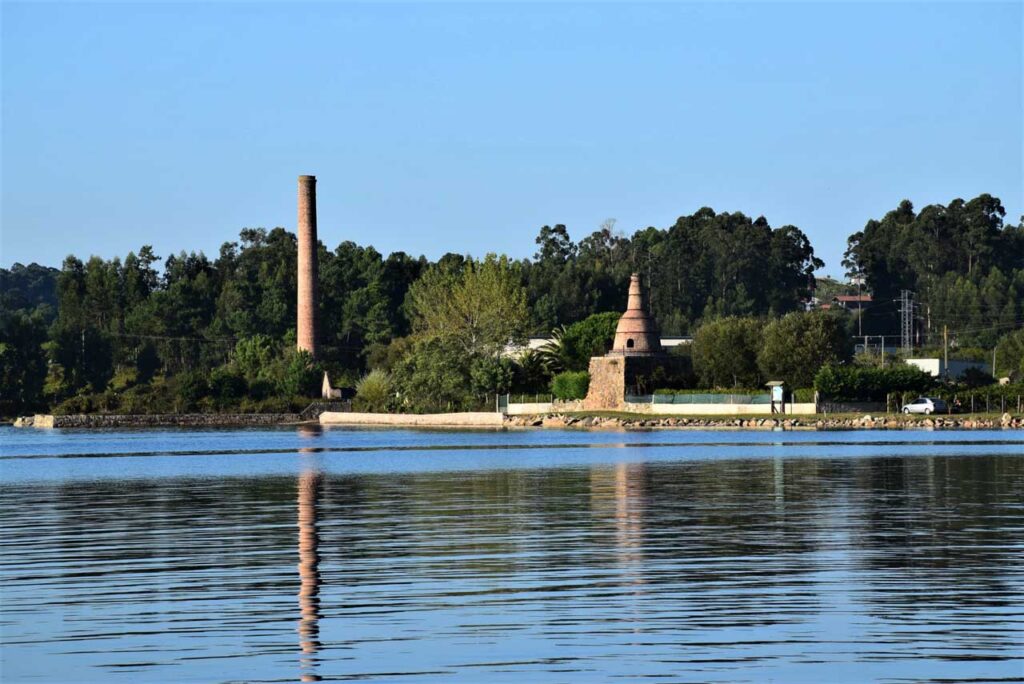
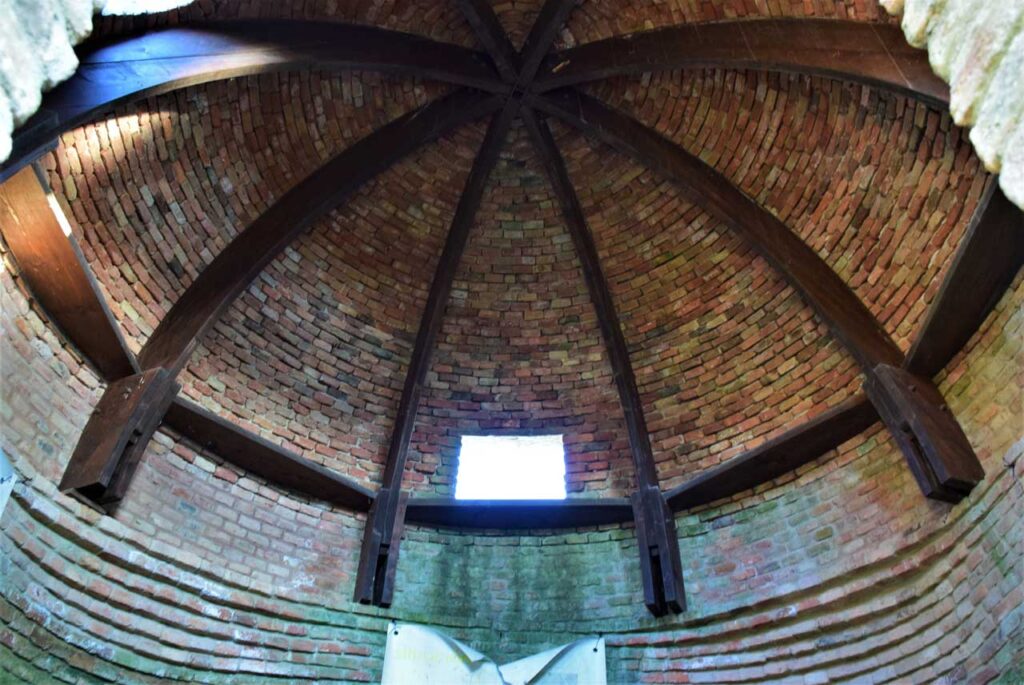
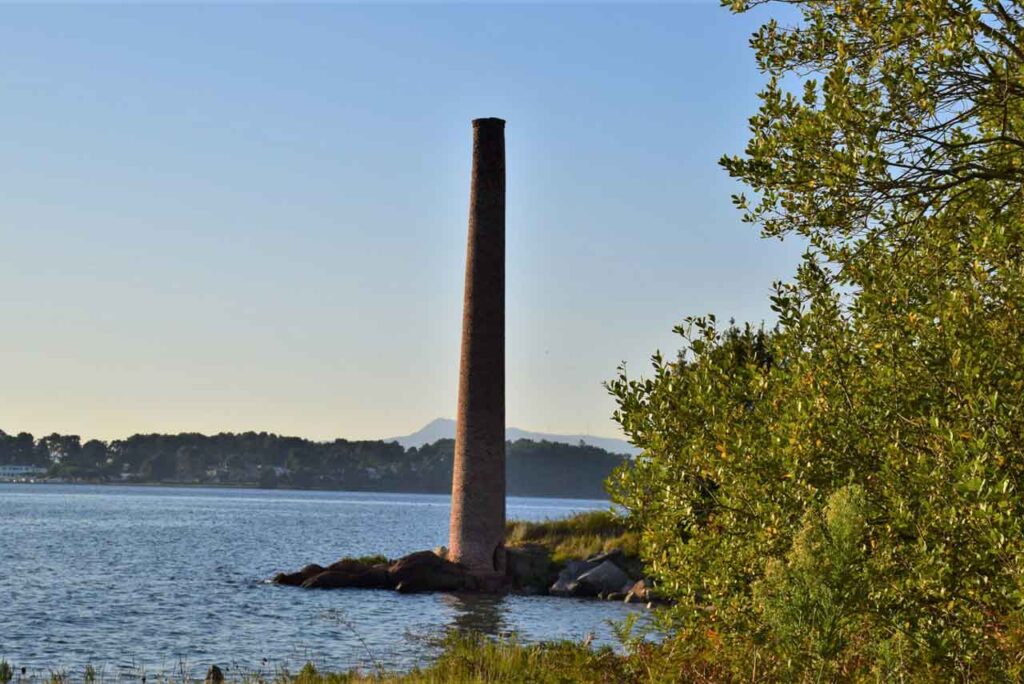
Currently, "La Telleira de Seixiños" remains intact and preserves its original kiln. It is in Black Stones-Beach (Pedras Negras-Praia) of Seixiños, Dena; it is also part of the Umia-O Grove Intertidal Complex. The clay soil of this coast was a great material to make tiles and bricks; for that reason, up to 28 factories were counted in this area.
Dena has a rich cultural heritage, comprise of different crosses, Galician granaries (hórreos), mills, and Lordly houses (Pazos), among others, the manor of Lis or Zárate. The church of Dena is of Romanesque style and has a single nave with a bell tower that stands out. It also has chapels, such as Santa Maria of Simes and the Romanesque temple of San John (Xoán) of Meaño.
Dena is on the Route of the Sea of Arousa and Ulla, within the Way of Saint James, which reminisces the journey along the estuary of the remains of Saint James the Apostle to Pontecesures and Padrón. The maritime-fluvial route crosses 22 counties belonging to the provinces of Pontevedra and A Coruña, members of the patronage "Xacobean Route of the Sea of Arousa and Ulla Foundation"(Fundación Ruta Xacobea do mar de Arousa e Ulla).
To learn more
The region of Salnés is located in the South Estuaries (Rías Baixas) and has nine town councils: Cambados, the Island of Arousa, O Grove, Meaño, Meis, Ribadumia, Sanxenxo, Vilagarcía of Arousa, and Vilanova of Arousa.
The Salnés is one of the most densely populated regions of Galicia, and one with the highest economic and demographic dynamism; thus, it consolidated as a tourist destination to take into account. Its wealth of patrimonial resources, its gastronomy, its magnificent beaches, among others, offers visitors a worthy enjoyable experience. Meaño is in the heart of the Salnés, a region where one can find magnificent beaches, mountainous areas, and valleys, all surrounded by the Pontevedra estuary to the south and the Arosa estuary to the north.
As we have already mentioned, every year – since the first ascent began in 1965 – Dena and its inhabitants witness the passage of the maritime-fluvial traffic to Puentecesures and Padrón. It is the maritime-fluvial Route of the Sea of Arousa and the Ulla River, which commemorates every year the arrival of Santiago Apostle to Galicia.
This fluvial route crosses 22 counties belonging to the provinces of Pontevedra and A Coruña, members of the patronage "Xacobean Route of the Sea of Arousa and Ulla Foundation" (Fundación Ruta Xacobea do mar de Arousa e Ulla).
To know it better
The Complex Intertidal Umia-O Grove, to which the county of Meaño belongs, has been exploited for hundreds of years as an intertidal space to create tiles and bricks. The work consisted of extracting the clay to create pieces called "telleiras." The name "telleira" applied to both the building and the production of tiles, bricks, and other construction elements based on clay. Between the nineteenth and twentieth centuries, this process - extraction and molding - was handmade and was what was known as the manufacture of tiles and bricks from local clay.
One of the ships carrying these building materials was the Galleons. These ships collected the goods and then transported them for marketing.
Meaño is a county in the region of Salnés, in the province of Pontevedra, and surrounded by the counties of Ribadumia, Poio, Sanxenxo, and Cambados. Its territory is 28 km2 and has seven areas: Covas, Padrenda, Xil, Meaño, Simes, Lores, and Dena.
Gallery
Location
- Locality
- Meaño
- Municipality
- Meaño
- Province
- Pontevedra
- Country
- Spain
The asset
- Type
- Parish
- Eco-destination
- Ría de Arousa
- Environment
- Rural
- Relevance
- Regional
How to get there
- Access
- By sea By land
- Distance
- 1,000 km
The visit
- Accessible
- No
- Parking
- No
Coordinates
- Latitud
- 42.45671000
- Longitud
- -8.81691900