
Downtown Vigo. Old Quarter, Ramparts, Collegiate and Parque Illas Atlánticas Museum
About this heritage
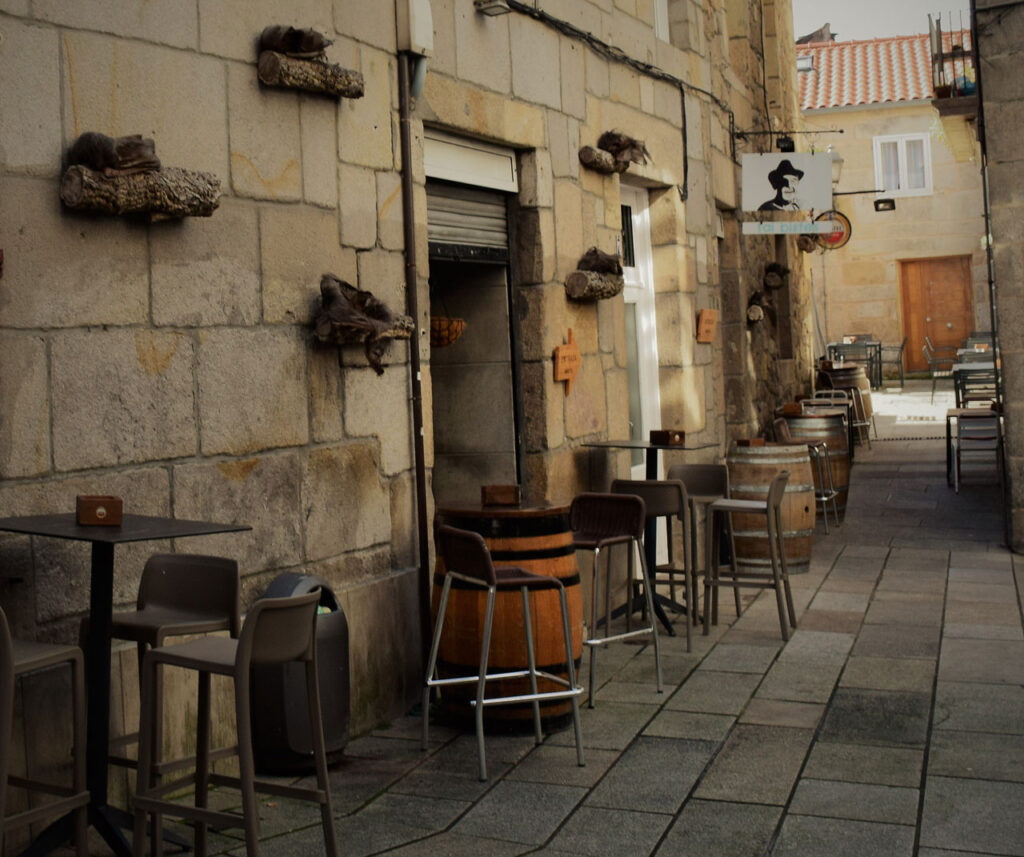
Downtown Vigo is the historical centre of a city linked to the sea, without renouncing its traditional essence. It is the most populated city in Galicia, with a cosmopolitan character. It is a city with soul, heart and life for the enjoyment of those visitors who continue arriving to its coasts, through one of the richest estuaries of the planet. Its rectilinear layout opened the way between the borders of its famous Ensanche and a historic centre that still shows the layout of its walls in its streets. Those walls were part of the defensive system of a town open to the sea. They included the Castle of San Sebastián, and the fortress of O Castro delimiting a visible line up to the cape A Laxe and O Berbés.
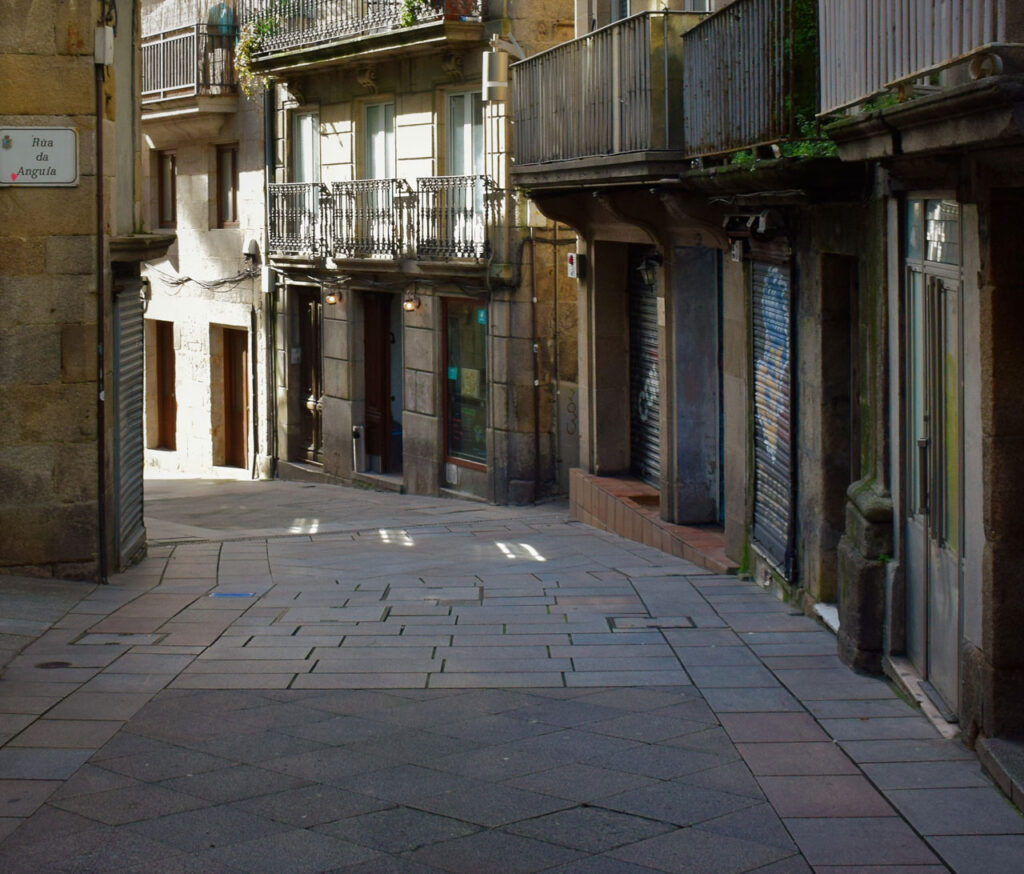
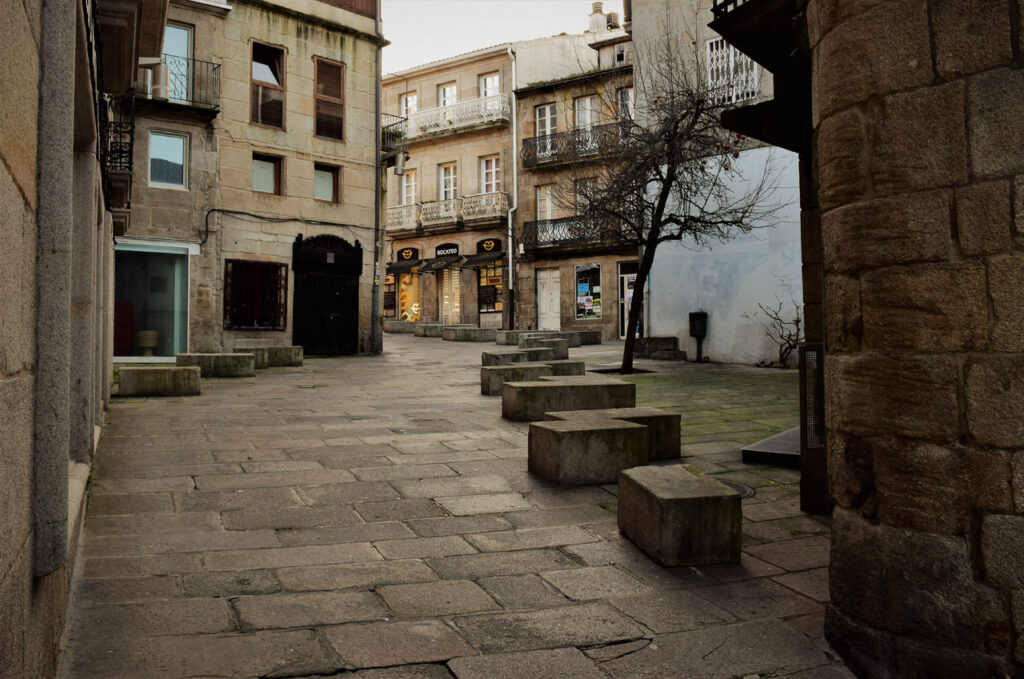
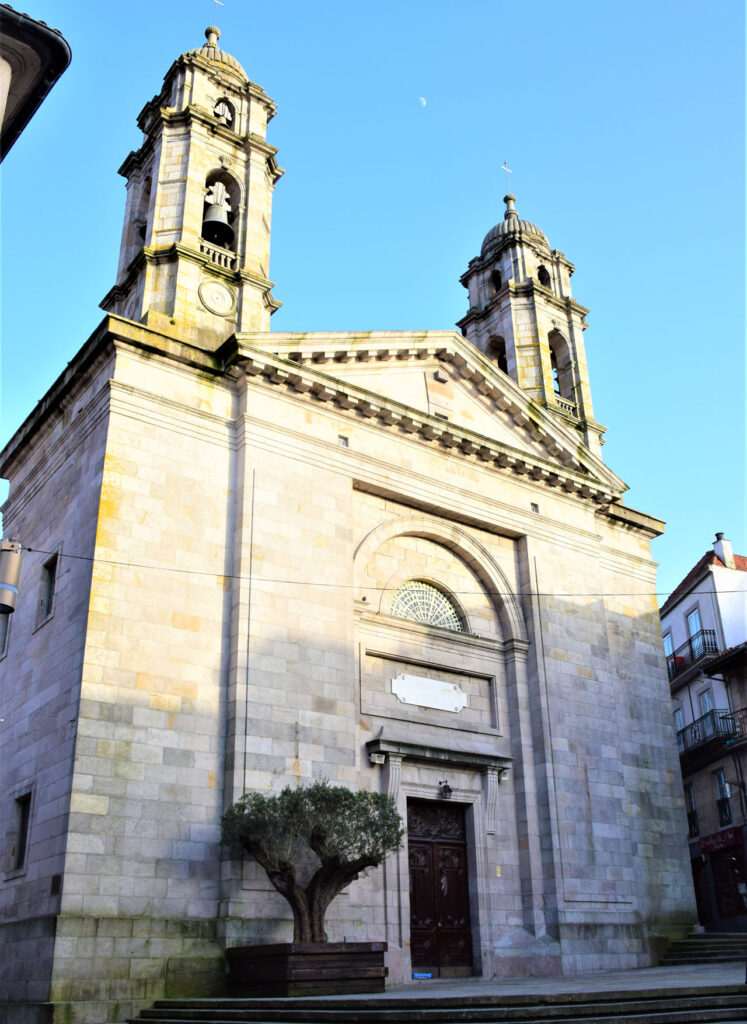
Vigo combines its maritime past and present with the hustle and bustle of an industrial and working city. In this small historical citadel, within the great city, is where the co-cathedral of Vigo stands out: the Church of Santa María. It has an olive tree on one side. The first building was erected by the Knights Templar as they passed through the city and is located in a small square, a meeting centre for Vigo inhabitants and foreigners who can enjoy the gastronomical possibilities provided by the hotel industry in the area. Still undergoing a process of refurbishment, it has managed to attract local life through its "corredoiras" (narrow roads, through which only one car can pass through) that descend towards the sea. Streets such as La Palma or Calle Real, which connects O Berbés with the Collegiate Church -the popular name of the Co-cathedral-, conform with the Praza da Constitución and the Mercado da Pedra -where you can taste its famous oysters-, the mythical places of this network of the old quarter.
One of the major treasures of this estuary, sought after by pirates such as the English buccaneer Francis Drake, are the Cies Islands. Home to incomparable flora and fauna, with some of the most famous beaches of the world – Rodas beach – they form part of the Atlantic Islands National Park (Parque Nacional Illas Atlánticas). These have an Interpretive Centre, where its geography can be studied, through audiovisual means and daytime/nighttime settings. The exhibition allows for the perusal of the archipelago, by means of mockups, sculptures and sounds, in an enveloping ambience, full of sensory stimulation.
To learn more
Vigo, also known as the olívica (olive tree) city, is configured as an industrial and service providing city, forming part of the province of Pontevedra. It is the most populated city in Galicia and its activity evolves around trade, tourism and, of course, the fishing sector, being the estuary which bathes its coast, its source of income.
The centre of Vigo is sufficiently large enough so as to organize different itineraries, distributed over a series of days, be they individual or forming part of a guided tour. Its Historic Quarters hosts a particularly old area, which inherits the marine character of its dwellings, that still emerge within its streets, under rehabilitation. Some of these still preserve porticos with latches where they would hook the boats that came from O Berbés. Some examples of these can be seen in the famous Constitution Square (Plaza de la Constitución), a leisure zone and heart of the city, in which vicinity we can find some of the best restaurants and enclaves of Galicia’s hotel industry. In the Praza da Pescadería, also known as the “Oyster Street”, one can savour this delicacy, as well as fish and shellfish from Spain, or just go for wine and tapas at the Mercado da Pedra.
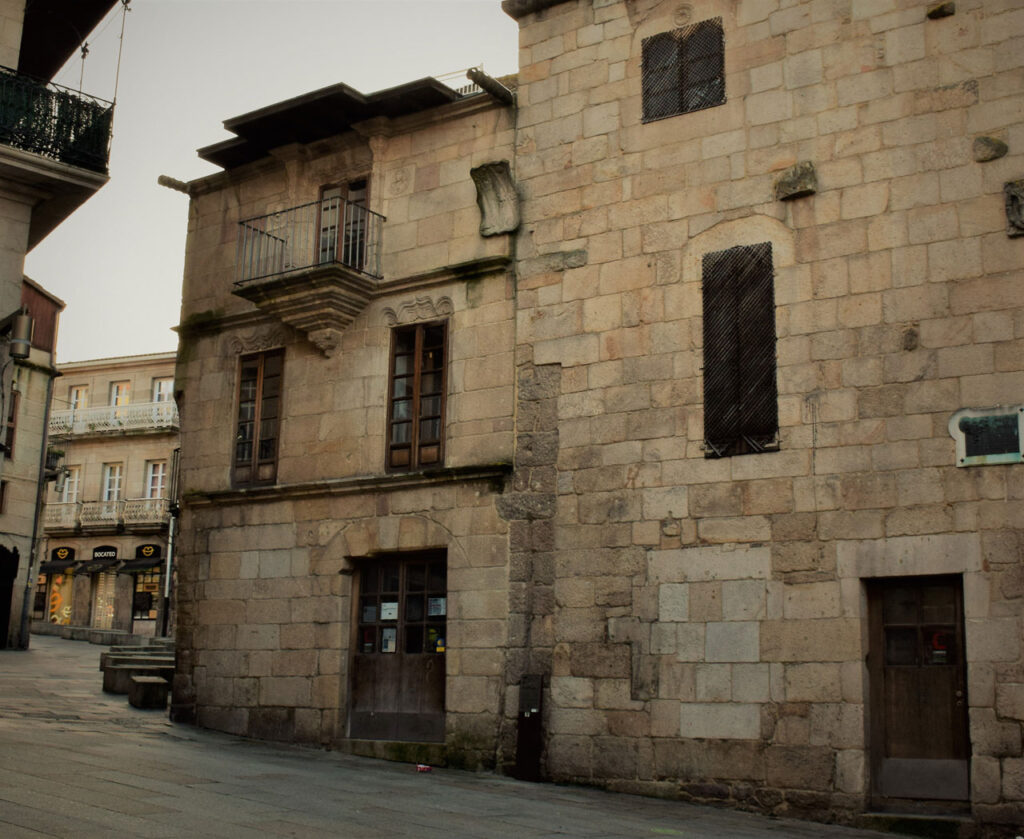
Close by is the Collegiate, name commonly given by the people of Vigo to its Co-cathedral: the church of Santa Maria, a fortress that unites both Neoclassical and Baroque styles. Its first construction was erected by the Knights Templar. They were the founders of the first temple, located where the church now stands, on the way to Vigo. It is the starting point for the procession of the Cristo de la Victoria (patron saint of the city), with numerous devotees, who walk some of the streets of the historic nucleus and city centre, the first Sunday of August. The victory over the Napoleonic troops that invaded Vigo in 1809, is attributed to this Christ, which gives reason for celebration that takes place every March 28th, day in which the citizens of Vigo commemorate the reconquest of their city, whereby the historic centre is converted into an immense, open air medieval market of the 19th century, recreating the battle and dressing up as the then local heroes.
This ancient quarter resides within a rampart constructed in the year 1656, just after the attack of the buccaneer John Culpeper, at the peak of the war with Portugal. Demolished practically in its entirety, it formed part of the defensive system of the city, with two grand epicentres, the San Sebastian castle and the O Castro fortress, following a route that lead to the Cape of A Laxe and O Berbés, embracing numerous winding narrow streets, downhill bound toward the sea.
Another attraction of this incredible city is the Cies Islands. These islands form part of the National Heritage of the Atlantic Islands, given their protected autochthonous flora and fauna. Not in vain, they were the target of numerous invasions by deranged pirates who came across them as the first defense bastion of the city, as the well-known case of the English buccaneer Francis Drake. Additionally, we can perform our own invasion with a tour guide, this time, in a regular boat, departing from the port of Vigo. A preview of this archipelago of three islands can be found in the old quarter, specifically in the Cambón building on Oliva street. It is the Interpretive Centre of the Atlantic Islands National Park, with audiovisual, aesthetic and descriptive means, with a handful of sand from the famous Rodas beach, considered one of the best beaches in the world.
To know it better
Vigo, in the province of Pontevedra, is the most populated city of Galicia. As with all cities holding a history, it has an old quarter where we can find some very important buildings.
One of these buildings is the Church of Santa Maria, also known as the Collegiate “La Colegiata”, where the Christ of Victoria is worshipped. Its origin dates back to the Middle ages, but in the 19th century, the chapel was demolished and a new one was built, which is the one that stands today.
Moreover, Vigo had a rampart which surrounded the El Castro and San Sebastian castles, the Puerta del Sol, the Carral street and A Laxe, bordering the sea up to Real Street in Berbés. This rampart was needed in the defense of maritime attacks, and was constructed in 1656, although practically completely demolished at the end of the 19th century.
The Interpretive Centre of the Atlantic Isles National Park (Parque Nacional Illas Atlánticas) can be visited in the historic quarter of Vigo. There, one can become acquainted with the geography of the Cies, Ons, Salvora and Cortegada Islands, through audiovisual means and daytime/nighttime settings.
The Sea Museum of Galicia (Museo do Mar de Galicia) is situated on the coast, and has one of the most complete permanent exhibitions, inasmuch as the sea and fish world in Vigo is concerned. Furthermore, we can also visit the aquarium in this centre of culture. This shows the principle ecosystems of the Museum’s wharf and the coast of the Cies Islands.
Galería
Location
- Locality
- Si
- Municipality
- Vigo
- Province
- Pontevedra
- Country
- Spain
The asset
- Type
- Old town
- Eco-destination
- Ría de Vigo
- Environment
- Urbain
- Relevance
- International
How to get there
- Access
- By sea By land
- Distance
- 0,100 Km
The visit
- Visitable
- Yes
- Accessible
- No
- Parking
- No
Coordinates
- Latitud
- 42.23929400
- Longitud
- -8.72609900