


Jacobian Route (Ruta Xacobea) of the sea of Arousa. Adrovello
About this heritage
The Jacobian Route of the sea of Arousa and Ulla River pays tribute to the arrival on our coasts of the remains of Saint James the Apostle. This fluvial route crosses twenty-two counties from the provinces of Pontevedra and A Coruña, and all are members of the patronage "Jacobean Route of the Sea of Arousa and Ulla Foundation" (Fundación Ruta Xacobea do mar de Arousa e Ulla).
These twenty-two counties that form the Jacobian Route are as follows: to the south of the estuary are Sanxenxo, Meaño, O Grove, Cambados, Meis, Ribadumia, Vilagarcía of Arousa, Arousa Island, Vilanova of Arousa, Catoira, Valga, and Pontecesures; to the north of the estuary are Ribeira, A Pobra do Caramiñal, Boiro, Rianxo, and Dodro; finally, the route's last section covered on foot from Padrón to Santiago of Compostela and passing through Rois, Brión, and Ames.
Along the way, you will enjoy the breathtaking coastal scenery, astonishing beaches, and rich ethnographic history. Vineyards of international fame as the precious Albariño accompany a route full of surprising places, such as Ons Islands, Sálvora, Toxa, and Arousa Island.
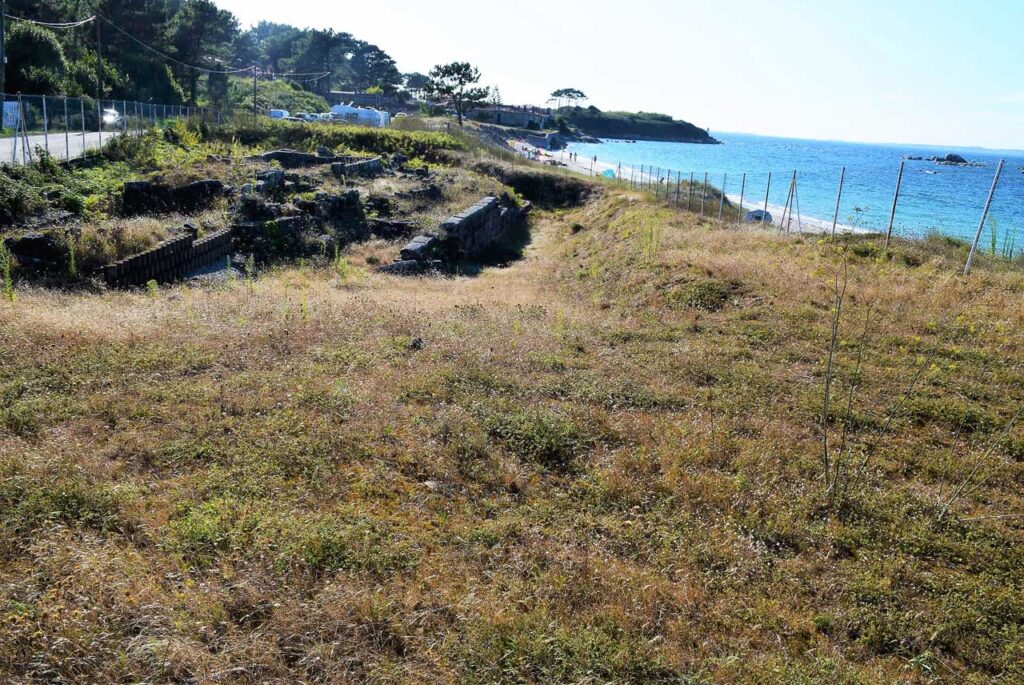
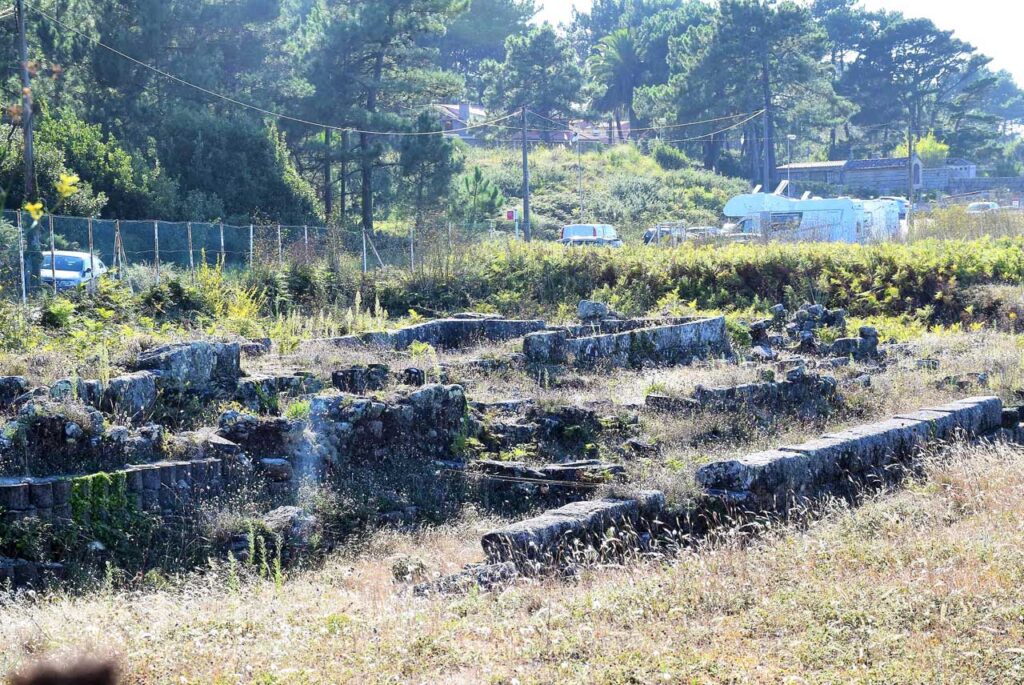
From this route and once at the summit of O Carreiro in Saint Vicent of O Grove, you can observe the remarkable archaeological site at the edge of O Carreiro beach called Adro Vello deposit. This site constitutes in superimposed layers a Roman Villa, a Necropolis of Inhumation (S. V - XVIII), the floor plan of a Visigothic Church (2nd century), and elements of a Fortification from the Late Middle Ages (later than12th century), this latter one probably made as protection from aggressors coming by sea.
To learn more
Every summer, since the first ascent began in 1965, the sailors of the area decorate several vessels to participate in the maritime-river procession to Puentecesures and Padrón. It is the maritime-fluvial Route of the Sea of Arousa and Ulla River, which commemorates every year, the arrival in Galicia of Saint James the Apostle (James the Great).
According to Christian traditions and multiple medieval texts, Ribeira and O Grove ports mark the entrance to the Arosa estuary, through whose waters Saint James the Apostle (James the Great) arrived from the port of Jaffa (Palestine). Saint James' remains sailed the Arousa estuary and up the Ulla River to Padrón, the fluvial port of the Roman city of Iria Flavia. This route is marked with seventeen works of art in stone, constituting the only maritime Way of the Cross (Via Crucis) in the world.
Hundreds of thousands of words would be necessary to describe all touristic, gastronomic, and cultural offer of the towns previously mentioned that form the Jacobean Route of the Sea of Arousa. Namely religious monuments, Lordly Houses (Pazos), stone crosses (cruceiros), granaries (hórreos), mills, vineyards, countless beaches, hiking routes; specifically, as an example, the Adro Vello archeological site, hidden for thousands of years and currently, appreciated with gratitude by curious tourists and other visitors.
To know it better
O Grove, in the province of Pontevedra, is a county characterized by fishing, mussel farming, and shellfish. Besides, in Galicia for more than 1200 years, pilgrim after pilgrim has made the Way of Saint James (el Camino de Santiago), as the pilgrimage was recognized by the European Parliament and O Grove, in the province of Pontevedra, is a county characterized by fishing, mussel farming, and shellfish. Besides, in Galicia for more than 1200 years, pilgrim after pilgrim has made the Way of Saint James (el Camino de Santiago), as the pilgrimage was recognized by the European Parliament and UNESCO.
The maritime-fluvial Jacobean Route runs along the sea of Arousa and Ulla River, also known as the Route of the Translatio or Jacobian Traslatio (Traslatio Xacobea). It commemorates the arrival by sea to Galicia of the remains of the Saint James the Apostle (Saint James the Great) after his martyrdom in Jerusalem. According to a legend, this route by boat reaches nearly the actual Padrón region by an angel and guided by a star.
In 1963, the Foundation of the Jacobean Route proposed the Translatio along the sea of Arousa and Ulla River, and by 1999, the Regional Government of Galicia (Xunta de Galicia) declared it of Cultural and Galician Interest. This route also issues the nautical charts necessary to obtain the institutional document "Jacobian Traslatio
Gallery
Location
- Town
- San Vicente do Grove
- Municipality
- O Grove
- Province
- Pontevedra
- Country
- Spain
The asset
- Type
- Xacobean Route
- Eco-destination
- Ría de Arousa
- Environment
- Natural
- Relevance
- Internacional
How to get there
- Access
- By sea By land
- Distance
- 3,700km
The visit
- Visitable
- Yes
- Accessible
- Sí
- Parking
- Sí
Coordinates
- Latitud
- 42.47767200
- Longitud
- -8.93124200