
Moaña and Domaio. Mill´s route. Moaña´s petroglyphs

About this heritage
Moaña is a town in Pontevedra´s province, which, together with Marín, Cangas and Bueu, form the Morrazo Peninsula. This region is known for its coastline and its particular natural beauty that combines the coastal landscape with the typical mountain landscapes.
Moaña has an important cultural heritage, as we can see in the Carreiras museum, Pazo do Rosal (Rosal Manor house), and the Pazo de El Real (El Real Manor house), San Martiño church, the routes to the beaches of Vedeira, Meira, Domaio, O Con or A Borna, among others.
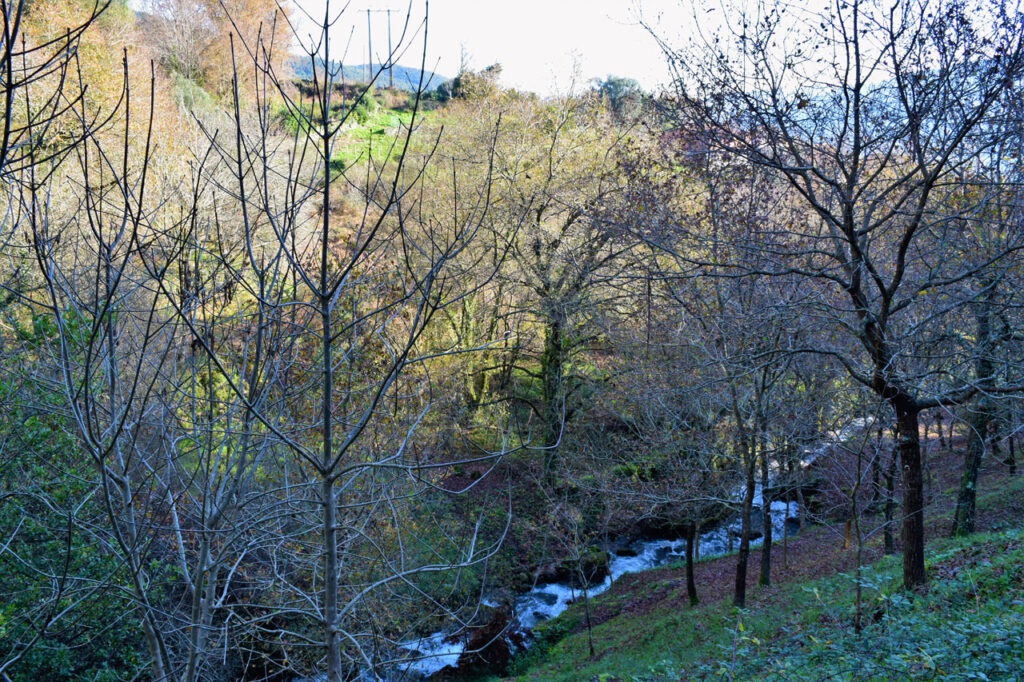
And it is at Domaio that we will stop on this occasion. Among the leisure options offered, we will travel the Route of the La Fraga´s mills in Moaña. This route runs along the river until its mouth in Vigo´s estuary. In the itinerary the visitor will find up to 30 hydraulic mills, located in an environment of great natural beauty. The itinerary is surrounded by abundant vegetation and the river gives us both spectacular waterfalls and peaceful pools. It is signposted, and it has some wooden bridge and fenced walks also in wood. Many of the mills have been restored and more than one is still in use.
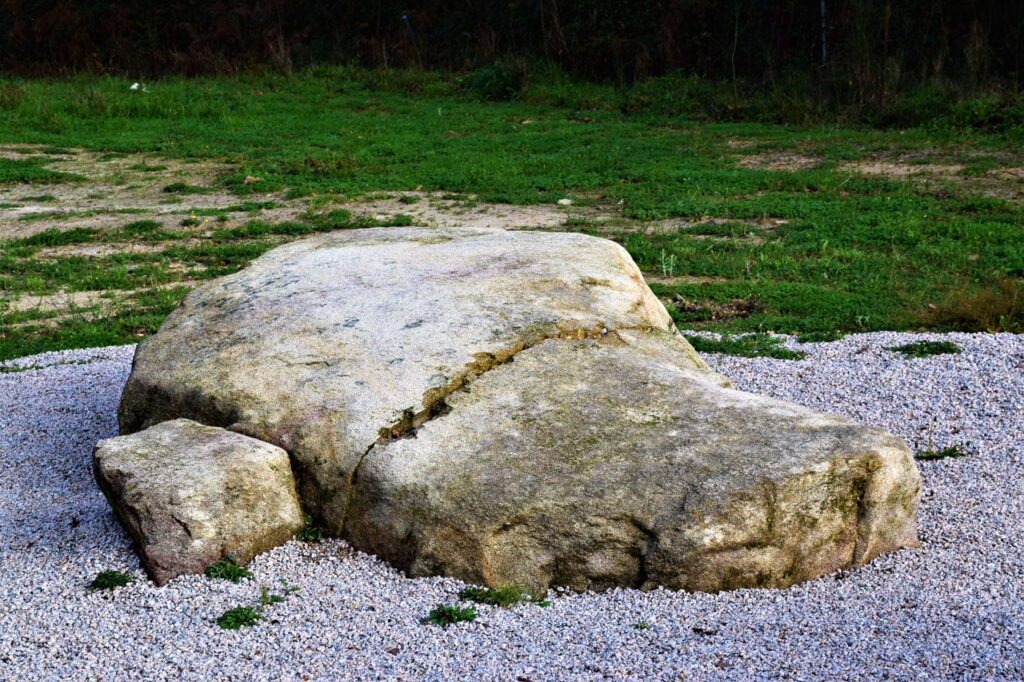
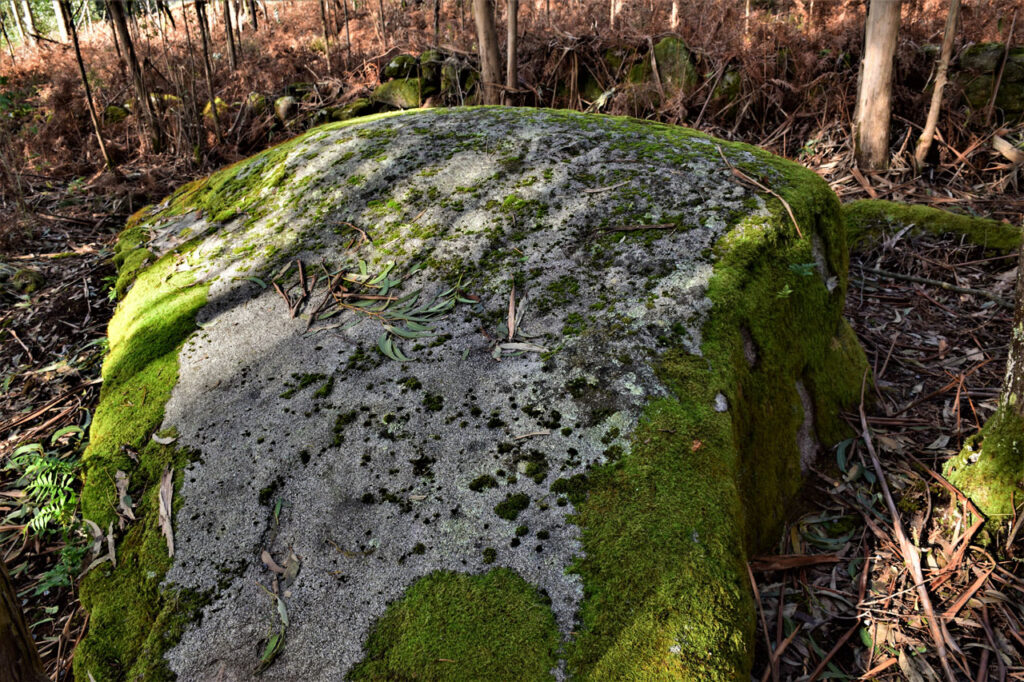
Moaña also has petroglyphs in Montealegre, a Borna, As Cidades, Pozo Garrido, A Escada and Os Remedios. Petroglyphs are symbolic representations engraved on rocks in the Neolithic period, these engravings are considered to be previous to writing. Archaeology enthusiasts can visit, in addition to the petroglyphs, the Mámoa de Chan da Arquiña or the remains of the castro´s culture as with the Castro de Montealegre (traditional military fortress).
To learn more
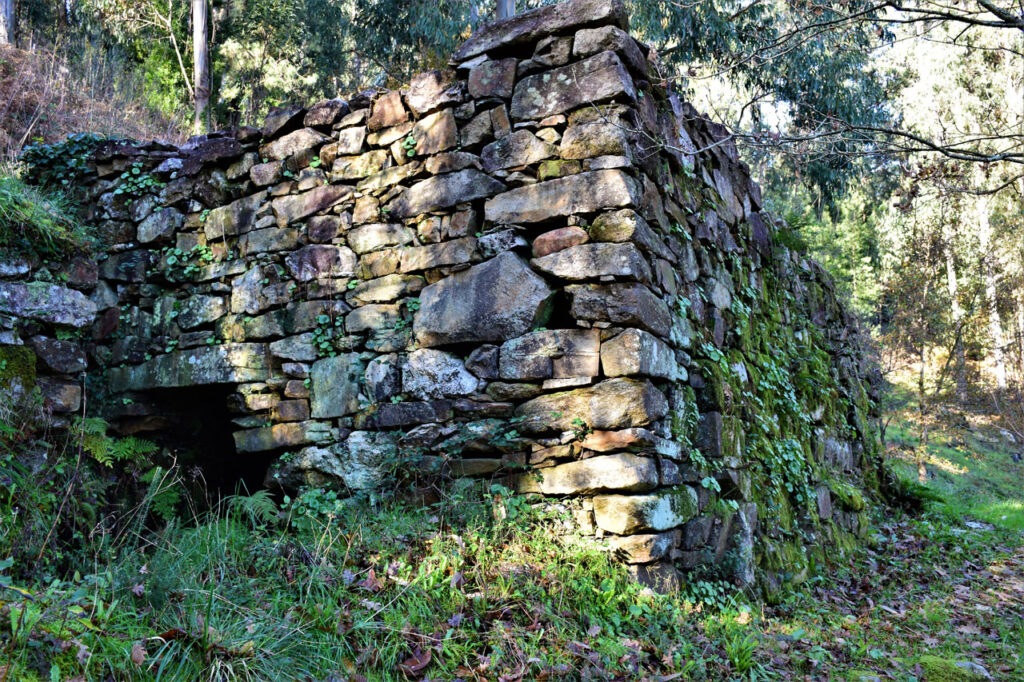
In the past, water mills were used to grind the different cereals that were grown in the area, generally wheat, rye and corn, which used the force of the water to move the mechanism that crushed the cereal. It is a typical construction of Galicia that besides serving to turn the cereals into flour, also contributed to develop our folklore.
Mills´ route goes into an Atlantic deciduous forest, in which the oak has a special and predominant presence. We also find alders, willows, chestnuts trees, laurels and also non-native species such as eucalyptus.
Moaña´s town centre offers visitors all the services and leisure options they may need. Moaña is a sun, beach and nature, destination but also gastronomic and cultural. The starting point to get to know the whole Morrazo region or to enjoy a great holiday without leaving the town.
The parish of Domaio begins at Rande´s foot. It has a port protected from the south winds that allows it to give shelter to its 198 moorings and its 9 jetties.
Domaio is located on the north side of the Vigo estuary and occupies Faro de Domaio mountain´s slope, the town has all the services and beaches as the famous Playa de Domaio and Domaio Golf Club among other attractions.
To know it better
Domaio, a Moaña´s parish, has a curious story about the Rande Bridge, since it is at its feet. This is where the famous Battle of Rande was fought.
The mills´ route in Moaña shows us the beautiful landscape of the Fraga river and the parishes of Moaña and Meira. On the way, we can find up to 30 water mills, waterfalls, bridges, washing places or fountains. These water mills were the machines of the time, as they revolutionized all the methods known up to that time. Thanks to them, human beings could already be helped by other methods of crushing and grinding food.
In Moaña we can find various petroglyphs; that is, engravings and drawings on the rocks that help us to know more about our past. Examples include the petroglyphs of Castro Montealegre - where you can see engravings of bowls and circular forms, the petroglyphs of Borna - from the Bronze Age - or the petroglyph of Escada, made up of circles.
Galería
Location
- Locality
- Domaio
- Municipality
- Moaña
- Province
- Pontevedra
- Country
- Spain
The asset
- Type
- Petroglyphs
- Eco-destination
- Ría de Vigo
- Environment
- Rural
- Relevance
- National
How to get there
- Access
- By land
- Distance
- Distancia: 4,3 km / 7 minutos en coche
The visit
- Accessible
- No
- Parking
- No
Coordinates
- Latitud
- 42.29839100
- Longitud
- -8.68272000