


O Cuadrante Palace. Valle Inclán’s Birth Home Museum
About this heritage
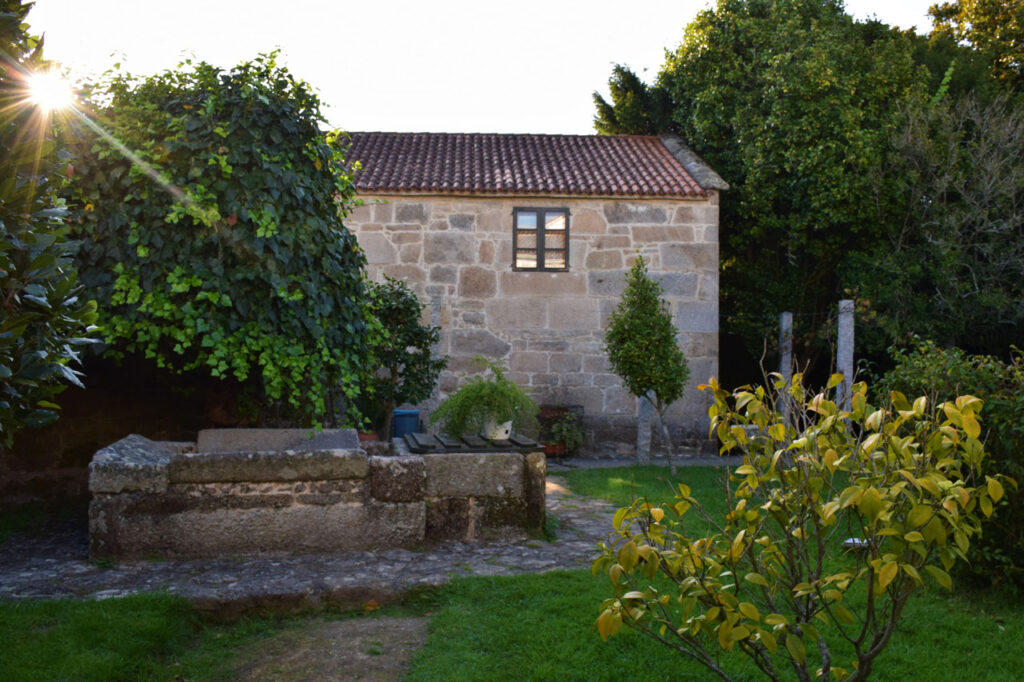
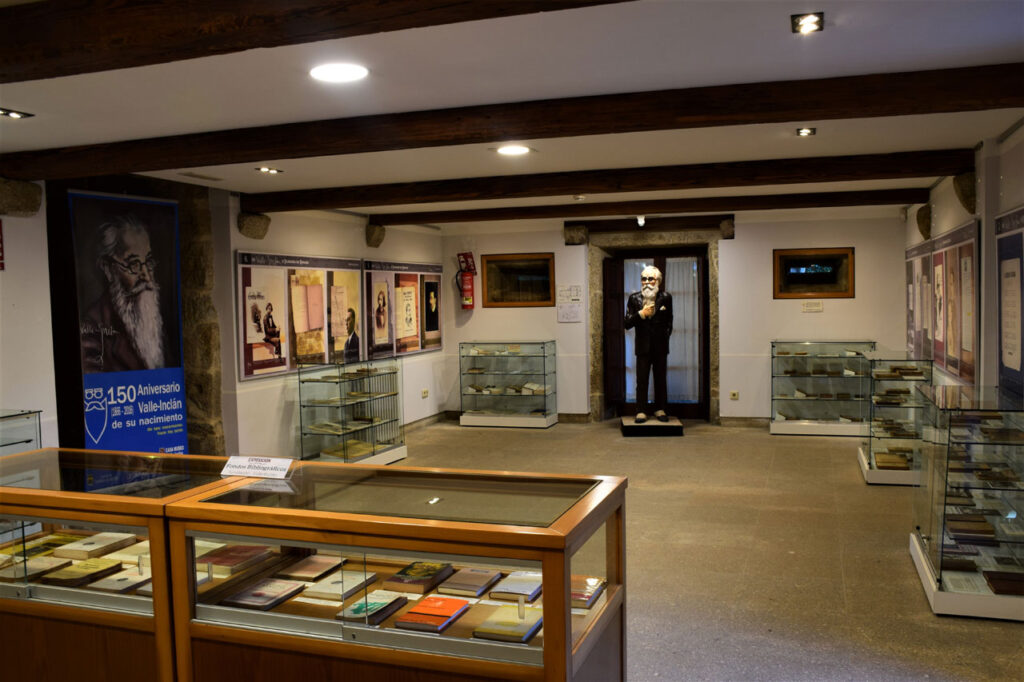
Nowadays, the Lordly House (Pazo) "O Cuadrante," where the writer Ramón María del Valle Inclán was born, is a museum. It is a building of Pacega typology or big urban house of the 19th century consisting of two floors. The ground floor, where they kept the stables of the animals, and currently holds the permanent exhibition covering the author's body of work, and the first floor, where they had their housing, and today recreates the style of a typical 19th century home.
Formerly, it was part of the properties belonging to the Benedictine priory of Vilanova de Arousa. It passed to the Peña family and became the estate of the maternal grandparents of Valle-Inclán, and later, inherited by some uncles, who left it as a legacy to their children. The house remained in use until the 1990s and abandoned after its last resident's death.
After suffering a fire in 1994, the Vilanova de Arousa Town Hall acquired to convert it into the current house-museum.
The collections held in the Ramón de Valle-Inclán House-Museum are mainly of a bibliographic and documentary nature. They used other ones of multidisciplinary nature to provide the setting of this house-museum. There are first editions and unique copies of his works, as well as other books linked to his life. It also has documentary compilation and original manuscripts, such as population or administrative censuses, which showed the relationship between Valle-Inclán and his family with the county. They completed this exhibition with a collection of furniture and household items from a mid-19th century educated mid-class Galician family.
To learn more
During the course of his life, Valle-Inclán was in Madrid, went to the other side of the Atlantic several times, and traveled around Europe. In Galicia, he settled down in several places; he even described some of them in his novels. A route goes through the most remarkable places the writer visited.
The route begins in Vilanova de Arousa, wherein 1866, Ramón José Simón Valle Peña was born into a wealthy family of noble origin. It is not clear if his birth was in the so-called "Casa do Cantillo" or in the present House-Museum "Casa do Cuadrante." The author himself did not help, since he always referred to a boat in the middle of the estuary, between Vilanova and A Pobra do Caramiñal. In Vilanova, they set an enormous sculpture in his memory next to the sea.
The route continues in Vilagarcía de Arousa, where one can find the Lordly House (Pazo) of Rúa Nova (New Street) linked to the author's family, which he referred to in his works, such as Autumn Sonata. In Cambados, the writer lived for a few years in Royal Street, which turned out to be a hard experience for Valle-Inclán since his second son passed away a few months after his birth in 1914. Both his little boy and his wife rest in the cemetery of the Romanesque church of Santa Mariña de Dozo, which is near the town center.
Pobra de Caramiñal town, there are many sites dedicated to the author, and along with Vilanova town is where Valle spent most of his life. One place is Torre Bermúdez, converted into a museum and opened to a square with a statue characterized by his round glasses and his long beard. Another one is the Tato Pharmacy, which witnessed gatherings in which Valle participated with passion. Finally, the Villa Eugenia house, where he wrote the fundamental "novel of the dictator" Tirano Banderas.
Leaving the village towards Boiro, next to the old road, is the Lordly House (Pazo) of the Mercé, where Valle-Inclán lived for a few years. The building is now in ruins. Valle studied high school in Pontevedra, the city he returned to live on many occasions, and one which holds a statue to remember him in the Méndez Núñez square.
In the late 19th century, the capital of Galicia, Santiago de Compostela, was where, without much enthusiasm, the playwright started his law studies, a career he left after his father passing. It was also the last city that saw him alive, ill, and in bankruptcy. In 1935, he returned to this city to enter a clinic, where he died the following year. He is buried in the Boisaca cemetery, and his figure is remembered with two statues placed near the old town. One of them rests on one of the benches of the Paseo da Ferradura, looking at the Cathedral, and the other is a bust in the Galicia Square, opposite the Derby café that he had frequented during the last months of his life to keep with his social gatherings.
To know it better
Vilanova de Arousa town is in the Pontevedra province within the O Salnés Region, a place with antiquity, and therefore, with history.
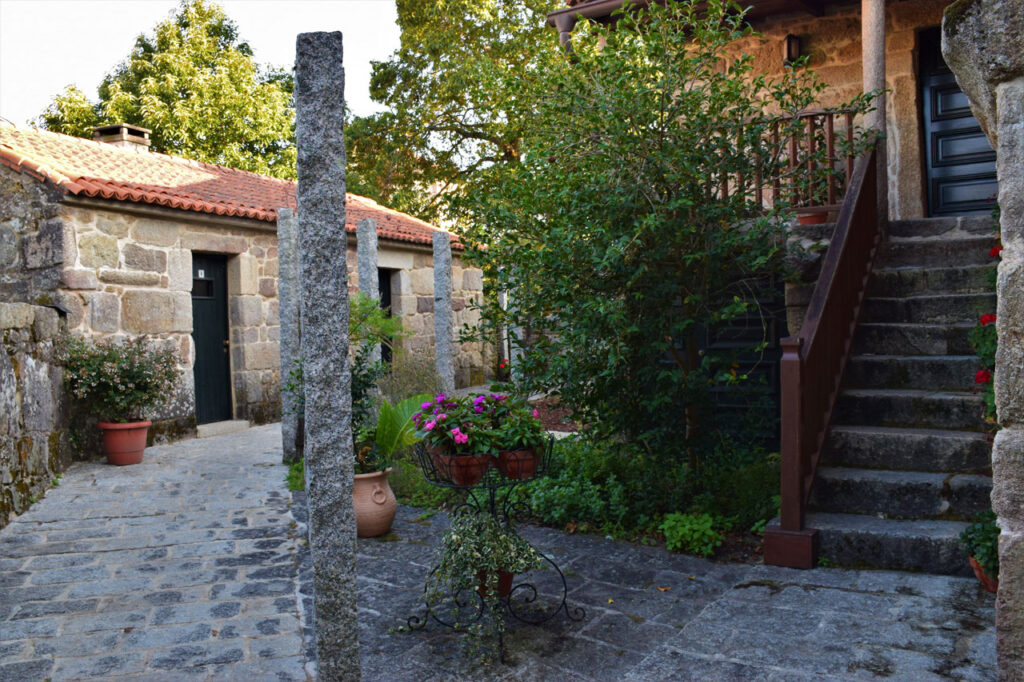
In this town, we can find the 19th-century house or, specifically, the Galician Lordly House (Pazo), where one of the most significant writers for the world literature, Ramón María del Valle Inclán Peña (1866-1936), was born. The building has two floors: in the first one, one finds the permanent exhibition, which covers his life, work, and original documents, as well as the house of typical 19th-century style and accompanied by a lovely garden.
Vilanova de Arousa Town Hall acquired this manor house and transformed it into a House-Museum. Since the property has witnessed the birth and growth of the 1866 writer, it was declared a National Historic Monument.
Gallery
Location
- Town
- Vilanova de Arousa
- Municipality
- Vilanova de Arousa
- Province
- Pontevedra
- Country
- Spain
The asset
- Type
- Museum
- Eco-destination
- Ría de Arousa
- Environment
- Urban
- Relevance
- International
How to get there
- Access
- By land
- Distance
- 350 m. / 5 min. caminando
The visit
- Visitable
- Guided tours in English and FrenchDiscounts for children: YesGroup discounts: YesSenior Discounts: Yes
- Interpretation
- English and french
- Accessible
- No
- Parking
- No
Coordinates
- Latitud
- 42.56280500
- Longitud
- -8.82753400