
O Rosal. Tamuxe River. Mill Nature Classroom
About this heritage
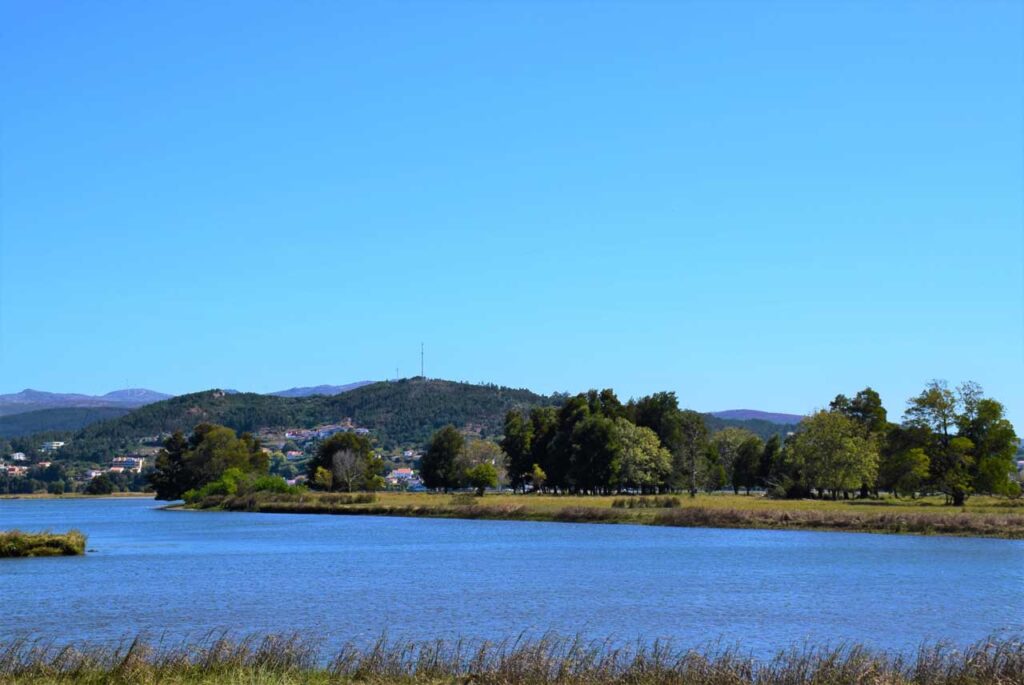
Whether you are a nature lover or just looking for a day to enjoy a natural habitat, the recreational area of the Tamuxe River offers the opportunity to tour around a unique environment. You can explore, among others, the ruins of a large steam sawmill and the "Muiño das Aceñas," an old water mill with a late 19th-century house reinterpreted as a Nature classroom.
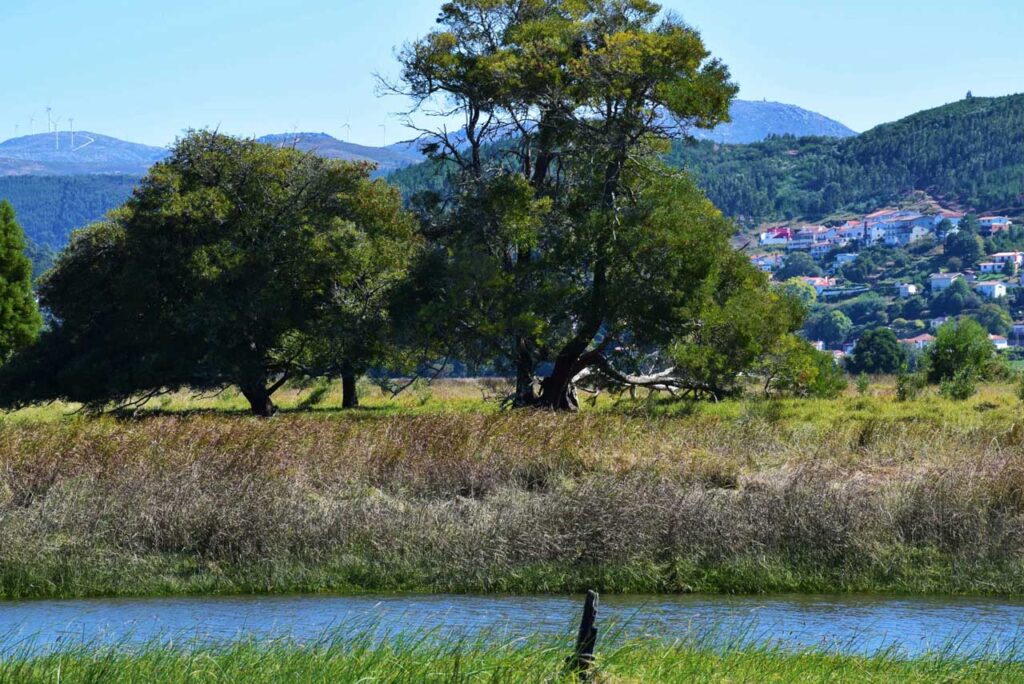
A visit to this enclave - located on the Pilgrim's Way to Saint James of the Portuguese route - will allow you to enjoy broad sandy beaches and extraordinary panoramic views of the Miño River estuary while walking through an ecosystem made up of riverside woods, pine groves, and the typical vegetation of wooden rods and reeds.
This region is within the protected areas of Natura 2000 Network and habitat with such diversity of birds that is ideal for bird-watching excursions.
It is possible to carry out different sporting activities or hiking trails through its environment, both as a family or as a sporting venture, and in the area of As Eiras, for the intrepid ones, renting a kayak is a fantastic alternative to touring the small islands and the Tamuxe River.
If the time of the year is right and the day is clear, don not rule out refreshing yourself with a dip in its crystal-clear waters.
To get to this recreational area, you have to take the PO-552 access between A Guarda and Tui until you reach the junction with the PO-3303 in the direction of the Eiras Beach (Praia das Eiras) in the O Rosal County.
To learn more
The Portuguese Coastal Trail within the Way of Saint James (Camino de Santiago) is 162.6 kilometers long of medium-low difficulty and is a variant of the Portuguese one. The Way along the shoreline crosses the Miño River in A Guarda, maintaining closeness to the sea until it converges with the interior in Redondela.
The Miño River is born in Meira (Lugo) and flows between A Guarda (Pontevedra) and Camiña (Portugal); it is a natural boundary with Portugal. It covers 308 kilometers. The Miño River is a permanent or temporary home for different species of birds, such as the European golden plover (Pluvialis apricaria), the tufted duck (Aythya fuligula) or the northern lapwing (Vanellus vanellus). As for the variety of fish, besides the most common ones, highlight that the sea lamprey (Petromyzon marinus) is traditionally fished in these waters and tasted in all restaurants of the area.
Natura 2000 Network is the European Union-wide network of protected natural areas created for the conservation of natural habitats and fauna and flora; hence, its objective is to safeguard the essential natural locations in Europe.
Following the habitats directive, the Special protection areas for birds (ZEPA) regulated by the Ministry for the Ecological Transition along with the EU's Wild Birds Directive; the Member States of the European Community has declared this Galician territory "a special conservation area," confirming its high significance at an environmental level, and particularly, as a refuge for wild birds.
To know it better
Tamuxe River, also known as "Carballa," runs through the valley of O Rosal, is one of the tributaries of the Miño River, and flows into Pías in San Miguel de Tabagón parish (O Rosal County). On the riverbank is a rest area of exceptional beauty with the "Muíño das Aceñas" Mill Nature Classroom. Here, there is the restored old water mill and a 19th-century house. Currently, the place serves as a visible example of the way people lived with the help of these machines. O Rosal County, known for its high-quality wines and vineyards, is part of the region of the Low Miño (O Baixo Miño) in the province of Pontevedra. It is located on the banks of the Miño River, bordering the counties of A Guarda, Oia, and Tomiño.
Gallery
Location
- Town
- O Rosal
- Municipality
- O Rosal
- Province
- Pontevedra
- Country
- Spain
The asset
- Type
- River
- Eco-destination
- Río Miño
- Environment
- Natural
- Relevance
- Regional
How to get there
- Access
- By land
- Distance
- 5,900 km
The visit
- Accessible
- No
- Parking
- No
Coordinates
- Latitud
- 41.92267100
- Longitud
- -8.82564800