


Paredes de Coura. Historical centre
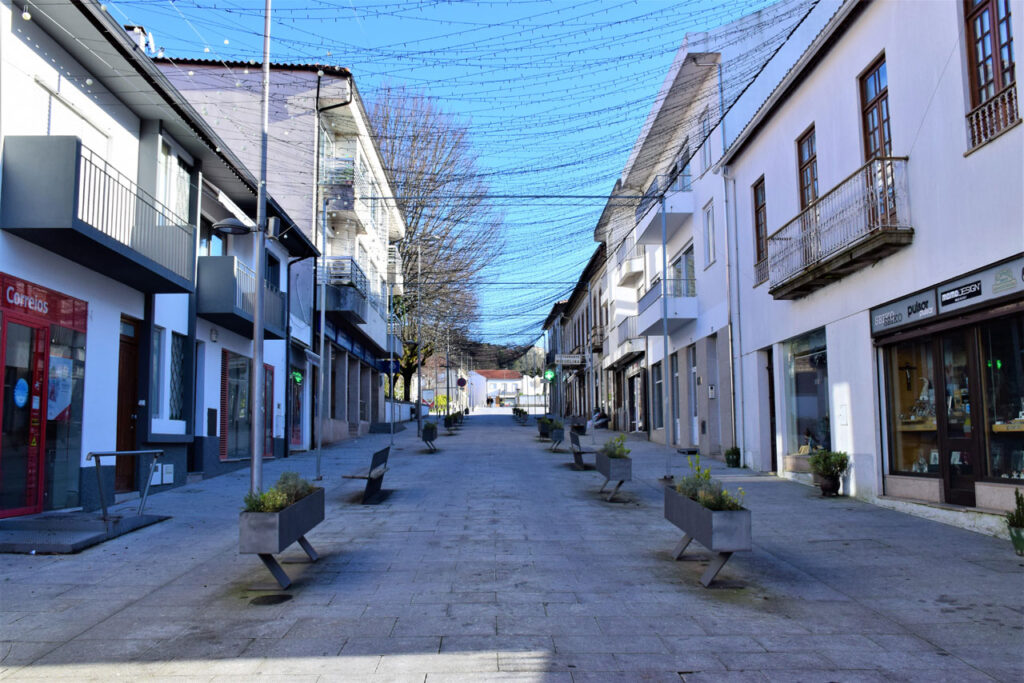
About this heritage
Paredes de Coura is a village belonging to Viana do Castelo distric, within the Northern region of Portugal. The municipality is subdivided into 21 parishes and borders the municipalities of Valença and Monção to the north, Arcos de Valdevez to the east, Ponte de Lima to the south and Vila Nova de Cerveira to the west.
Traces of the passage of man through these lands from the Palaeolithic to the Roman period are known and are collected in the Regional Museum of Paredes de Coura, thus promoting the study, preservation and dissemination of the cultural heritage of the municipality. It is installed in Casa da Veiga, an 18th century building.
It has an archaeological collection with materials from the fortified town of Cossourado, from the Iron Age. As well as megalithic materials from other “freguesías" (parishes); belonging to the municipality. You can see textile objects, clothing, furniture, agricultural implements and other ethnographic objects.
Another building to be highlighted is the Casa da Biodiversidade (Biodiversity house) which was the Junta de Freguesía (town hall), and now is a supporting space for the owners affected by the Iberian wolf. It is also intended for scientific research as it is the field base of the CIBIO (Research on Biodiversity and Genetic Resources Centre) of the University of O Porto.
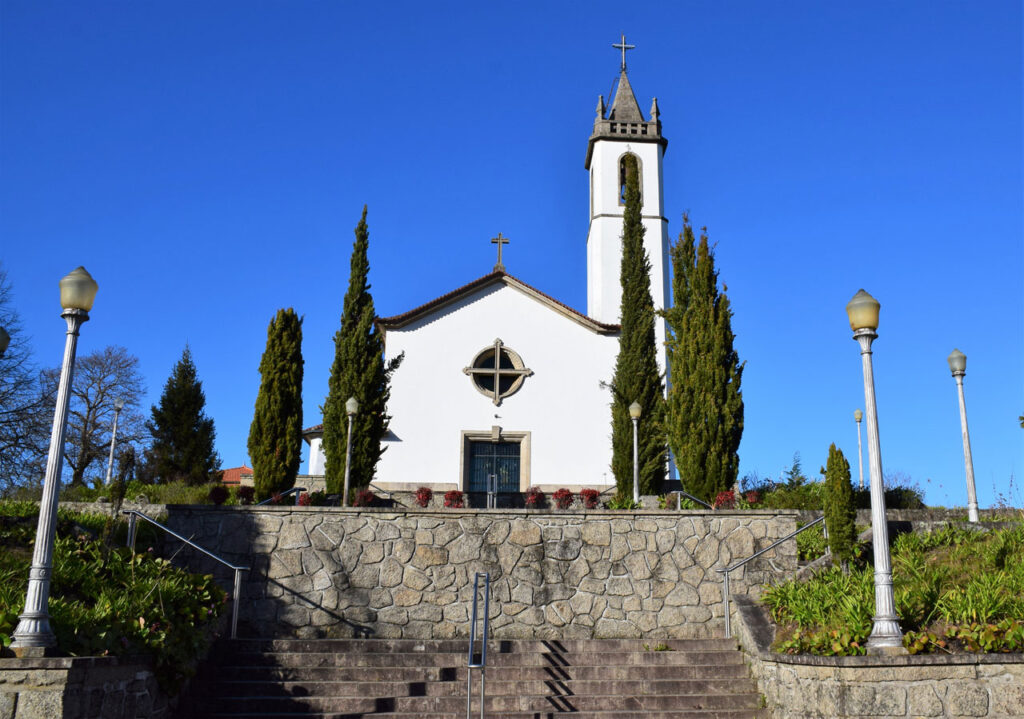
The Paredes de Coura Matriz Church is a Catholic temple located at the top of a mound surrounded by a stone wall and well-tended gardens, in the vicinity of the historic centre. To access this temple, one must climb several stone stairs, conveniently decorated with some cypress trees and several plants. Once upstairs, the white façade of the temple stands out, above the door, a large rose window and then a single tower that acts as a bell tower and clock at the same time.
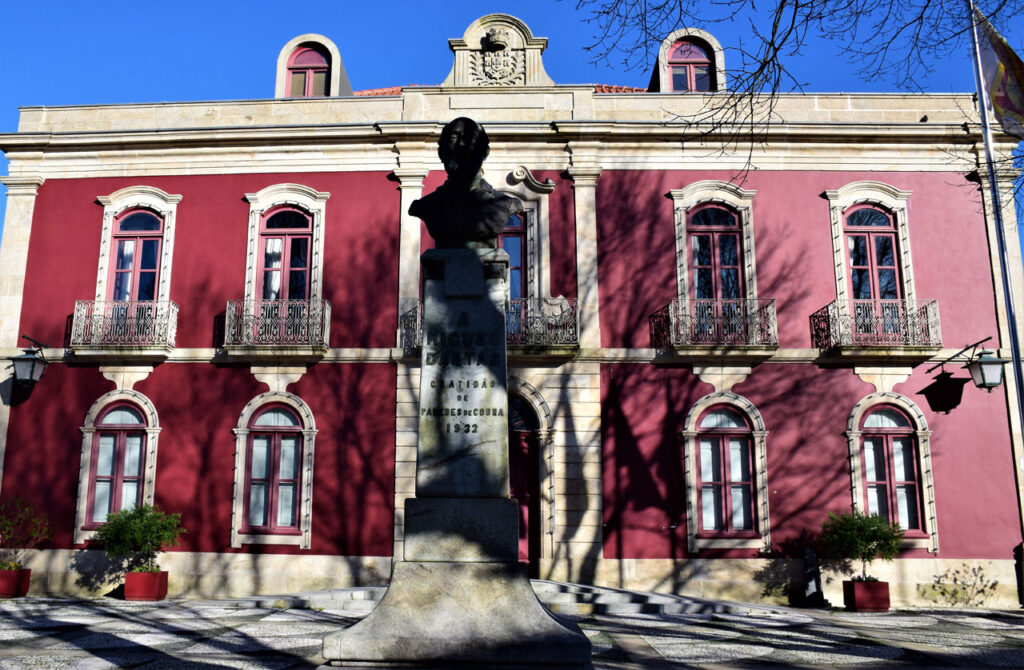
The heritage includes monuments such as the Chapels of Espírito Santo and Nossa Senhora da Conceição, the beautiful building of the Paços do Concelho, the various mini-villages, and the old houses of the region, such as the Casa Grande and the Palace of Miguel Dantas.
In addition, in Paredes de Coura, highlights its natural heritage full of natural landscapes of mountains, valleys, waterfalls and the crystal clear waters of the river Coura collected in the Protected Landscape Area of Corno de Bico.
To learn more
Paredes de Coura is a village known throughout the country because, in this municipality, every summer is held the Paredes de Coura Festival where musical groups of international level come, making it one of the most important in Portugal. It has been held for 26 years and it was considered one of the five best music festivals in Europe by Rolling Stones magazine. Its programming is careful and coherent, always faithful to the alternative spirit that characterizes it.
This festival is held on the Coura river´s banks next to the Taboão fluvial beach. Quiet and bucolic place with crystalline waters of excellent quality. It offers a playground and a cafeteria-restaurant. During the summer, with the Paredes de Coura Festival, the beach fills up with music lovers who come to the beach to cool off.
Another natural space located within the municipality of Paredes de Coura is the Environmental Education and Interpretation Centre of Corno de Bico, located in the vicinity of an Agricultural Colony, created by the Estado Nuevo (New state), within the scope of the agrarian restructuring policy, carried out by the Internal Colonization Board, which made extensive areas of uncultivated land cultivable.
Bico village stretches across the Corno de Bico mountain range to the Coura river´s banks. It is one of the most extensive parishes of the municipality and you can find the most characteristic Portuguese villages where they continue with the typical gastronomy recipes like the honey soup, “feijoada Bico´s style", small corn potatoes, “rojões", and “trutas e belouras de milho".
They work with linen and continue with the traditional arts and the Camponês de Bico Folklore Ranch, which has been keeping the village's cultural traditions alive for over 50 years.
To know it better
Paredes de Coura is a village in the north of Portugal that belongs to Viana do Castelo district. This municipality, located very close to Valença and Monção, is very famous for a music festival held in summer, as it attracts international groups to the country.
In the southwest of Paredes de Coura, in Romarigãe, there is an estate known as Casa Grande de Romarigãe, which is famous because it already has a book with its name. All this began after the farm passed through different families. In 1891, it became the property of Dr. Bernardino Machado and his granddaughter, Mr. Jerónima Dantas Machado, who married the writer Aquilino Ribeiro. The latter would be the one who wrote a novel from the same house in the 50s and 60s.
Paredes de Coura stands out because of its cultural variety and its nature. Moreover, its economy is largely used to preserve its natural environment.
Gallery
Location
- Town
- Paredes De Coura
- Municipality
- Paredes de Coura
- Province
- Distrito de Viana do Castelo
- Country
- Portugal
The asset
- Type
- Old town
- Eco-destination
- Río Lima
- Environment
- Rural
- Relevance
- International
How to get there
- Access
- By land
- Distance
- 23,6 km / 27 minutos en coche
The visit
- Visitable
- Yes
- Accessible
- No
- Parking
- No
- Website
- paredesdecoura.pt/turismo/
Coordinates
- Latitud
- 41.91008700
- Longitud
- -8.56215700