
Ponte de Lima. Historical centre

About this heritage
Ponte de Lima is a Portuguese village in Viana do Castelo district, North region and intermunicipal community of Alto Minho. It is one of the most beautiful villages in the north of Portugal and is bathed by the Lima river which forms a wide valley.
It has a 1st century BC Roman bridge. C, which was built during the time of the Roman Emperor Augustus, the bridge was part of the main Roman road from Braga to Tuy and Astorga. Later, in the Middle Ages, it was integrated as part of the Portuguese Way to Santiago de Compostela. From the primitive Roman bridge only five semi-circular arches remain at the southern side, contrary to the corresponding pointed arches rebuilt at the lower Middle Ages.
Next to the Parque da Guía (Guía´s park) and next to the new bridge where the national road passes is the Igreja da Nossa Senhora da Guía (Our Lady of a Guía), dating from the end of the 16th and beginning of the 17th century, which at that time was called São Vicente Mártir. It is followed by Avenida dos Plátanos, a beautiful walk with centenary trees, planted in 1901.
Near this church is also the Museo dos Terceiros, a building formed by the former Santo António dos Frades convent and the 18th century São Francisco dos Terceiros church. At the back of the building on Agostinho José Taveira street is the 19th century Diogo Bernardes theatre, which is still in operation.
Few remains of the walls that surrounded the old town of Ponte de Lima were built in the 14th century. It is known that the works began in 1359 by order of King D. Pedro, continuing until 1370, already in the time of D. Fernando. It was over a kilometre long and it had nine towers protecting its irregular oval-shaped perimeter. The bridge was integrated into the defensive structure and two towers were implanted in it, one at each end: the Torre Velha (Old tower) on the right bank and the Torre da Ponte (Bridge´s tower), linked to the defensive system of the walls.
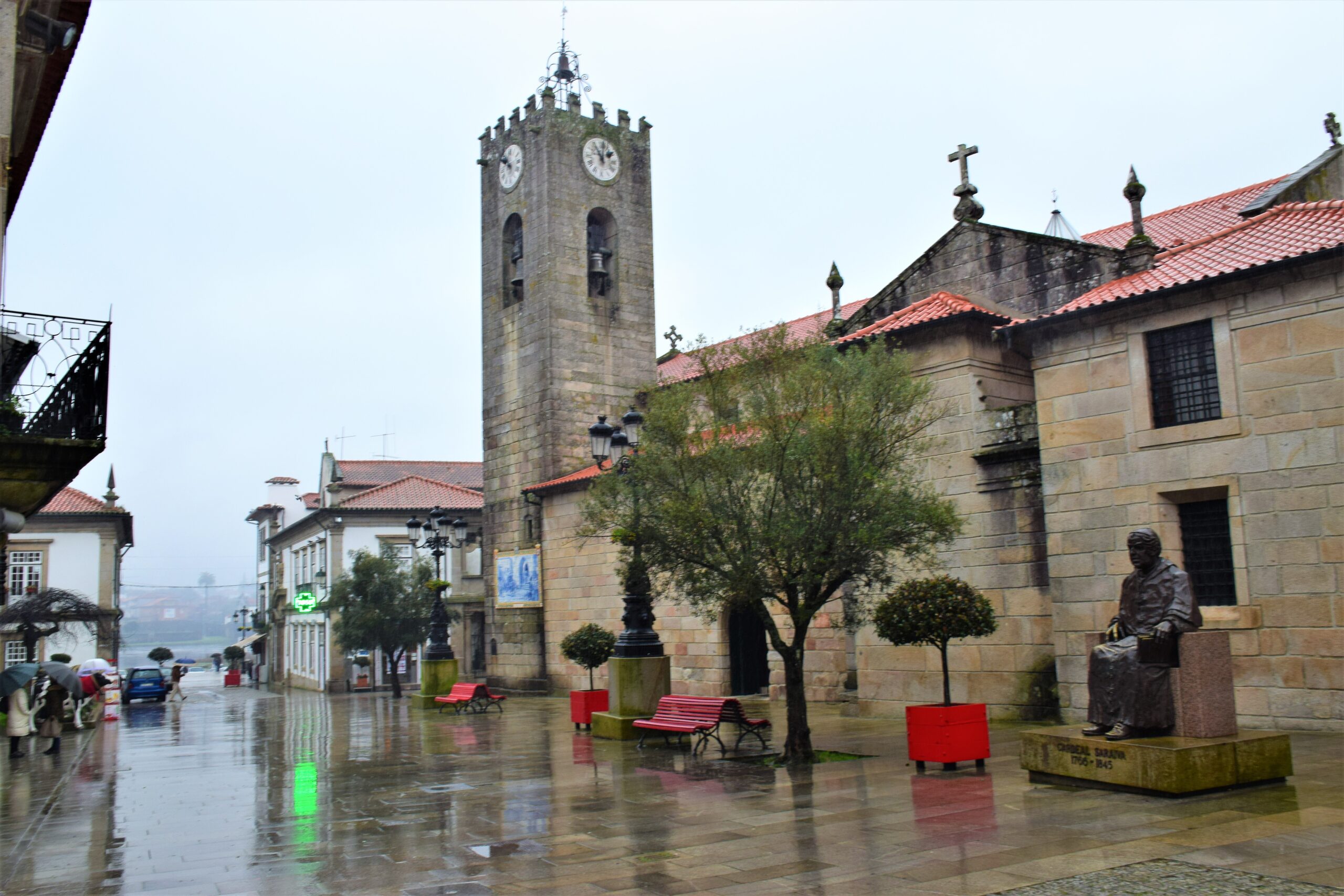
Of the nine, only the Cadeia Velha tower and the São Paulo tower remain. Both have a rectangular floor plan with gargoyles on their battlements, and the facades show hunting or religious scenes represented on tiles. Near the São Paulo tower, on the back street, is the Matriz de Ponte de Lima church built in the 15th century, and modified throughout the 18th century. Inside, the Nossa Senhora da Conceição chapel and its baroque altarpieces stand out.
Returning to the riverbank, next to the promenade is a square that houses the Chafariz Nobre do Largo de Camões, completed in 1603, is the town´s most famous fountain. Going around this square and continuing along the street towards the interior of the town, we arrive at Largo Delfim Guimarães where we find the Capela das Pereiras and from there we can see one of the best views of Ponte de Lima.
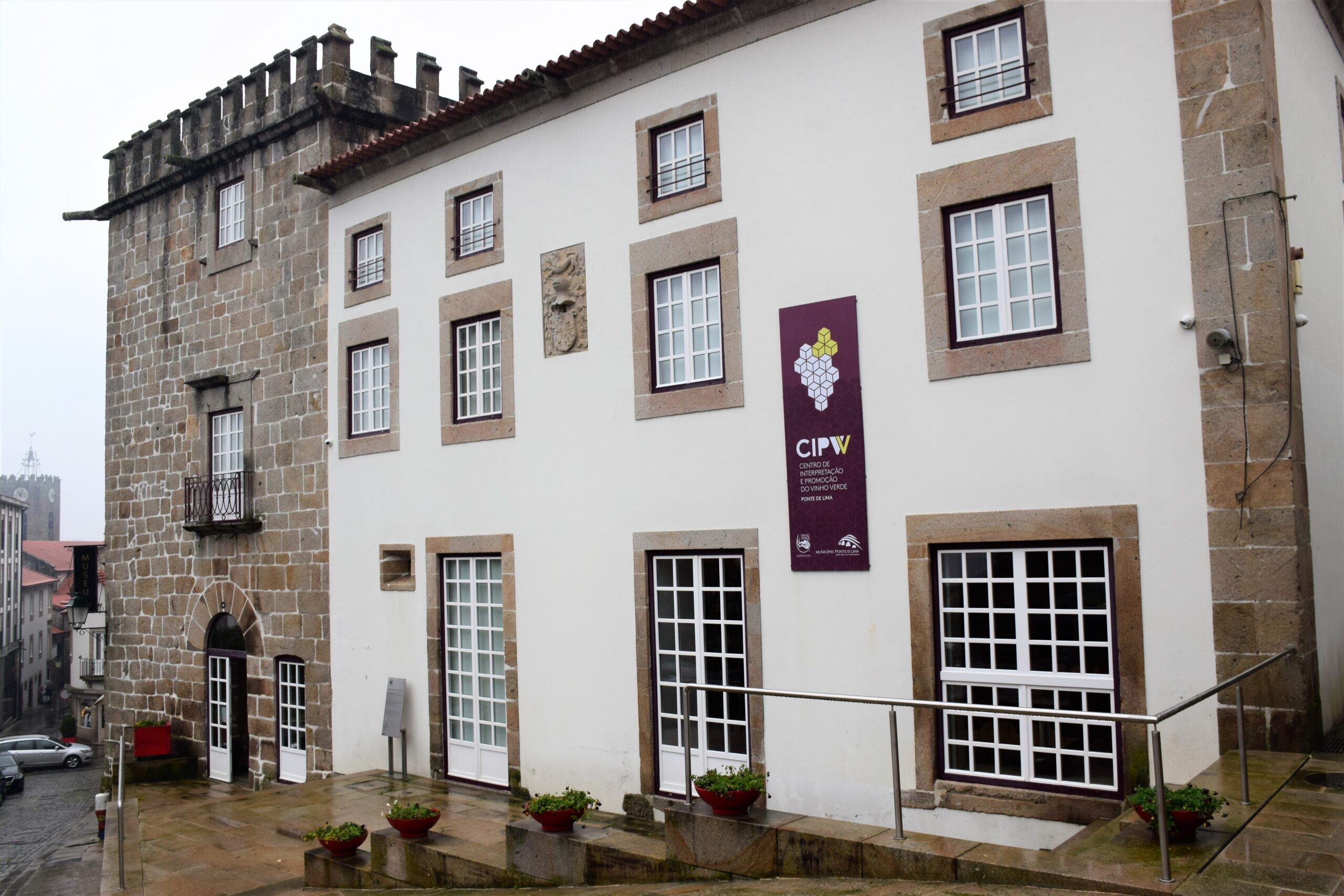
About 200 meters away is the Adelino Sampaio Garden, next to it is the town hall and the Centro de Interpretação e Promoção do Vinho Verde (Green Wine Interpretation and promotion centre).
A few metres away, on both sides of the Praça da República (Republic square), there are other points of interest, such as the Botanical Garden, the Overseas Heroes Memorial and the Ponte de Lima Military History Interpretation Centre, located in the Paço do Marquês, dating from the 15th century.
To learn more
Ponte de Lima is one of the oldest towns in Portugal and you can see it in the variety of old houses, beautiful plaques and grand religious buildings that can be found scattered throughout the city.
Queen Doña Teresa granted the Royal charter to this town in 1125 and D. Pedro I protected it with walls, of which some pieces, towers and gates with ogival arches still remain. Like the towers of Cadeia Velha and São Paulo.
The 380-metre-long, completely pedestrianised medieval bridge, through which thousands of visitors pass, stands out. On each bank of the river, there are sculptures of General Décimo Julio Bruto and the Roman soldiers who played a leading role in an event that is now history, back in 138 BC. It is said that when the soldiers refused to cross the river´s waters of what they thought it was the Leteo river, the river of oblivion, their superior ready to show them that this was a simple superstition, forded the Limia and harangued his troops from the other bank, after which they followed him. The sculptures on both sides of the river recall that fact.
In the historic centre´s heart of the town is the Green Wine Interpretation and Promotion Centre. Installed in the Casa Torreada dos Barbosa Aranhas of the XVII century. The centre aims to contribute to the promotion of green wine through research and dissemination of its heritage, as well as the development and affirmation of wine tourism in the Green Wine Region. The building has a permanent exhibition area, a meeting room and a tasting room, it also has support services for the tourist routes and itineraries associated with wine.
To know it better
Ponte de Lima is a beautiful Portuguese city located by the Lima river. It is one of the oldest towns in Portugal because not only the Romans built a bridge there in the year 1 B.C. also because according to research, archaeological sites have been found that demonstrate settlements of thousands of years ago.
The medieval bridge of this village is 380 metres long and it had to be extended at that time due to a change in the river´s course. A part with five Roman arches and the rest of the bridge are preserved, according to the 14th century.
Like any historical town, it has a medieval quarter made up of cobbled floors and narrow streets. The Alcaidaria, an old palace of the Marquises of Ponte de Lima from the 15th century and the House of Nossa Senhora da Aurora, from the 18th century, stand out. It also has the 15th century Parish Church and the 16th and 18th century Misericórdia church.
Moreover, you can visit the Green Wine Interpretation and promotion centre. which has a permanent exhibition and tasting area. This museum, aims to publicize and research on the famous “green wine"; of Portugal.
Gallery
Location
- Locality
- Ponte de Lima
- Municipality
- Ponte de Lima
- Province
- Distrito de Viana do Castelo
- Country
- Portugal
The asset
- Type
- Old town
- Eco-destination
- Río Lima
- Environment
- Urban
- Relevance
- International
How to get there
- Access
- By land
- Distance
- 2,5 km / 8 minutos en coche
The visit
- Visitable
- Yes
- Accessible
- No
- Parking
- No
Coordinates
- Latitud
- 41.76773300
- Longitud
- -8.58311500