


Pontevedra´s estuary. General
About this heritage
An estuary is a geomorphological roughness produced by the sea´s penetration into the mouth of a river. Thus, an estuary could be defined as the form taken by the mouth of a river in cases where a coastal valley appears submerged in the sea as a result of a rise in its level.
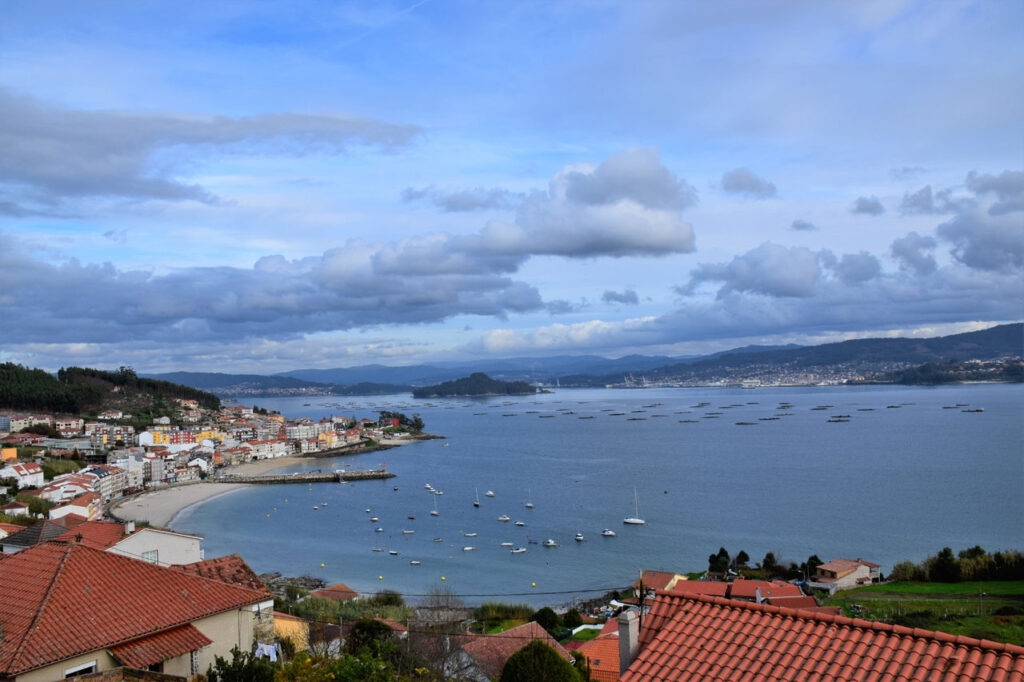
Pontevedra´s estuary is one of the main entrances to the Rías Baixas sea. With its 145 square kilometres of surface area, it is the third largest in Galicia. At the southern end of the estuary the inlet of Aldan appears and leads to Aldan´s estaury. Here there are the island of Tambo at the bottom of the estuary and the archipelago of Ons formed by the island of Ons and the island of Ounce or Onceta located at the mouth of the estuary. Tambo is a small island with a lighthouse, three piers and two beaches, named Area da Illa and A Dreidá. On the other hand, Ons island is large and is currently inhabited. In addition, together with the island of Onza or Onceta, this archipelago is part of the Maritime-Terrestrial National Park of the Atlantic islands of Galicia.
The depths of this estuary range from 18 meters in the port of Marin to 60 meters in the southwest mouth of the estuary. Closer to the estuary´s interior there is greater muddy or sandy sedimentation. Cities such as Pontevedra, fishing villages such as Bueu, Marín, Combarro or Loire and tourist centres such as Sanxenxo and Portonovo, among others, are located in this estuary.
To learn more
Pontevedra´s estuary is the third largest estuary in Galicia and is the most regular of all the Rías Baixas. It is also one of the main entrances to the Rias Baixas sea. Along the coast of this estuary pass two of the different routes that exist today to make the way of St. James, the Portuguese way and the Way by the coast.
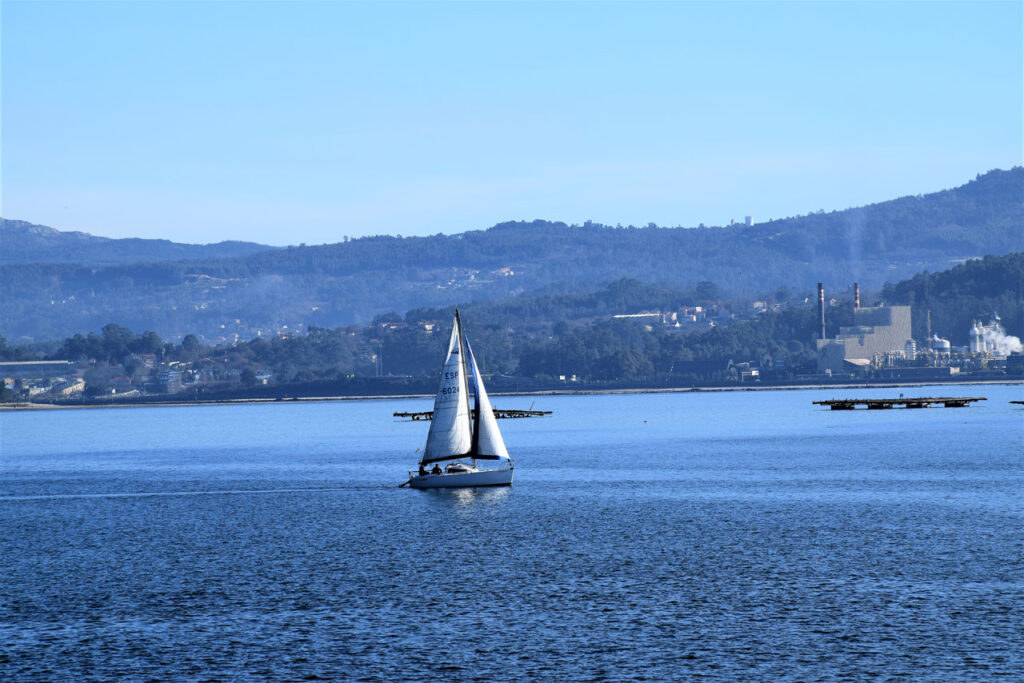
This estuary is the place for different nautical activities such as sailing, canoeing, fishing and diving. There are different sailing schools and regattas in places like Sanxenxo, Portonovo and Aguete. Sailing is also widespread in the estuary, so much so that the Swiss sailing team trained there for the America's Cup. In summer, canoeing and sea kayaking have an appointment in this estuary for the celebration of the G.P. Principe de Asturias, of international level.
Some of the activities related to fishing in this estuary are Atlantic salmon fishing, in the river Lérez or surfcasting in the sandy areas in the different boat modalities. As for the subaquatic activities, places where it is carried out are the sea bottoms of Ons, Cape Udra and A Mourisca among others.
The underwater fauna that we can find in this estuary is very diverse as there are different underwater habitats. In the areas where there is a greater presence of sandy seabed live rays, turbot, cuttlefish and small bivalves such as cockles and razor clams. Where there are gravel bottoms, which are formed by shells of molluscs, live octopuses, crabs, pouting and sandy dogfish among others. In the areas where there are rocky bottoms, thanks to the richness of the waters, mussel and barnacle reefs are formed.
To know it better
Pontevedra has a large estuary, which bears his name, and is one of the three main entrances to the the Galician Rías Baixas sea, being the most regular of them. It opens up to the north from Punta de Cabicastro, located to the west of Canelas beach, and to the south to Punta Centoleira. The River Lérez has its mouth between these points joining the sea here.
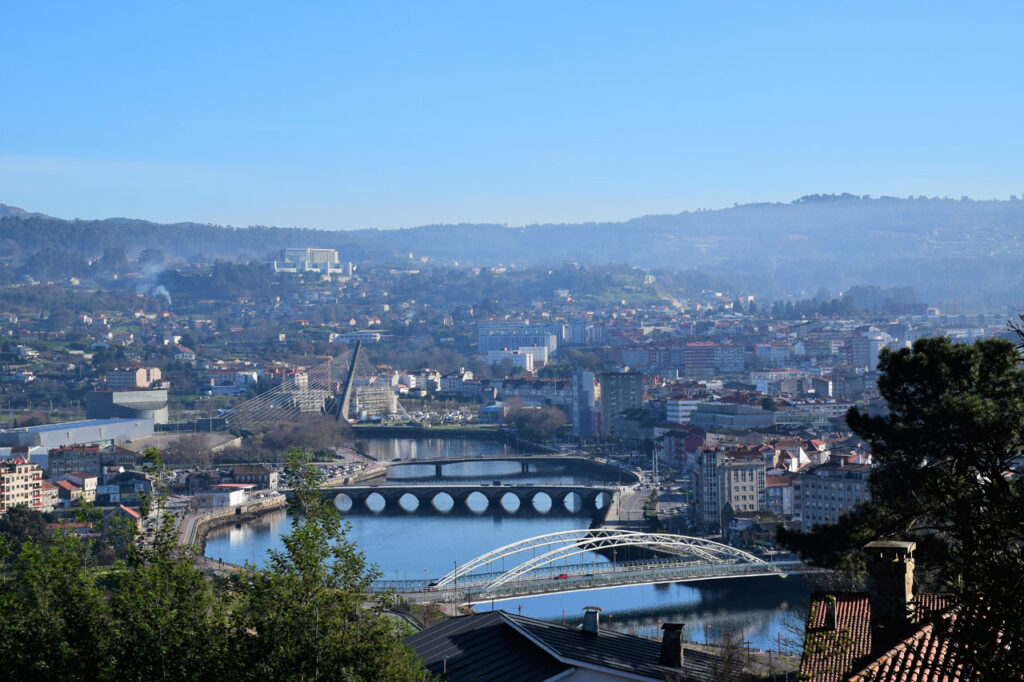
In Pontevedra´s estuary and its banks, art and history make the difference. We can find monasteries, like the one in Poio or, a little further away, the one in Armenteira. It also has beautiful villages like those of Marín, or outstanding seafaring districts, like that of Bueu. Moreover, we find in the area places that have discovered in tourism their main income, as in the case of Sanxenxo, Portonovo or San Vicente de O Grove.
Located in the northwest of the Iberian Peninsula, Pontevedra is an administrative, monumental, tourist and a service provider city. A city of art and history which has a monumental area that, after Santiago de Compostela, is the most important in Galicia.
Gallery
Location
- Town
- Pontevedra
- Municipality
- Pontevedra
- Province
- Pontevedra
- Country
- Spain
The asset
- Type
- Estuary
- Eco-destination
- Ría de Pontevedra
- Environment
- Natural
- Relevance
- Internacional
How to get there
- Access
- By sea By land
- Distance
- 0,000km
The visit
- Visitable
- Yes
- Accessible
- Sí
- Parking
- Sí
- Signposted
- Yes
Coordinates
- Latitud
- 42.41283100
- Longitud
- -8.69484000