
Sanxenxo. “A Lanzada” beach. “A Lanzada” tower. “A Nosa Señora de A Lanzada” chapel
About this heritage
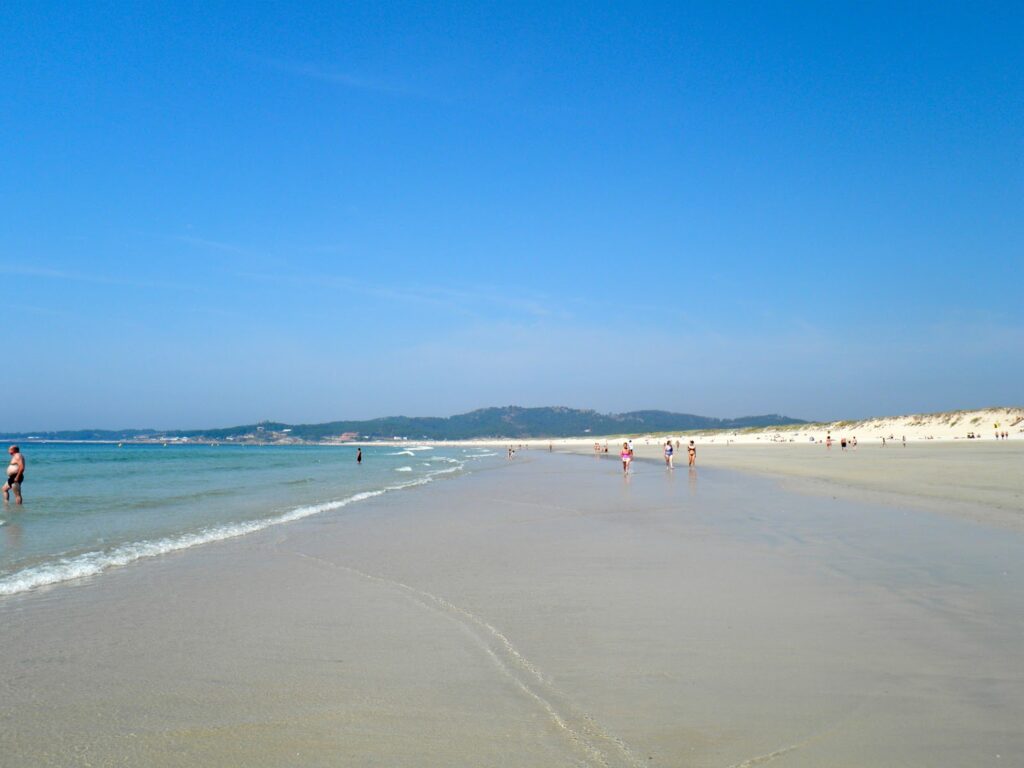
A Lanzada, one of the most emblematic Galician beaches, in addition to being one of the longest with 2.5km, having a large dune complex and being located in a natural area within the Natura 2000 network, its also part of the Umia – O Grove Intertidal Complex.
One of the oldest legends of the popular culture talks about the “Nine waves bath” that gives the waters of A Lanzada, properties to increase fertility.
The popular belief is that the woman who wishes to become pregnant and overcome sterility must go to Nuestra Señora da Lanzada beach on the last Saturday of August, and undergo a bath at midnight, during which she has to charge nine waves, to get cured of the sterility.
On this beach you will find, on a promontory, the remains of the A Lanzada tower. It dates back to the Sueva period in 952 and they are the only remain of a fortress built by Bispo Sisnando in the 10th century. This tower was part of a defensive system whose function was to warn of the arrival of the Viking ships to the Arousa estuary through bonfires.
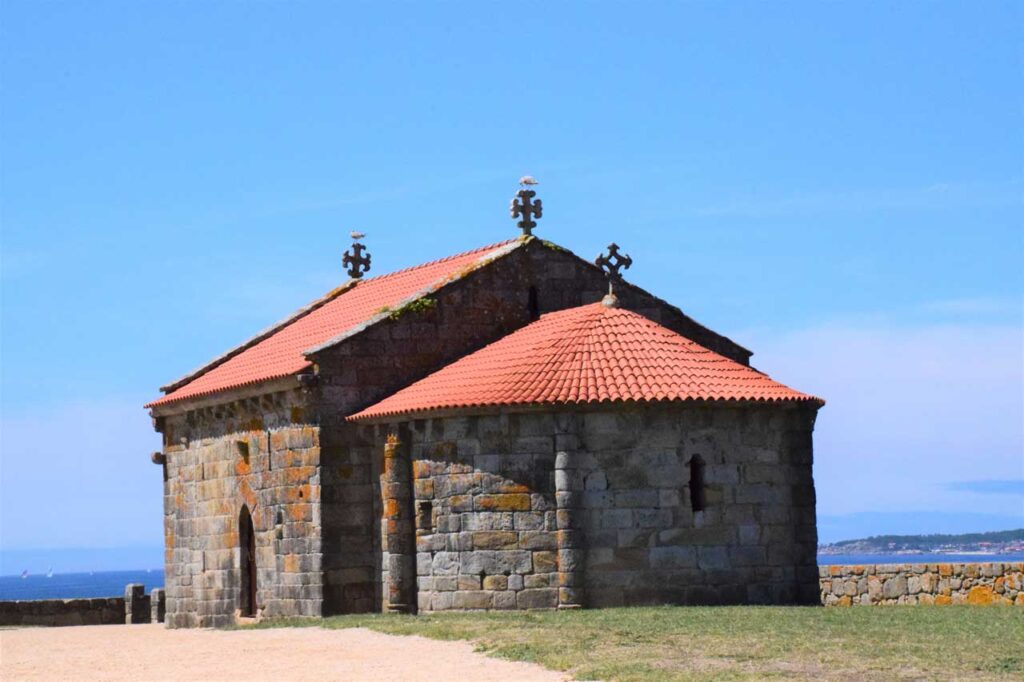
A few metres away is the hermitage of Nosa Señora de A Lanzada. This is a Romanesque style chapel from the late 12th century and early 13th century. It has a single nave and semi-circular apse. There is also a rose-window on the western façade.
To learn more
This paradigmatic settlement has been inhabited since ancient times, as can be seen from the remains of an old military settlement and the necropolis in the surroundings, the tower of A Lanzada from the Sueva period and the chapel that followed.
The hermitage of Nosa Señora da Lanzada with a Romanesque style, is dated from the beginning of the 13th century.
Composed of a single nave and a semi-circular apse, at different heights. On the outside there is a trefoil rosette above the main door with a tympanum facing west. To the south is the lateral access through a semi-circular door and the arrow. To the north and east you can see their arrow slits. Four columns stand out from the semi-circular apse as external buttresses and the more recent windows open to the wall. The roman tile roof has three stone crosses of different styles and shapes.
Inside you can find the figure of St. Mary, advocate of fertility. This is where the pilgrimage of the “Virgen da Lanzada” is celebrated on the last weekend of August.
The popular belief says that the woman wishing to become pregnant and overcome infertility, has to go to the beach of “Nosa Señora da Lanzada” on the last Saturday of August, undergo a bath at midnight, during which she has to charge nine waves, to get cured of the sterility.
So, on Saturday night there are hundreds of women who want to end their infertility. At dawn they have to go to the hermitage and sweep the floor to undo all the kinds of “Meigallos” (evil eye) and thus make the offering to the Virgin.
To know it better
The beach of A Lanzada located in Sanxenxo, is considered to be one of the best sandy area in Galicia and belongs to the Pontevedra Town Council of Sanxenxo and O Grove. It has more than 2km of fine white sand, crystal clear waters and a wide offer of different water sports. In addition, in this area, a dune and an intertidal complex known as the Umia-O Grove is formed.
We should not leave the area without visiting the chapel of A Lanzada, or also known as the hermitage of “Nuestra Señora da Lanzada”. This Romanesque hermitage, dating from the late 12th and early 13th centuries, has a single nave with a semi-circular apse where the image of the “Virgen de la Lanzada” can be found. This saint is closely linked to rituals related to fertility. Legend says that, to end fertility, on the night of the last weekend in August, women must bath the nine midnight waves. Afterwards, at dawn they must go to the hermitage and sweep the floor to undo any kind of evil eye and thus, make the offering to the Virgin.
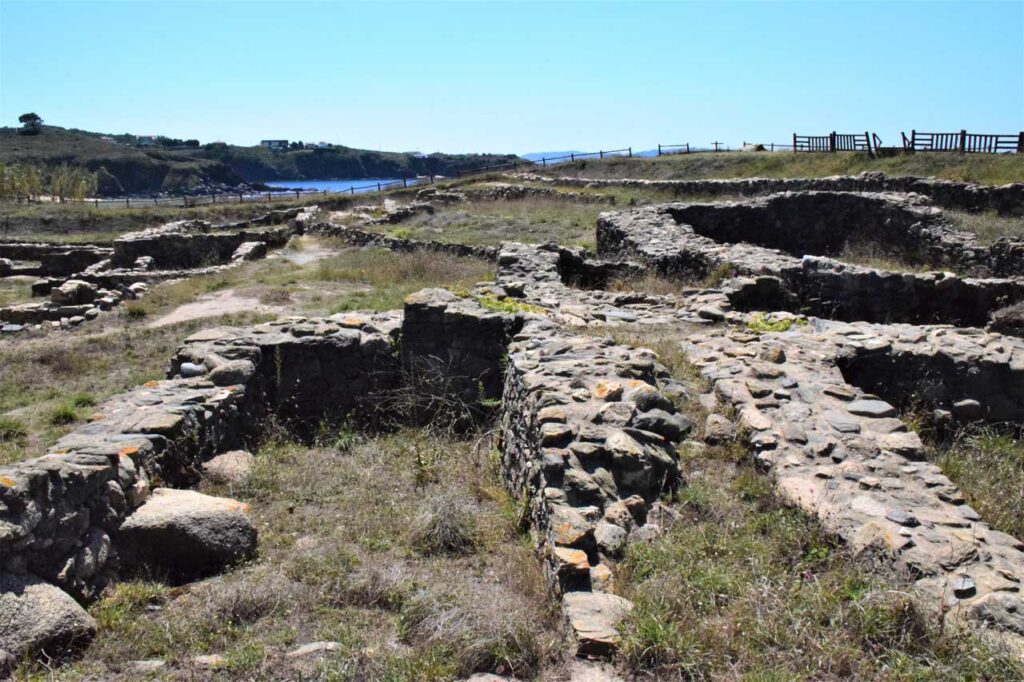
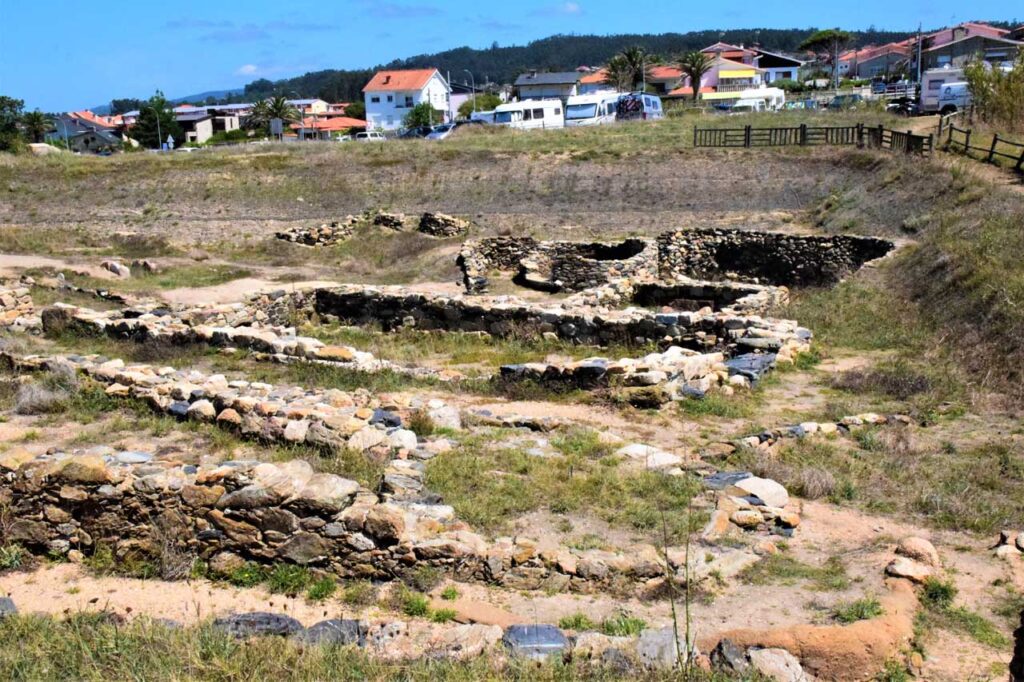
Next to the hermitage is the A Lanzada tower, which was part of a medieval age castle, although some authors think that its origin could have been Phoenician or Roman. In addition, in the same area are the remains of a large construction the “Castro de A Lanzada”, a settlement of the VIII BC.
Galería
Location
- Locality
- Sanxenxo
- Municipality
- Sanxenxo
- Province
- Pontevedra
- Country
- Spain
The asset
- Type
- Beach
- Eco-destination
- Ría de Pontevedra
- Environment
- Natural
- Relevance
- International
How to get there
- Access
- By sea By land
- Distance
- 3,900 km
The visit
- Interpretation
- Information panels on sensitive areas
- Accessible
- Sí
- Parking
- No
Coordinates
- Latitud
- 42.44730200
- Longitud
- -8.87555600