


Tamuxe island. Nature Classroom. Miño river´s flora and fauna in O Rosal.
About this heritage
The Tamuxe river is the Miño´s last tributary, also called “Carballas”, in its upper part. It is born in Argallo´s mountain range belonging to the massif of A Groba in the municipality of Oia, and it is about 14 kilometres long and has an abundant flow. It ends in the place of Pías in San Miguel de Tabagón parish, in the municipality of O Rosal.
Along its route, which has numerous mills and fisheries that, in addition to sport fishing, offer the possibility of bathing. The main fish species in this river are the Cutthroat trout (Oncorhynchus clarkii), the Brown trout (Salmo trutta), and some sea lampreys (Petromyzon marinus), in the area of its mouth.
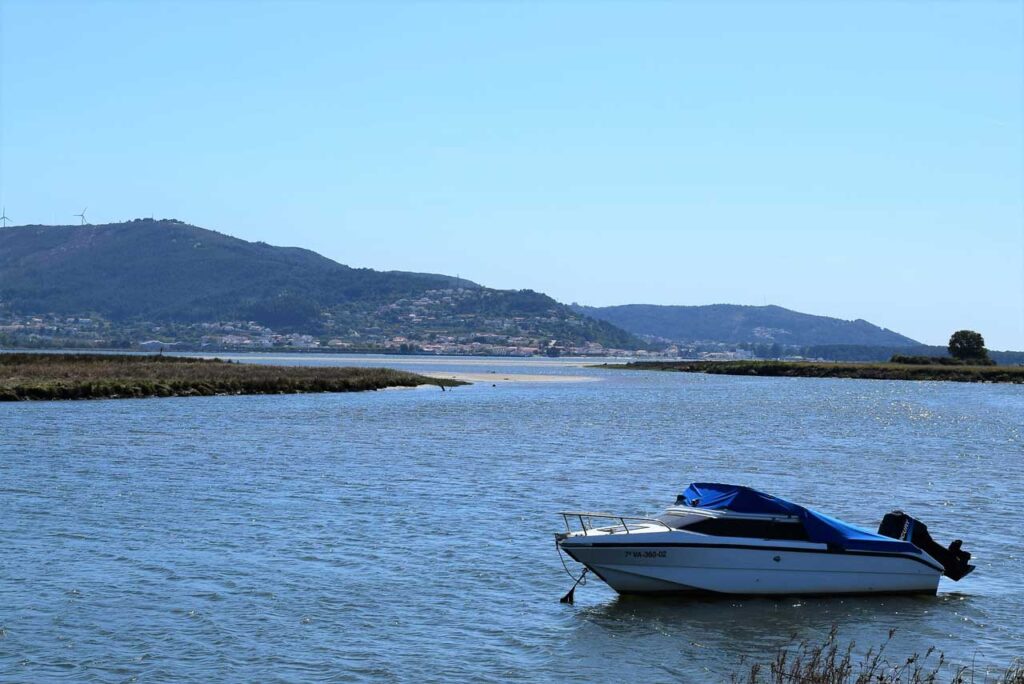
At its mouth there are three fluvial islands formed by sediments that have been accumulating in the Miño estuary. These types of formations are usually called “Morraceiras”.
The biggest one is called Canosa island or Xunqueira, Vimbre island or also known as “Illa do Grilo” or “Morraceira do Grilo”. Above Vimbre and next to San Miguel de Tabagón parish, are located the Varandas islands, also known as “Morraceira de Varandas” or “Illa dos burros” (Donkeys´ island). Finally, almost in the middle of the river we see the Morraceira de Seixas, which owes its name to the Portuguese village of Seixas, in front of which it is located. It is also known as Mauricio island.
There are islands with a large area of grassland and some of them are profusely wooded and belong to the Baixo Miño Special Conservation Area (ZEC), within the Natura Network 2000. This area covers the last 80 kilometres of the Miño river and its socioeconomic influence extends through the municipalities of A Guarda, O Rosal and Tomiño.
Also recognized as a special protection area for birds (ZEPA Esteiro do Miño). Where you can see colonies like the aquatic warbler (Acrocephalus paludícola), little bittern (Ixobrychus minutus) or the Eurasian curlew (Numenius arquata). Wintering species as the tufted duck (Aythya fuligula), the sanderling (Calidris alba), the ringed plover (Charadrius hiaticula) stand out.
Taxa from other group are also found, such as the gold-striped salamander (Chioglosa lusitánica) or the otter (Lutra lutra).
There is a PR-G112 path, “Sendeiro de Pescadores Río Miño -Tamuxe” which starts at As Eiras beach and connects with the recreational area of Tamuxe river where the ruins of a large steam sawmill and the Aceñas mill can be seen. This route has a low difficulty with 7.2 kilometres and it lasts one hour.
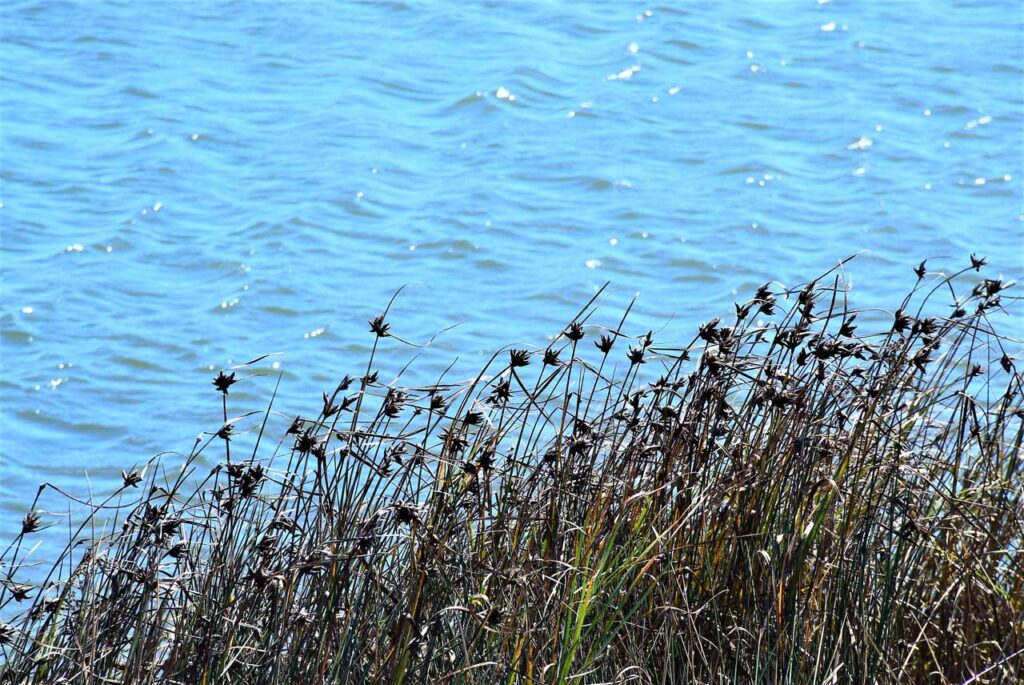
The formations of the Ribera forest are interesting, with reedbeds, rushes and pines, which together with the great variety of birds make this habitat a very interesting ornithological enclave.
To learn more
Tamuxe river is the last tributary of the Miño river, also called “Carballas” in its upper part. It has several tributaries that are usually small streams even some in summer come to dry. It ends in the place of Pías in the parish of San Miguel de Tabagón in the municipality of O Rosal.
Along this route, it has numerous mills and fisheries that, in addition to sport fishing, offer the possibility of bathing. The fisheries or small dams are areas where they retain water for fishing but they also offer the possibility of bathing in wide and deep areas. Some divert this water for the operation of mills.
Water mills in Galicia are structures that belong to the ethnographic heritage of the area. It is a system that works with the driving force of water and for its construction it needed the collaboration of stonemasons, carpenters and blacksmiths.
There are two different types of mills, one called “De Herdeiros” (Heirs´ mills) which were built and paid by the members of a community and belonged to the same community or parish. The use´s right was inherited from one generation to the next one.
Another type was the called “Maquia”, a familiar or individual construction. They were private mills and its use was paid with a part of the milling or “maquía”.
Milling was done in shifts and grinding the entire crop´s grains took time. The whole family or several families would get together to help each other, and in their leisure time they would play instruments and compose songs that continue within the popular culture enriching the Galician folklore, this event is called the “Muiñadas” and they were born here.
To know it better
Tamuxe river, also known as “Carballa” runs through O Rosal valley and is one of the tributaries of the Miño river that flows into Pías – San Miguel de Tabagón (in the municipality of O Rosal). On the river there is a beautiful resting area with the Nature Classroom of Muíno das Aceñas (Aceñas´mill). Here, we can find an old water mill with a 19th century house. Nowadays the construction has been restored and serves to give us an idea of how the population lived in the past with the help of this machines.
O Rosal municipality, known for its wines and vineyards quality, is part of Baixo Miño region (Lower Miño region) in the province of Pontevedra. It is located on the Miño river´s banks, bordering the municipalities of A Guarda, Oia and Tomiño.
Gallery
Location
- Town
- San Miguel de Tabagón
- Municipality
- O Rosal
- Province
- Pontevedra
- Country
- Spain
The asset
- Type
- Island
- Eco-destination
- Río Miño
- Environment
- Natural
- Relevance
- Internacional
How to get there
- Access
- By sea By land
- Distance
- 8.200km
The visit
- Visitable
- Yes
- Accessible
- No
- Parking
- No
Coordinates
- Latitud
- 41.91172100
- Longitud
- -8.82713200