
The Aldán Estuary and Phonecian commerce
About this heritage
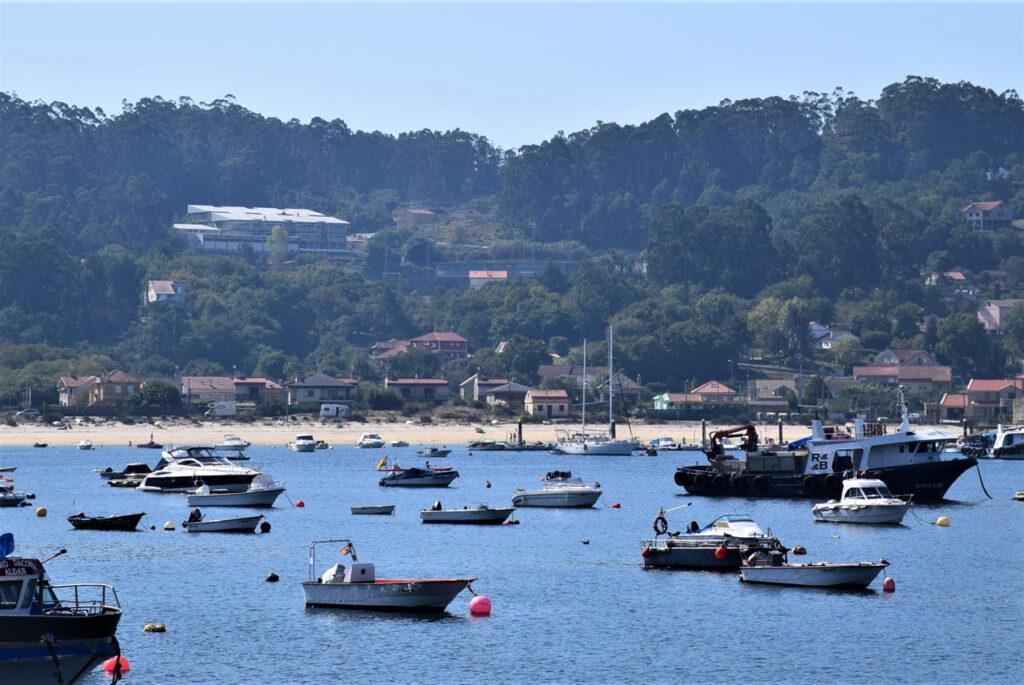
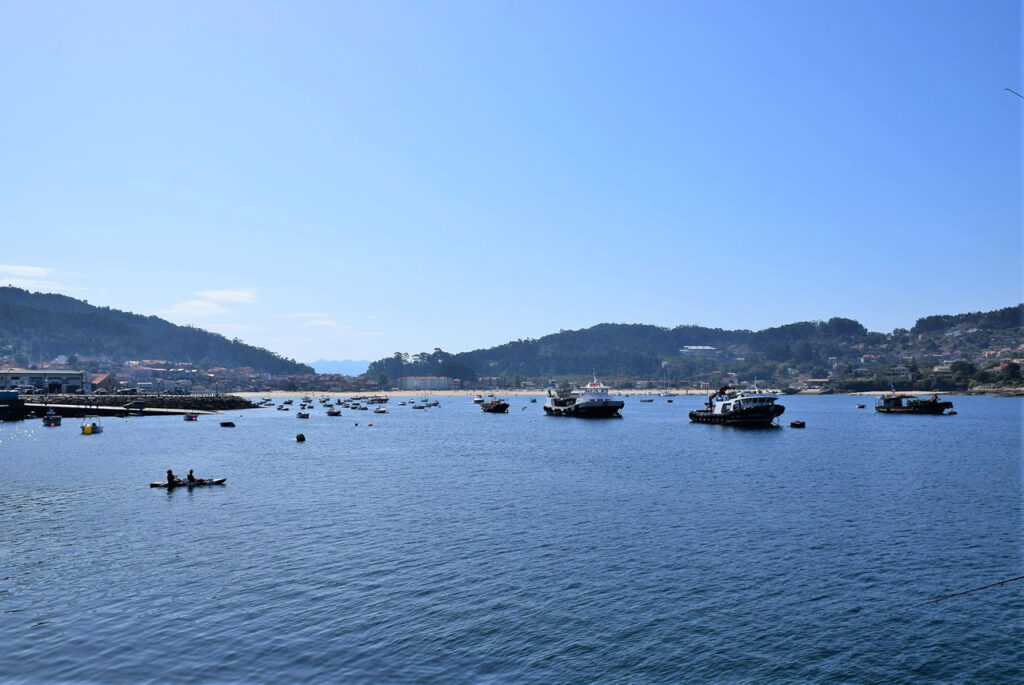
The Aldán estuary is a clear example of the navigational attraction of the Rías Baixas and the terrestrial haven of the Galician bays, with its twenty beaches of white sand and crystal-clear waters, protected from the waves and wind
To learn more
The Phoenicians maintained commercial relations with the Gallic fortifications during centuries. The geographical location favoured these contacts.
The Phoenicians were outstanding navigators and merchants. Their specialisation in certain manufactures enabled them to engage in highly profitable trade with neighbouring kingdoms and overseas. The Phoenicians provided cedar wood, fabrics (including the famous purple ones), carved ivory, furniture made of hard wood, pendants, bowls and jars made of gold and silver, and in general, valuable handcrafts. Besides this, they exchanged silver, lead and tin that they obtained in Spain, wheat and linen from Egypt, balsams and honey from Israel, horses and mules from Anatolia, ivory and slaves from Africa, oil and cereals from Greece.
Metals were their primary target on the Atlantic route. They were the maritime transmitters of the new metal, revolutionary both in war and in the countryside: iron, which was used for the first time in the Hittite country. The Phoenicians also went in search of tin, an indispensable material for making bronze by alloying it with copper, reaching the Cassiterides Islands.
Tin could be found only 30 kilometers off the Galician coast. In addition, the area of the Rías Baixas had a fluvial route, the river Miño, to enter the interior, and the estuaries had extraordinary natural ports to be able to anchor and trade with the indigenous communities. According to Herodotus, the Phoenicians lit bonfires on the beaches and left the goods there to exchange their products. It is difficult to know if this is the case, although Punic and Neopunic ceramics from the 6th to 1st centuries BC have been found on the fossil beaches of O Arenal in Vigo.
Trade between the Phoenicians and the peninsular northwest intensified after the First Punic War (264-241 B.C.). The loss of some Mediterranean territories and the Roman irruption as a new power, forced the Phoenician merchants to look for other destinations where they could obtain raw materials in exchange for their products. It was in this search that the mercantile routes were established bringing to the northwest an abundant number of materials and objects of Mediterranean origin.
To know it better
The Aldán estuary is part of the Galician Rias Baixas and is located in the municipality of Cangas. The Orxas river flows out into the mouth of this river, where six villages meet: A Espiñeira, Herbello, O Piñeiro, Gandón y Menduiña. These are grouped under three parishes: O Hío, Aldán and Beluso.
The Aldán estuary, located at the extreme end of the Morrazo peninsula, has two ports: a fishing port in Aldan and a sporting port in O Hío. Moreover, when we travel to this estuary, we can find numerous beaches for our enjoyment, most of which are blue flag.
The ideal location of this estuary favoured Phoenician commerce at the time. They used it for the trading of different products and raw materials, between the Atlantic and the Mediterranean.
Gallery
Location
- Town
- Hío
- Municipality
- Cangas
- Province
- Pontevedra
- Country
- Spain
The asset
- Type
- Estuary
- Eco-destination
- Ría de Pontevedra
- Environment
- Natural
- Relevance
- International
How to get there
- Access
- By sea By land
- Distance
- 0 km
The visit
- Accessible
- No
- Parking
- Sí
Coordinates
- Latitud
- 42.28283
- Longitud
- -8.82206