


Toralla Castro
About this heritage
The Toralla castro is located on a small island in the Vigo estuary. It had a wall 3 meters thick and 1 meter high. Since the 1980s, numerous interventions have been carried out, which have brought to light an important batch of Punic materials, including some fragments of red slip pottery. Possibly, the Toralla castro acted as a redistribution emporium of Mediterranean materials until the 2nd century BC, just like the Muíño do Vento castro, also in Vigo. This castro was probably abandoned during the 2nd century BC. Of particular relevance is the granite betyl one and a half meters long, which is preserved in the Quiñones de León museum in Vigo. Betyls (obelisks) appear in Phoenician-Punic religious contexts throughout the Mediterranean, from Byblos to Gadir, which suggests that there was a Phoenician worship space here, as well as in Punta do Muiño do Vento, in Alcabre. This temple, similar to those found in Andalusia and Levante, would have been port sanctuaries usually chosen by Mediterranean merchants to carry out their transactions.
To learn more
The communities encountered by the Phoenicians upon their arrival in the northwest at the end of the 5th century BC were undergoing a process of transformation. This period marks the transition between the First and Second Iron Age in the area. Until then, the northwest was characterized by considerable cultural homogeneity: small castros predominated, with circular plan architecture that was not very monumental and fortifications mainly consisting of terraces, ditches, and embankments. The territory was sparsely occupied and settlements were located in elevated places. From the late 5th century BC many of these villages were abandoned and valley bottom settlements multiplied, which were equipped with complex defenses and, at least on the coast, were characterized by monumental stone structures and very dense occupation, although they remained small (2 hectares) at least until the 2nd century BC. Unlike the southern peninsula, the northwest was not "Mediterranean-ized." The Punics maintained commercial relations but did not establish colonies or permanent settlements, the closest to a permanent settlement being the worship spaces identified in Punta do Muiño do Vento and the island of Toralla (Vigo). However, there is evidence of influence in some coastal castro settlements in the southern area, where metallurgy and elements of religious culture were adopted possibly through ideological transfer via Punic worship sites in the settlement. The first emporia with Punic presence are located in places familiar to merchants from the south. These are landscapes similar to the Punic Mediterranean world and the Strait of Gibraltar area: islands close to the coast, capes flanking coves, good natural ports, and river mouths acting as entry routes inland. A first feature of this early Punic trade is its concentration on the coast. Apparently, the emporia monopolized the vast majority of imports and acted as intermediaries between metal producers inland and merchants on the coast, following the classic model seen in various points of protohistoric European geography. The involvement of the Gallaeci in the Second Punic War as soldiers serving Carthage shows how close the interactions between northwest communities and Punic navigators had become. From the mid-2nd century BC and more strongly from 125 BC onwards, exchange with the Mediterranean world reappears strongly, evidenced by the appearance of numerous remains in many sites. In this late Punic period, oppida appear, large castros that become trade attractions and particularly attract the import of large amphorae whose contents were used for banquets sponsored by the elites leading the oppida. Wine played a key role in the political economy of the oppida and undoubtedly acted as a stimulus for trade from the 2nd century BC, and wine was one of the products traded by the Phoenicians, who planted vineyards in all their colonies and around their factories, both in North Africa, including Carthage which later inherited all Phoenician power, and in the Iberian Peninsula, France, and Italy.
To know it better
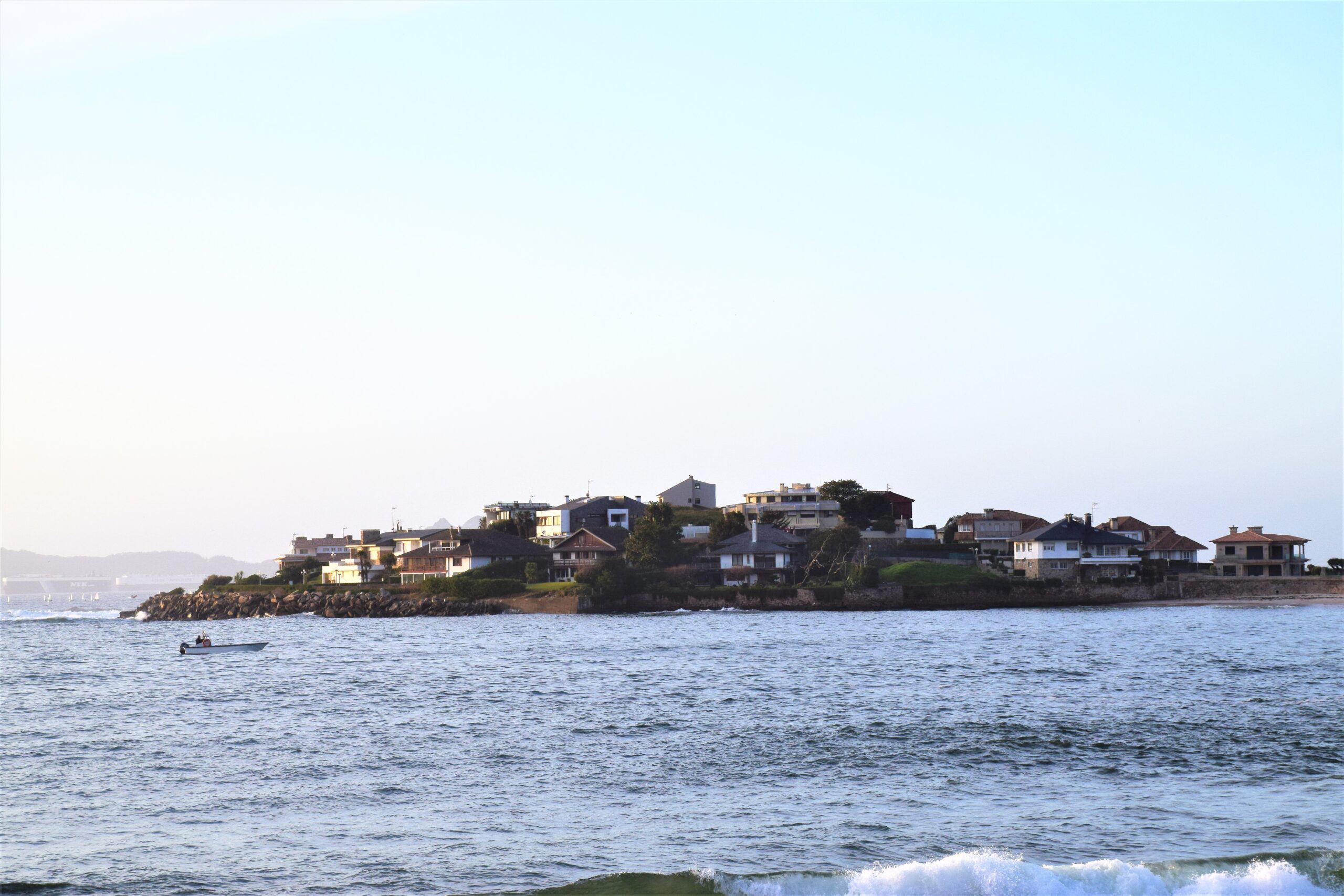
On the island of Toralla, located in southern Galicia, about 140 people live. Located in Vigo (province of Pontevedra), it is currently a private island accessible only to its residents. A few years ago, remains of a castro possibly dating to the 7th century BC were found in Toralla. It had a wall and, along with the Alcabre Castro, they are the oldest in Vigo. In both castros, betyls (obelisks) or granite stelae have been found; that is, sacred stones referring to a Phoenician worship space. Near the island of Toralla is the Roman Villa of Toralla or Finca Mirambell, where the first Roman remains in the area were found. This settlement, located on the coast, was dedicated to the exploitation of marine resources through fishing, salting, and saltworks.
Gallery
Location
- Town
- Vigo
- Municipality
- Vigo
- Province
- Pontevedra
- Country
- Spain
The asset
- Type
- Castro
- Eco-destination
- Ría de Vigo
- Environment
- Urban
- Relevance
- International
How to get there
- Access
- By sea By land
- Port
- Puerto de Canido
- Distance
- 100 metros
The visit
- Visitable
- No
- Interpretation
- No
- Accessible
- No
- Parking
- Sí
- Signposted
- Yes
Coordinates
- Latitud
- 42.20013300
- Longitud
- -8.80286800