


Valença. Historical centre and fortress
About this heritage
Valença do Minho is a fortress town strategically located on the top of the Miño river, bordering Tui. It is located in Viana do Castelo´s district and belongs to the northern region of Portugal.
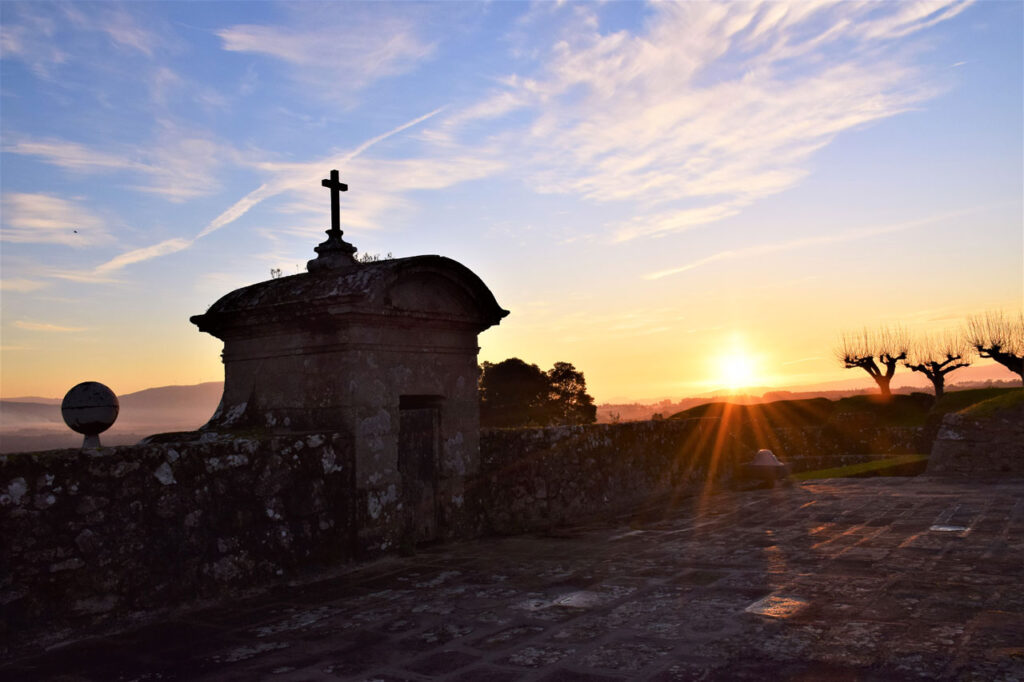
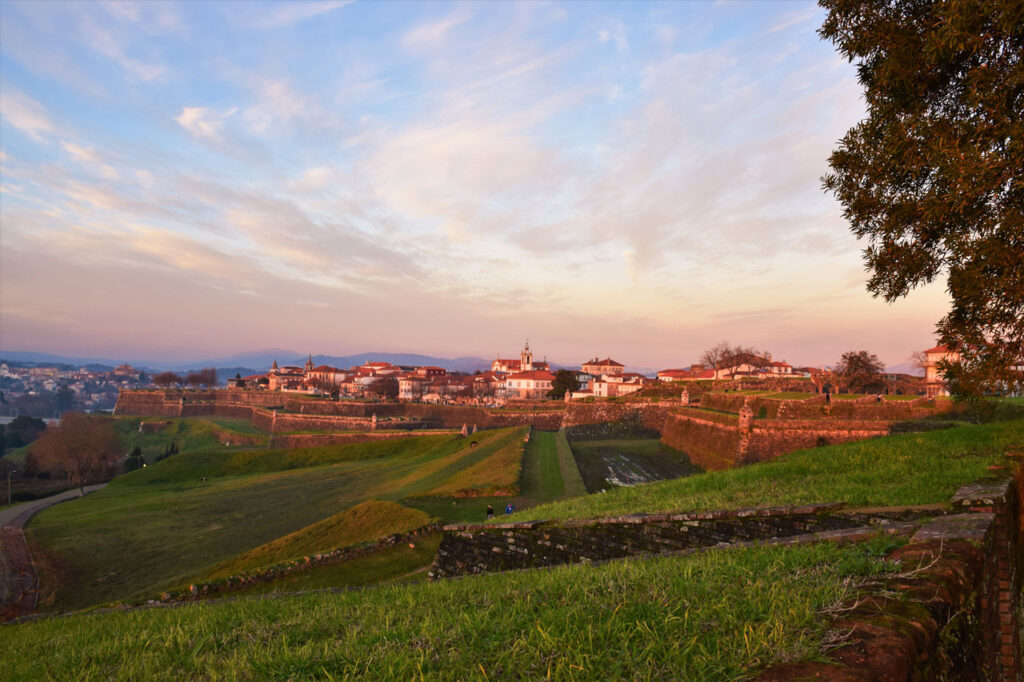
Its historical centre is located inside the fortress which dates back to the 13th century and was later remodelled during the War of Restoration.
This fortress, formed by an intricate series of walls, moats and ravelins, is divided into two main areas that were connected by the so-called Porta do Meio (Middle door): the northern sector,
which includes the old medieval town; and the southern sector, a smaller and more open area, the so-called Coroada (Crowned).
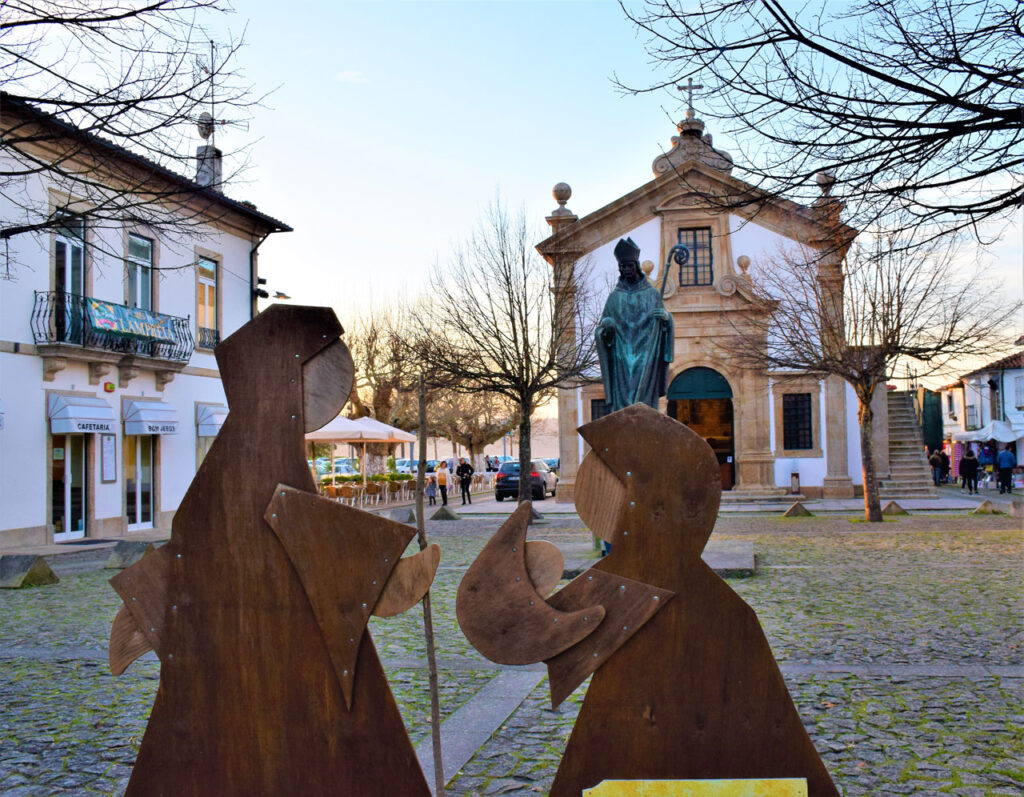
There are interesting buildings such as the Casa da Eria (Eria´shouse), which has a Manuelinestyle window, or the 16th century church of Santo Estevão with its neoclassical façade. Near this
temple is the Roman landmark of the ancient road that connected Braga with Astorga.
At the end of José Rodrigues street stands the Church of Santa Maria dos Anjos, which is Romanesque style and dates back to 1276, with a tiny chapel with Romanesque-Gothic
inscriptions on the back. To the left of this construction is the Chapel of Mercy, and behind it, the Pousada de São Teotónio.
Nowadays this historical centre is a tourist attraction, both for its beauty and for the views that can be seen from its bastions. The streets are full of shops that sell the typical towels and sheets of Portugal and there are also restaurants serving the typical dishes of the region.
To learn more
The fortification of Valença do Minho is located in a village that dates back to the transition from the 12th to the 13th century with its subsequent remodelling in the context of the War of
Restoration when a border fortification was erected, surrounding the extended perimeter of the village with its walls and erecting new bastioned structures. It worked as a first line of defence
against attacks from the neighbouring country.
The city was separated from the river by an extensive bastions network on several levels, connected to each other by ditches and overpasses.
The stronghold, in an intricate series of walls, moats and, ravelins, is divided into two main areas that were connected by the so-called Porta do Meio (Middle door): the northern sector, which
covers the old medieval town; and the southern sector, a smaller and more open area, the socalled Coroada (Crowned).
It is considered the most important fortification of the Alto Minho and it has been the object of various conservation and restoration interventions until the 20th century, remaining the
structures that have arrived to our days in good condition and open to the public.
Joining both banks is the international bridge, built over the Miño river, and connecting both countries by road and rail, which is still in use. It consists of a metallic, lattice-like structure in
the shape of a box that rests on thick stone pillars. It is the work of the engineer Pelayo Mancebo de Agreda, from La Rioja (Spain) and was inaugurated in 1886.
To know it better
Valença, also known as Valença do Minho, is a municipality in the north of Portugal belonging to Viana do Castelo´s district. It is located at the top of the Minho river and has a strategic
location next to the Spanish border.
Valença is divided into a new and older part. The latter, which gave rise to the fortification of Valença, to the left of the Miño river, corresponds to the 12th and 13th centuries. Thanks to this
fortress, the population had a defence over the Miño river for the different wars. In addition, it preserves an area dating from the time of Afonso III, the original doors of the city and it also has
the Church of Santo Estevão, with a neoclassical facade of the 14th century.
This fortification has been rehabilitated and restored several times, as it is considered the most important fortress in Alto Minho. On the other hand, you can also visit the new Valença, which
grew up at the foot of the old fortress.
Gallery
Location
- Town
- Valença
- Municipality
- Valença
- Province
- Distrito de Viana do Castelo
- Country
- Portugal
The asset
- Type
- Old town
- Eco-destination
- Río Miño
- Environment
- Urban
How to get there
- Access
- By land
- Distance
- 1,00 km
The visit
- Visitable
- Yes
- Accessible
- No
- Parking
- Sí
- Signposted
- Yes