
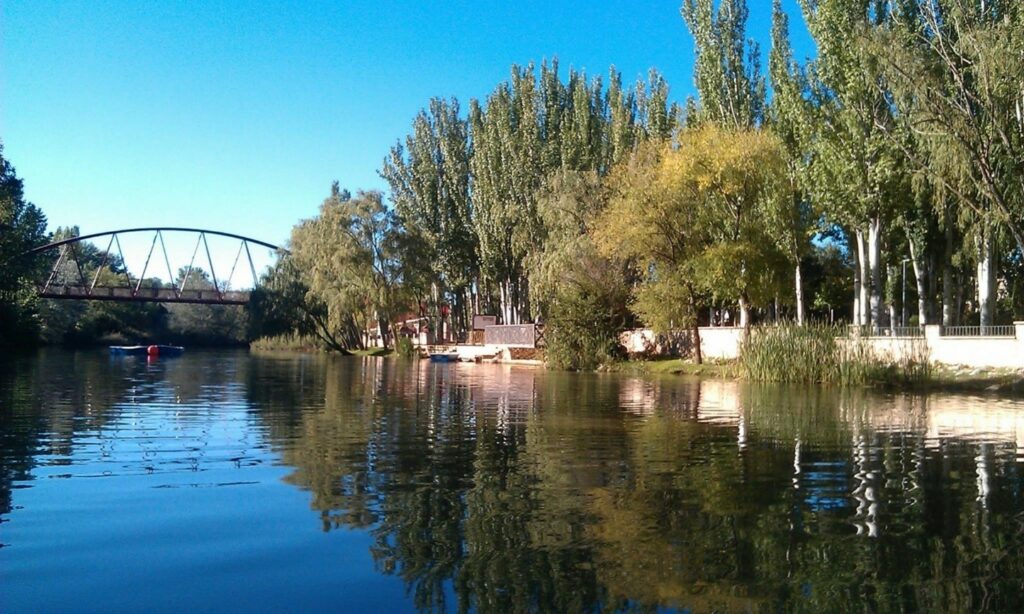
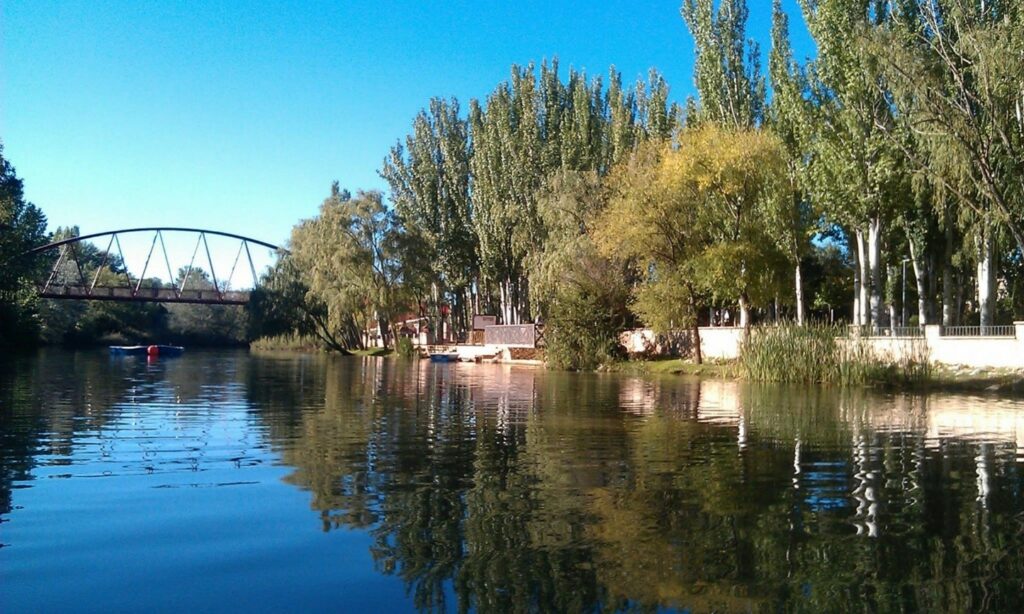
It is located in the heart of the city of Aranda del Duero, very close to the city center. It is an area with abundant nature where walking and tranquility are guaranteed. In the part of this park where the waters of the Bañuelos River flow, there is an area adapted for waterfowl such as ducks, peacocks, and geese, among others.
EL BARRILES PIER
Provincia de Burgos
About this port
Port entrance
Route and approach instructions
N/A (river destination)
Gallery
Location
- Address
- AVENIDA ESPOLÓN 1
- Municipality
- Aranda de Duero
- Province
- Burgos
- Country
- Spain
- Postal code
- 9400
Coordinates
- Latitud
- 41.67055556
- Longitud
- -3.69138889
The port
- Eco-destination
- Río Duero - Burgos
- Environment
- Aranda de Duero is the largest town in the Ribera del Duero region within the province of Burgos. Alongside Peñafiel, San Esteban de Gormaz, Peñaranda, and Roa de Duero, it is one of the most emblematic for the wines of Ribera del Duero. Aranda de Duero offers wine tourism enthusiasts a variety of excellent activities. From visiting its most emblematic monuments such as the facade of the Santa María church or that of San Juan (now the Sacred Museum Church of San Juan), the Berdugo Palace, to expanding knowledge about the world of wine at the Wine Architecture Interpretation Center (CIAVIN), tasting the rich and varied gastronomy (led by roast suckling lamb) in its many excellent inns and restaurants, strolling along the banks of the Duero, to immersing oneself in the Middle Ages by visiting the underground wineries excavated beneath the houses of the historic center, forming a network of 7 kilometers of tunnels or galleries carved between the 12th and 18th centuries. Aranda de Duero is crossed by the Duero River and two of its tributaries, the Arandilla River and the Bañuelos River. This has made the bridges of Aranda one of the most characteristic aspects of the city. Within the city, there are also numerous gardens and promenades that allow visitors to appreciate and admire a blend of urban and natural environments. Another distinctive feature of the natural surroundings is the vast expanses of vineyards, which, resting on fertile land, produce one of the most prestigious and internationally recognized wines: Ribera del Duero. Currently, there are countless routes and guides that allow visitors to tour the vineyards and wineries to observe the beauty of the fields and learn more about wine production, an essential part of Aranda's culture and history. Finally, the Duero Trail offers a path, the GR-14, a route that runs along the riverbanks themselves, delighting with landscapes and the ecosystem provided by the riverside. Following this trail, one can also observe some of the most important vineyards in the area, as well as various places and monuments of great historical value.