


The San Simon and Cassiterides Archipelagos
About this heritage
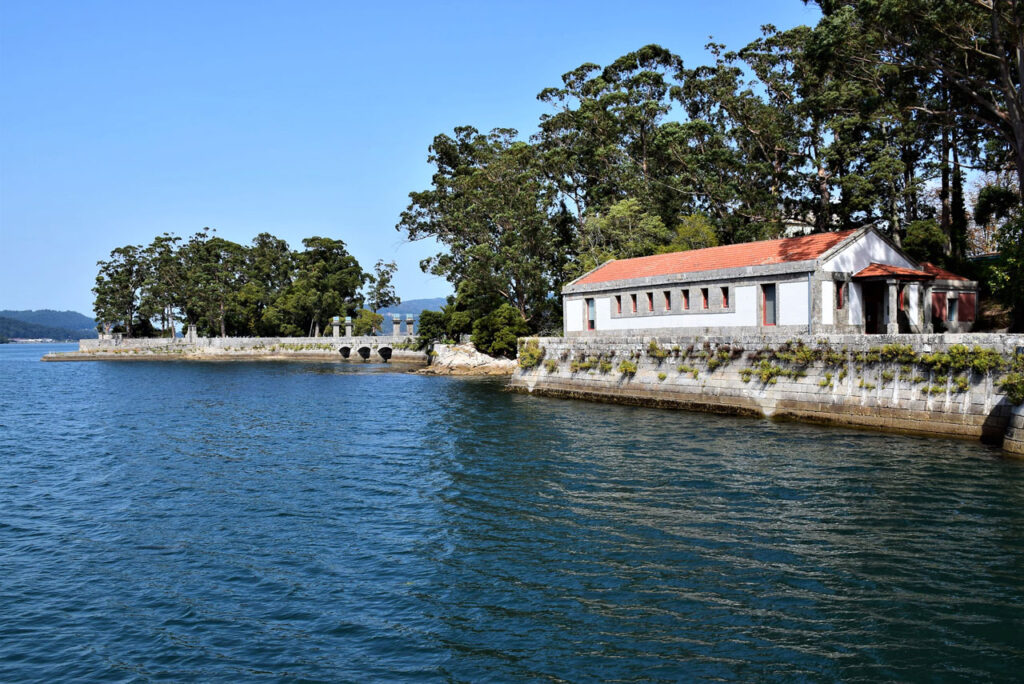
Located in the sea inlet of Vigo and declared as Asset of Cultural Heritage (BIC), Special Protected Zone for Natural Values and part of Natura 2000, the island of San Simon is one of the most magical enclaves in Galicia. Although it was inhabited from the prehistoric ages through to the Roman occupation of the Iberian Peninsula, it was the Knights Templars who gave importance to the island, with the foundation of a monastery in the 12th century, which then passed to the order of the Franciscans.
If we were to take into account Strabo’s theories that the Cassiterides islands were situated in Galician waters, the island of San Simon would be one of them
To learn more
Cassiterides is the name given by the Greeks to the production of tin (kassiteros) islands situated at the West Coast of Europe. Pliny the Elder, in his 'Natural History', points out that the first Greek to reach the Cassiterides was Midwritte, an individual of whom nothing else is known. Historians and geographers such as Ptolemy, Herodotus and Strabo also allude to these rich islands, which the 18th century Galician geographer José Cornide, undoubtedly situates on the Altantic coast of Galicia. It is believed that the Phoenicians were already aware of tin route or Cassiterides. These were routes that the Carthaginians would have kept hidden until Roman times, given their great importance. According to Cornide, Sálvora would have been one of these ten mythical islands.
Herodotus, when referring to the boundaries of the western world in his III book of “History” mentions the Cassiterides and identifies these as island from which Greek tin came from, although he acknowledges that he cannot confirm its existence. Strabo, in his “Geography”. Strabo, in his "Geography", affirms that these are ten islands located near the port of the artabros (which inhabited the region around present-day A Coruña) and maintains that the Phoenicians were the first to arrive there. He also refers to how the Romans insistently attempted to reach the Cassiterides Islands, but when the Phoenician ships sailing the ocean towards the Galician coasts discovered that they were being followed, they had their boats grounded in order to preserve the secret of the route. The Greek mathematician, geographer and astronomer Ptolemy also mentions them.
From Aveiro's work "Ora marítima" (4th century B.C.), which relates the maritime feats of the Phoenicians 800 centuries ago, the main archaeological school of thought identifies their exact location in Brittany or the British Isles and that Phoenicians trading throughout the northwest of the Iberian Peninsula was a step ahead toward the Cassiterides. Today, however, archaeological data seems to indicate otherwise. There is no Phoenician evidence either in French Brittany or Great Britain, while in Galicia there is. The richness of tin in the Galician estuaries and the numerous samples of important metallurgical activity in the transition from Bronze to Iron seem to prove it.
The Galician geographer, naturalist and humanist José Cornide de Saavedra y Folgueira (A Coruña, 1743-Madrid, 1803) defends the geographical situation of the Cassiterides on the Galician coasts, known since ancient times for their abundance of mines, and points out that the Phoenicians traded with the inhabitants of Galicia. The geographer based this on the texts of classical historians and geographers and identifies these islands in "the lowlands of Corrubedo, the islands of Sálvora, Arousa, Cortegada, Grove, Ons and Cíes, Baiona, and smaller ones of the Arousa Estuary".
To know it better
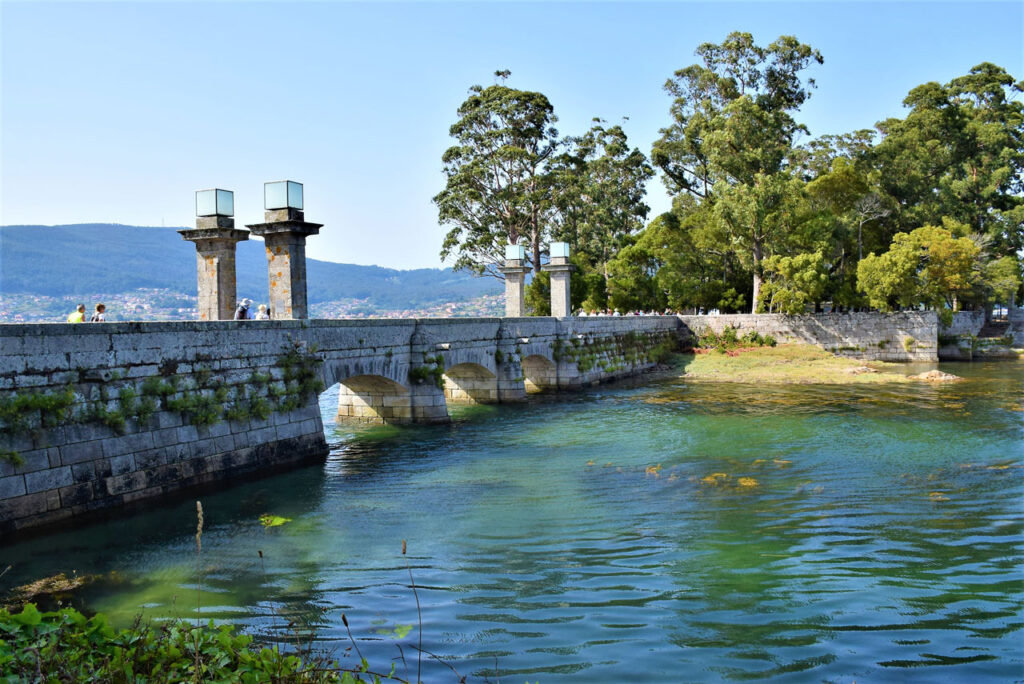
The islands of San Simon, San Antón and other islets, belong to the San Simon archipelago. Located on the Vigo estuary and part of the parish of Cesantes in the municipality of Redondela, San Simon is connected with the island of San Antón via a bridge, together with two other small islands; San Bartolomé and San Norberto.
Although its inhabitance spreads from the prehistoric era up until the Roman occupation of the Iberian Peninsula, it was the Knights Templars who made this place their retreat, with the foundation of a monastery in the 7th century. Pursuant to the Knights Templars exclusion and pursuement, the island became dependent of the Castilla and Leon kingdom and then on to that of the bishopric of Tui, until it was ransacked by Francis Drake in 1589.
The ruination of San Simón remained as such until the arrival of the monks, who built a convent and the small chapel of San Antón on the other island. It is not inhabited at the moment, but pursuant to being a monastery, it was used as a quarantine hospital for infectious diseases, a jail, and a home for orphaned children.
Cassiterides or Kassiterides was the name given to the Tin Islands by the Greeks. Following this theory, the island of San Simón was one of them, given that the Phoenicians used this area for their trading activities.
Furthermore, its unique ecosystem fits it into the category of Area of Special Protection of Natural Values and Site of Community Importance in the Natura 2000 Network.
Gallery
Location
- Town
- Cesantes
- Municipality
- Redondela
- Province
- Pontevedra
- Country
- Spain
The asset
- Type
- Island
- Eco-destination
- Ría de Vigo
- Environment
- Natural
- Relevance
- International
How to get there
- Access
- By sea By land
- Distance
- 0 Km
The visit
- Visitable
- The island is open to the public, although you must ask for authorization to visit them
- Interpretation
- Yes
- Accessible
- No
- Parking
- No
Coordinates
- Latitud
- 42.30745300
- Longitud
- -8.62882100