


Monçao. Historical centre. Baths. Fort
About this heritage
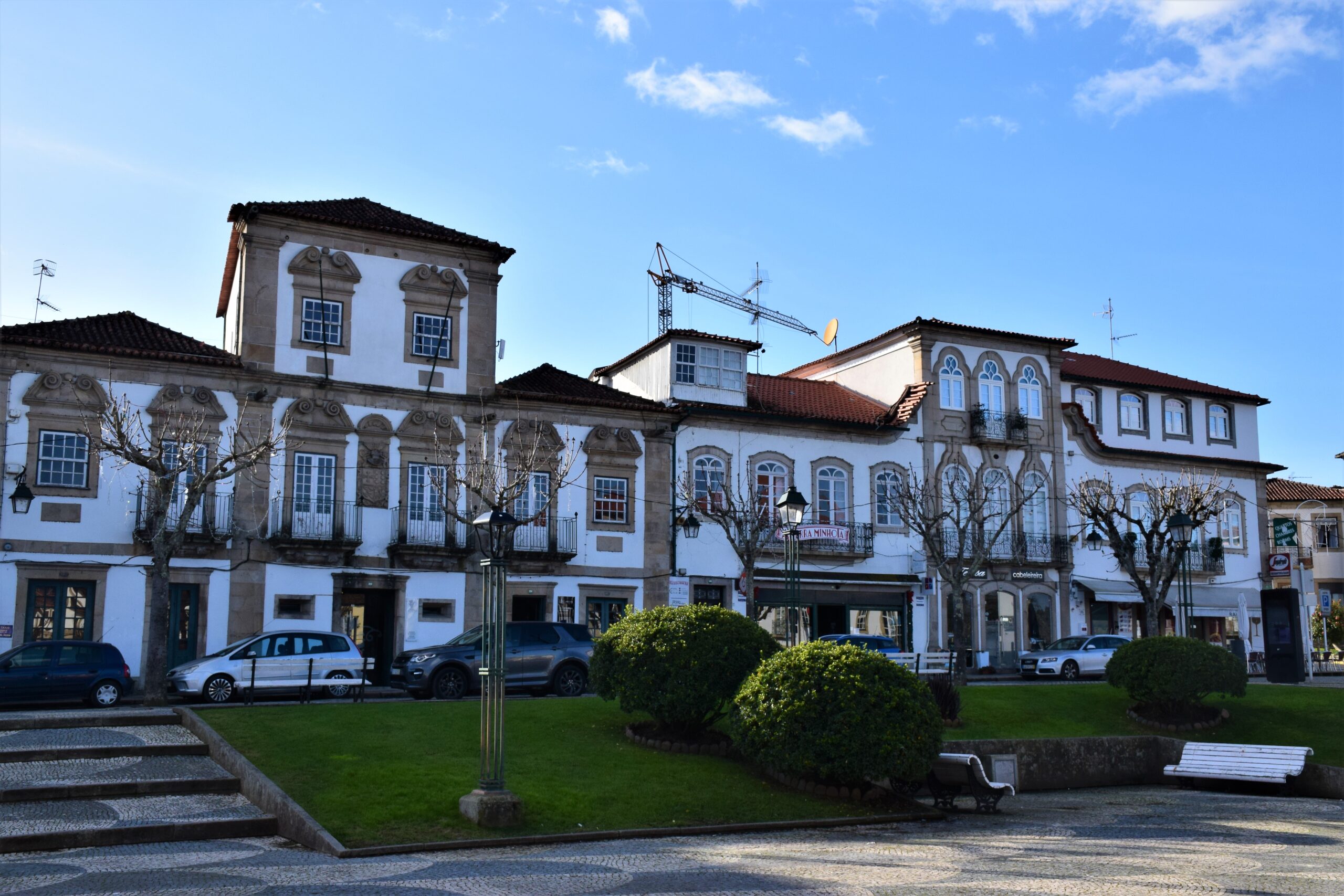
Monçao is a town located in Viana do Castelo district, bordering Galicia, specifically in front of Salvaterra do Miño municipality.
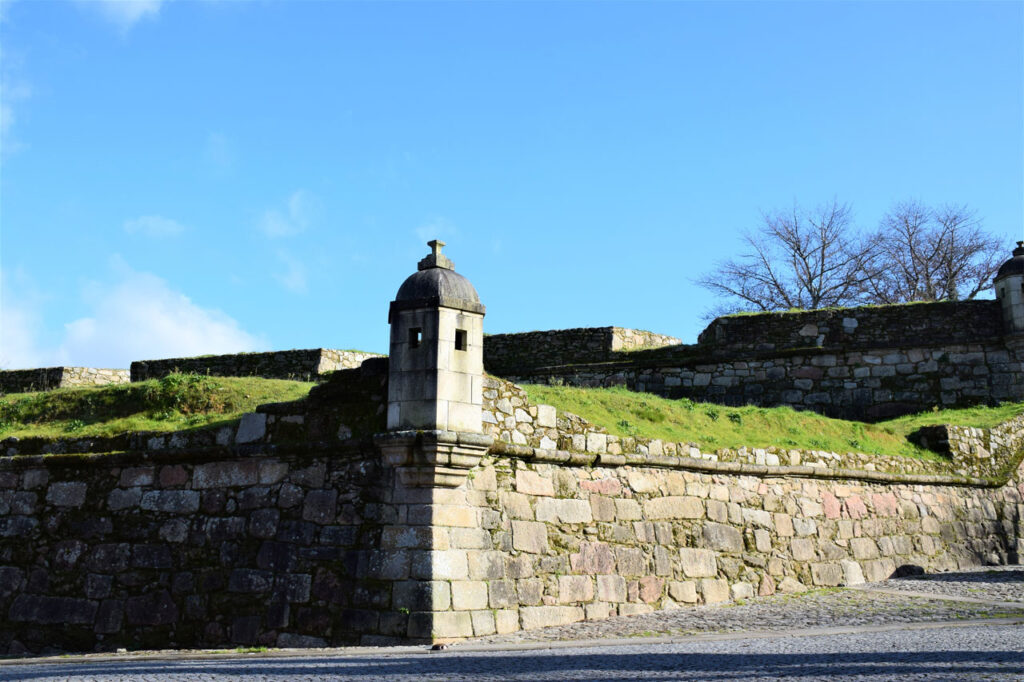
In the Old town stand the remains of its 14th century forts, which watched over the river from above. Few vestiges remain today of what was the Monçao medieval castle, as it was demolished due to the new construction of the fortification. There are only a few remains of the reused wall in the northern part of the Fortress and a walled-in gate between the bastions of São Francisco and São Filipe. The castle had existed since the 13th century and later in the 17th century the city was completely walled in during the Restoration War.
At first it only had two gates, and shortly afterwards nine bastions and five more gates were added: Salvaterra, O Rosal, A Fonte or As Caldas, S. Bento and O Sol or Os Milagres. The project was carried out by the French military engineer Miguel de L'Ècole under the direction of the master João Alves do Rego. Its walls were built in 1656 and its shape is a polygonal bastioned plant.
Over the years and the with the town´s growth, part of its walls were demolished in the 19th century in order to construct new buildings and roads. Even the passage of the train that during the 20th century ran through part of its walls, which is now a 14-kilometre eco-path that links Monçao with Valença.
In the Deu-la-Deu Square there is a beautiful fountain crowned by a statue of the same name with his hand on his chest, an inhabitant of Monção who, faced with a siege of Castilian soldiers in the year 1368, managed to get enough flour from the hungry locals to make a few loaves of bread, and throw them to the enemies, giving a feeling of abundance with the message “If you want more, let us know". The Spaniards were discouraged and withdrew.
At the northern end of this square is the Senhora da Vista bastion, which offers views towards Spain. Nearby is the Chapel of Mercy, with a coffered ceiling with painted cherubs. To the east of this is the cobbled old town. Walking along Glória street, you will arrive at the small and beautiful Mother Church of Monção, of Romanesque origin, where Deu-la-Deu is buried.
Monçao also has thermal waters that are used in the thermal station. At 700 meters away from the village, the farm is located in an area of great natural beauty, with one of the most modern spas in the country.
To learn more
The origins of Monçao are not entirely clear since, during the creation of the Portuguese nationality, no specific references to the village appear, but other nearby villages are mentioned. Possibly because it would be of no strategic interest to the crown.
During the reign of Sancho I the small existing village was fortified, although there are no remains from those times, but later in the reigns of Afonso II and D. Dinis where Monçao appears as a village in the consultations carried out by the former in 1258.
It received the charter in 1261 and the city was consolidated in the early years of the 14th century when it received the Royal Charter and the Matriz Church was built.
The medieval castle would have been built by the middle of the 13th century, as evidenced by the reference to the “miles de Monçom" (soldiers of Monção), in the royal charter of 1261. It is in Gothic style, as shown by the oval profile typical of this system, the Homage´s tower is associated with one of the doors and an urban grid layout that allowed a more house´s arrangement.
The fortification was reformed in the 15th century to adapt it to the warfare technique´s advances of the time. It consisted of a double wall system and the river tower.
Few traces remain today of the Monção medieval castle as it was demolished by the bastioned fortification construction and the urban fabric´s growth. Only a few fragments of the reused wall remain in the northern part of the Fortress and a walled-in gate between the São Francisco and São Filipe bastions.
In the 17th century, in the Restoration War context, a great military reform was carried out and a fortification project of the village was carried out. Its author was a French engineer who was named “Mestre de Todas as Obras de Fortificação no Norte de Portugal", Miguel de l'Escole and the works´ direction was taken by the master João Alves do Rego. At the beginning of the 18th century and under the direction of the military engineer Manuel Pinto de Vilalobos, modifications were made to the fortification that reflected the plan he drew up in 1713. A new construction stage took place between 1762 and 1769 when Friedrich Wilhelm Ernst zu Schaumburg-Lippe, Count of Lippe, introduced improvements to Monção´s wall, leaving it with “1,000 circuit´s fathoms"; and capacity to house a garrison composed of “an infantry battalion, 4 horse companies and 15 artillery pieces".
From 1840 until the first decades of the 20th century, there were many demolitions to access the urban fabric. In 1910 it was declared a National Monument.
The fortification has an irregular polygonal floor plan and is made up of 12 bastions of different sizes arranged asymmetrically. These bastions have sentry boxes at the corners and some of them have a knightly redoubt. There are also three doors left of the five that existed: Salvaterra´s door, which established the connection with the river; O Rozal´s door, which communicated with the fairground enclosure and the Caldas´ gareway, which communicated with the river and points out the way to the thermal baths.
To know it better
Monção is in the north of Portugal in the district of Viana do Castelo. It is bordered by the Spanish towns of Salvaterra do Miño and Arbo to the north, by Melgaço to the east, by Arcos de Valdevez to the south, by Paredes de Coura to the southeast, and by Valença to the west. In terms of heritage, the Alvarinho Museum, the Casa Museu de Monção, the Igreja Matriz, the Manueline fountain, and the statue of Deu-la-Deu Martins are of particular interest. The latter represents a mythical figure of Monção, who, according to legend, saved the town when invaded by the troops of Henry II of Castile.
The thermal resort of Monção is a space dedicated to relaxation, nature, and silence. In its thermal waters, it is possible to enjoy hot and cold water-baths surrounded by the most utter nature.
Gallery
Location
- Town
- Si
- Municipality
- Monçao
- Province
- Distrito de Viana do Castelo
- Country
- Portugal
The asset
- Type
- Old town
- Eco-destination
- Río Miño
- Environment
- Rural
- Relevance
- International
How to get there
- Access
- By sea By land
- Port
- Pantalán Monção
- Distance
- 1,8 km / 4 minutos en coche
The visit
- Visitable
- Yes
- Interpretation
- Yes
- Accessible
- No
- Parking
- No
Coordinates
- Latitud
- 42.07904300
- Longitud
- -8.48526500