


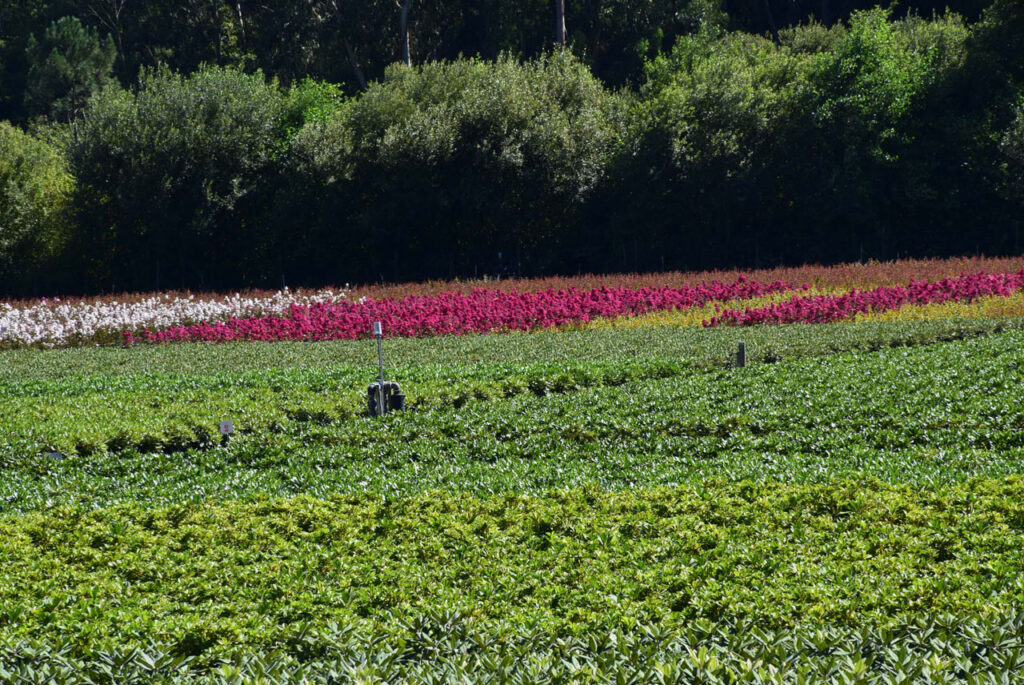
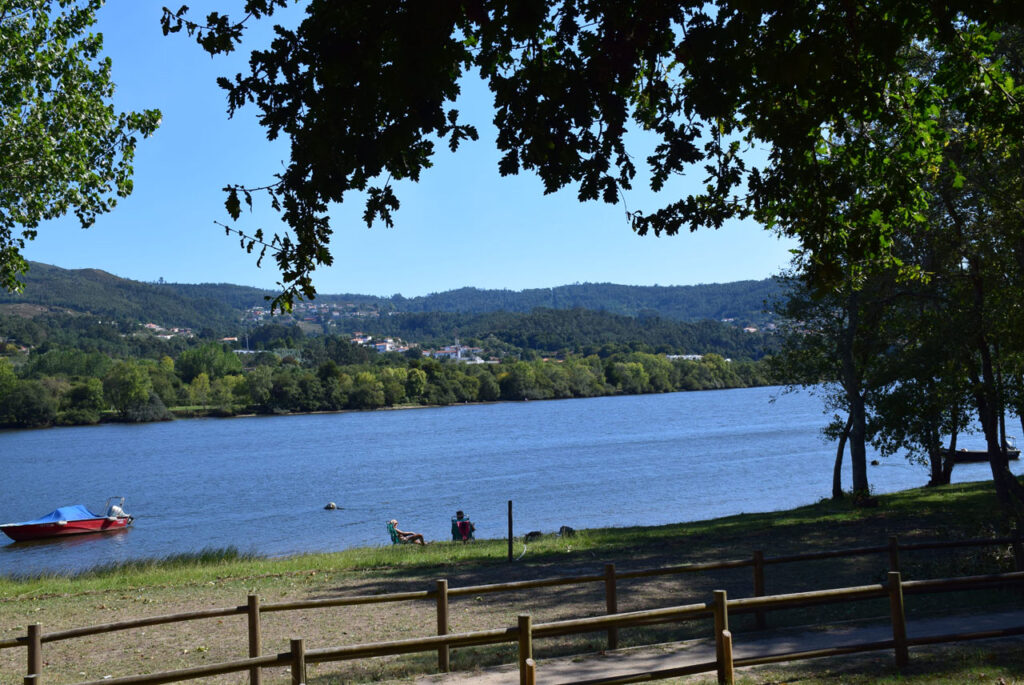
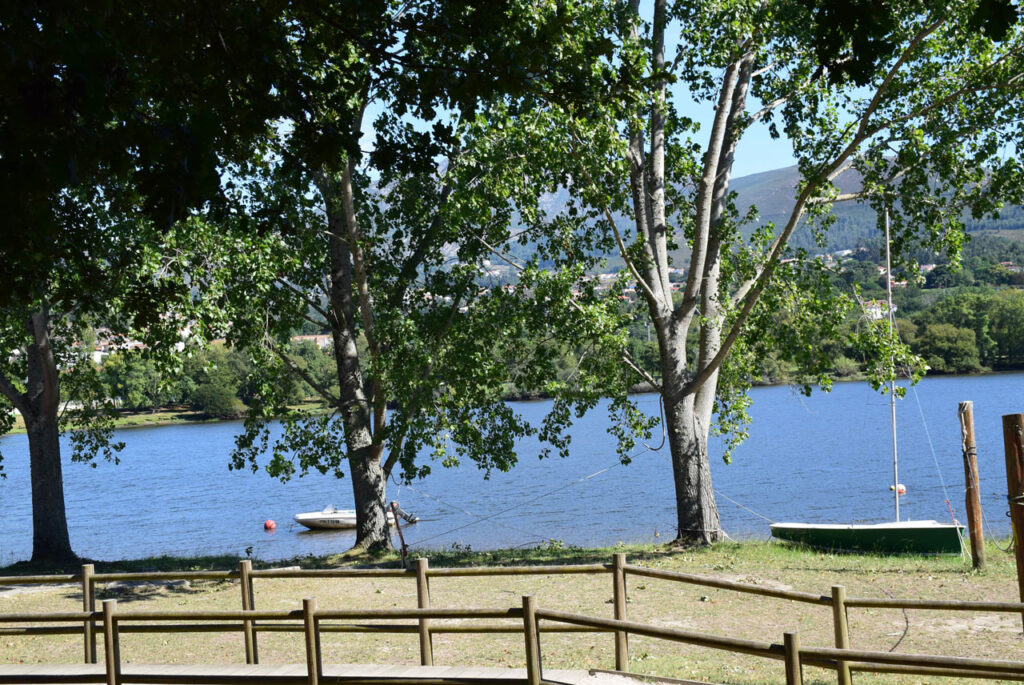
Tomiño. Fluvial beach. Flower plantations in O Rosal
About this heritage
The Baixo Miño region is made up of the municipalities of Tui, Tomiño, O Rosal, A Guarda and Oia. This area is characterized by a microclimate that, together with the quality of its acidic lands, favours the development of the horticultural sector.
O Rosal has a fertile valley where it grows its symbol, roses, and also the most famous Albariño vines.
The crop branch provides an important economic and social development for the whole region. Large areas of land are dedicated to outdoor cultivation, especially of ornamental plants, which makes it an important source of employment and wealth.
The origin of ornamental nursery in the Baixo Miño goes back to the early 20th century, when “Viveiros Peixoto” set up in the areas as the first ornamental plant nursery.
Nowadays, more than 100 hectares are dedicated to the production of ornamental plants, about 50 hectares to flower´s production and the same amount of land to garden products.
It is a dynamic sector that continues to advance and expand, and also to increase its exports, not only to the Spanish territory but also to countries such as Portugal, France, England, Belgium or Switzerland.
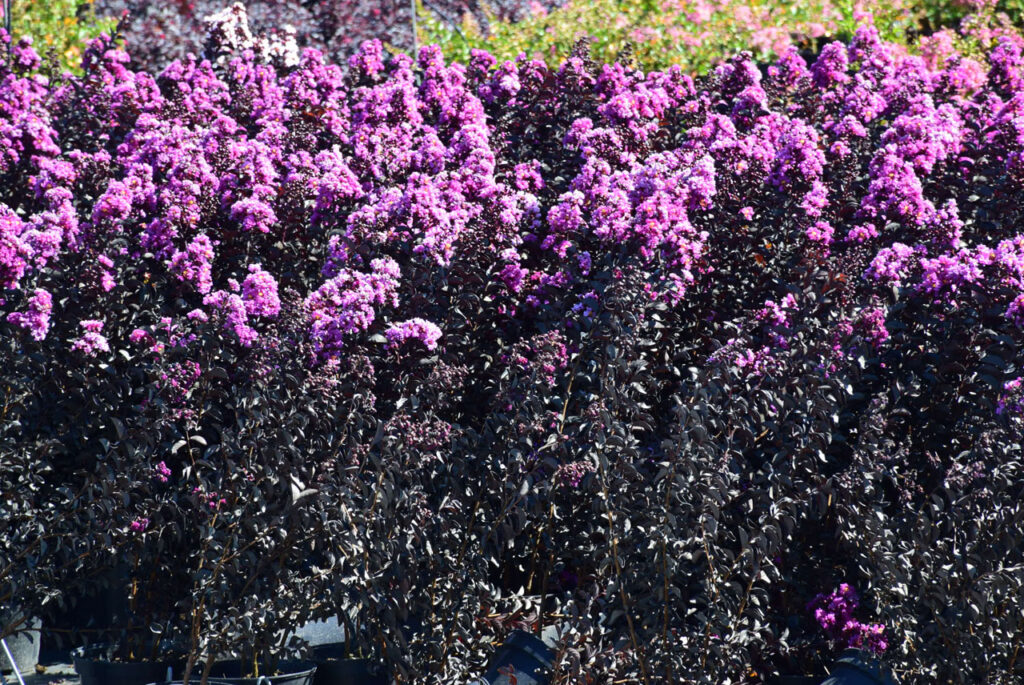
The production of the nurseries focuses on ornamental plants and trees, such as hydrangeas, rhododendrons, camellias, magnolias, azaleas and hollies.
In recent years, kiwi production has increased thanks to its good adaptation to this microclimate and also Mirabelle, the only fruit originally from this place, and which has raised its demand.
In Tomiño and O Rosal, there are the fluvial beaches of Goián and Eiras, both linked by a path that runs along the Miño river. This beaches are ideal to spend hot summer days.
To learn more
In recent years, the production of exotic fruits such as the delicious Actinidia kiwi has been gaining ground thanks to the area´s microclimate and its excellent adaptation.
Kiwi fruit is native to continental China, specifically the Himalayan slopes and is currently grown in several countries such as New Zealand, Brazil, Italy, Spain and Chile.
It is a vitamin-rich fruit that helps with the iron-absorption, fights constipation and aids digestion, among other things.
In Spain, the production of this fruit is mainly concentrated in Galicia, which accounts for 55% of the national production and the peculiarity lies in the fact that 60% of this cultivated area is in the Baixo Miño.
Future prospects are very positive because Spain only consumes 10% of what is produced and kiwi is a fruit that maintains a fairly good yield per hectare, helped by this wonderful area´s good climatic conditions.
Another start fruit in the Baixo Miño region is the Mirabelle Prunus x domestica var. Syriaca, cousin of the plum. It is an exquisite fruit, difficult to find outside Galicia and which fresh fruit can be eaten for just 15 days a year.
It is native to the German Black Forest and the first trees were brought to O Rosal in the 1930s by José Sánchez García.
Mirabelle quickly spread throughout this valley and was initially grown mainly for domestic consumption. They were preserved in syrup and also presented as an exclusive dessert the restaurants of the area. The fame of its taste and texture increased the demand for this product and also the varieties of presentation, such as jams, eau-de-vie and liqueurs.
To know it better
Thanks to the Miño river, Tui has several bathing areas such as the fluvial-beaches of Areneros, in Guillarei, and Penedo, in Candelas. During the 20th century, the most frequented beach was Metralla. This beach used to be very close to the town centre, but today it has practically disappeared.
On the other hand, in O Rosal, also in the area of Baixo Miño, where few products aren´t capable of being harvested. All kinds of products can be planted on this land. Examples can be grapes, lemons, strawberries or kiwis. In addition, they have “Flores Toxal” , a nursery with more than 80.000 square metres dedicated to the production of different types of carnation, gerberas, roses, lilies, gladiolus, irises, among others. Tui is a Galician city located in the eastern part of the Baixo Miño region, in the province of Pontevedra. This town stands out for its proximity to Portugal and for the passage of the Miño river.
Gallery
Location
- Town
- O Rosal
- Municipality
- Tomiño
- Province
- Pontevedra
- Country
- Spain
The asset
- Type
- Beach
- Eco-destination
- Río Miño
- Environment
- Rural
- Relevance
- National
How to get there
- Access
- By sea By land
- Distance
- 0 km
The visit
- Accessible
- No
- Parking
- No
Coordinates
- Latitud
- 42.05394800
- Longitud
- -8.62085000