
Cortegada island. Laurel forest and flora
About this heritage
In front of Carril´s port, an islet called by the Romans "Corticata" emerges, which we know today as Cortegada. Belonging to an archipelago integrated as the smallest of the four that make up the Atlantic islands National Park, is the only one that is located in an inland sea, the Arousa´s estuary.
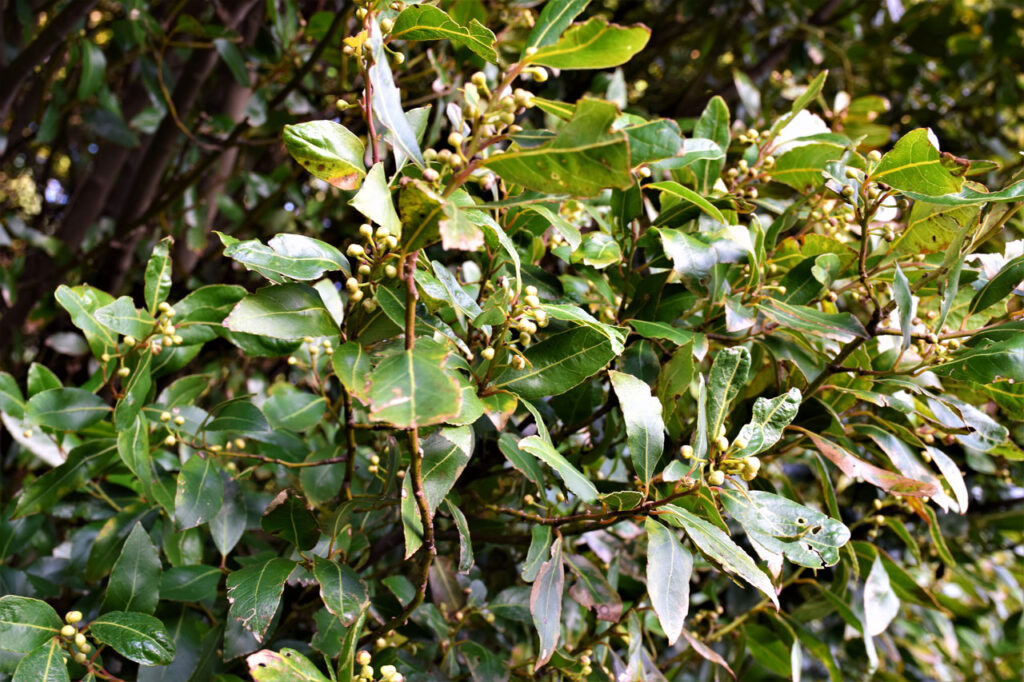
Identified by its dense forest, which occupies 2.5 of the 43.8 hectares of land emerging from the estuary, its flora dates from 65 million years ago, the Tertiary or Cenozoic Era, where laurels abounded in Galician coasts. Its flora, which occurs more frequently in southern regions with a temperate, humid and warm climate, is a type of subtropical cloud forest or high forest, with large trees, vines and lianas whose leaves resemble laurels, from which it takes the name "laurel forest". It is here, in Cortegada, that we find the largest example of laurel forest of Europe.
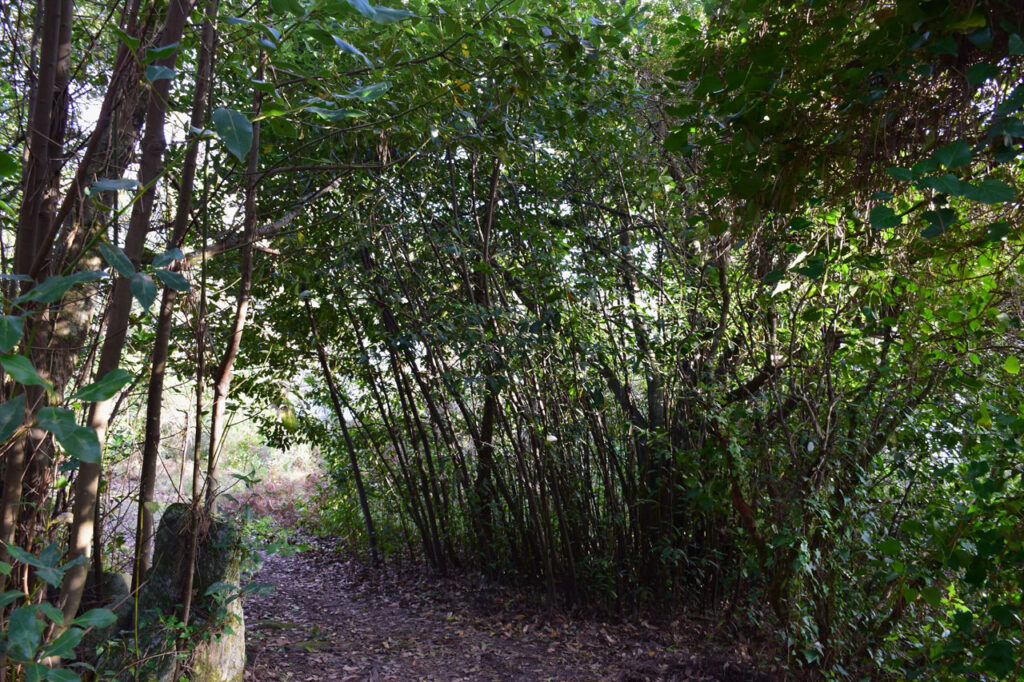
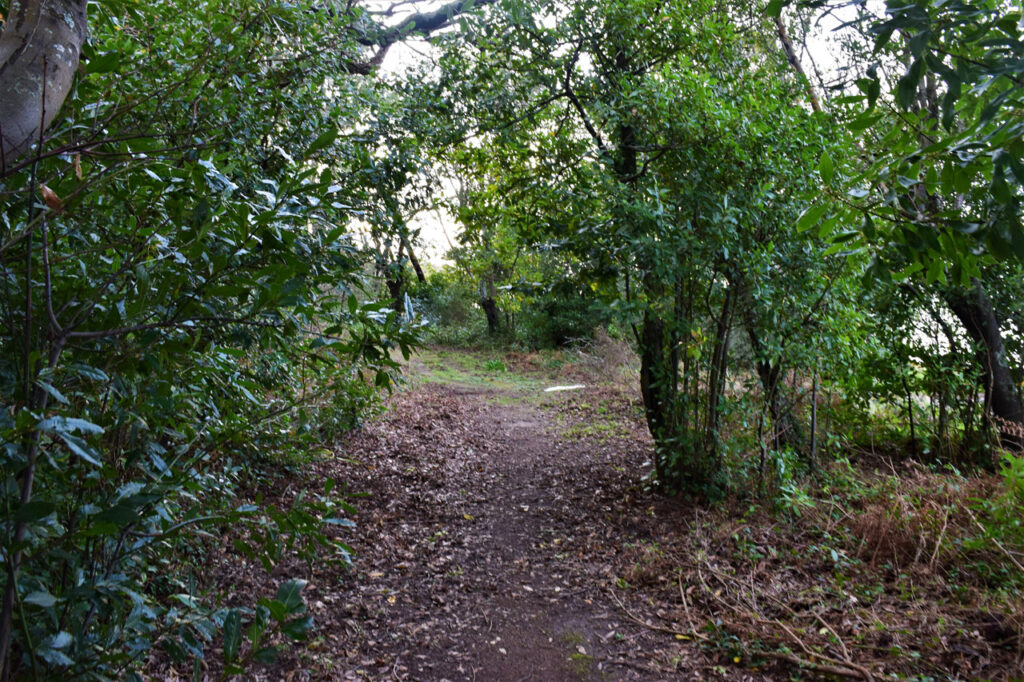
The largest specimens exceed ten meters in height. Their branches intertwine to create a kind of vegetable dome crossed by light in a spectacular and sifting way. This cover protects a rich understory where ivy and up to 800 species of mushrooms abound, some of them unique in Galicia. It is a perfect habitat for Europe's largest reptile, the arnal lizard, birds such as the grey heron, the owl or small mammals. The laurels also grow among the remains of the old village. Because this is the true fossil of Cortegada, a humanized space where time stopped 102 years ago.
It took many years of abandonment, almost a century, for this forest to emerge. The natural value was not the predominant in Cortegada´s history, so it is also worth noting its important cultural and historical value, sometimes neglected. When, in 1910, the donation of the island to the Royal House was forced and the sixteen families were evicted, now free from human pressure, the vegetation typical of the hitherto worked orchards began to take over Cortegada along with the few trees that dotted its surroundings. This is how, over the last century, Cortegada gained its magnificent laurel forest. Because the laurel was one of those crops that made life easier for those who found a home there for centuries.
To learn more
Cortegada is part of the smallest archipelago of the Atlantic islands National Park. Bathed by the estuary of the Ulla river, it is the only inland island of those that make up the Galician National Park. Very close to Carril, it stands out for its leafy humid forest, fed by a temperate climate, more typical of southern regions than of the Atlantic. For this forest to emerge, many years of abandonment were necessary, almost a century; to which is added the genetic heritage of a flora that arose thousands of years ago: the Tertiary or Cenozoic Era.
Due to its location near the mouth of the Ulla River, it is protected from the wind within the estuary of Arousa. This location and its topography provide more favourable environmental conditions than those of the other islands that are part of the National Park, for the development of hydrophilic forests. The island is connected to the mainland by a sand´s tongue of 189 meters wide, covered during high tide and exposed at low tide. On the sandbank, a road was built called "Caminho do Carril", developing the ideal environment for the commercial breeding of the famous Carril clams. The tides change rapidly in the area so it can be dangerous for pedestrians to walk on the road.
Cortegada has an oceanic climate, with warm summers and mild winters, more typical of a southern area. The warm and humid air that blow from the ocean are forced upwards by the terrain, which cools the air mass to that of the dew point, causing the humidity in the air to condense in the form of rain or mist, creating a habitat characterized by cold and humid conditions in the air and ground.
It has two main sources of fresh water: a seasonal lagoon and fresh groundwater. This last water source is very peculiar since the island is surrounded by salt water. The island is almost flat; its highest elevation is about 6 meters. It has a surface area of 54 hectares of land in a rectangular shape, with a large amount of water throughout the land, which can be seen flowing in small streams or in ponds and puddles. The drops of water, cover plants, rocks, soil, trunks, moss and paths, making the island impassable during heavy rains. However, the beauty of the ensemble makes Cortegada an almost magical tourist attraction.
In short, it has been Mother Nature herself who has taken possession of this unusual territory. The laurels planted by the villagers grew in an unusual way, reaching a height of over 20 metres and a perimeter of 2 metres, making the island one of the largest laurel forests in Europe. Not to mention the old willow tree or the stone-eating oak tree (“Comepiedras”) that, planted next to a wall, integrated one of its rocks into its trunk. The contour of the island holds more than 800 different species of mushrooms in its understory. Some of them are native and others are in danger of extinction, turning the land into a real paradise for mycology.
To know it better
Cortegada island has the largest laurel forest in the Iberian Peninsula. There are also pine and oak plantations, as well as ivy.
The laurel, in ancient Greece, was a plant dedicated to Apollo. Later, Apollo himself declared this plant sacred and gave it a meaning: patience, glory and triumph. That is why, in Roman times, a laurel wreath was placed on the winners of, for example, the Olympic Games.
Cortegada island is located in the province of Pontevedra. The Cortegada archipelago is made up of this island and other island groups, the Malveiras Islands and the Briñas Islands. Cortegada, is the largest of them. In its forest, laurel and seafood stand out. In fact, the seafood farmers of the Arousa estuary take advantage of its location to collect these products.
Gallery
Location
- Town
- En barco privado: Puede visitarse todo el año pero es preciso tener el permiso de navegación y el permiso de fondeo expedido por el Parque.Accesos a pie: Sí
- Municipality
- Vilagarcía de Arousa
- Province
- Pontevedra
- Country
- Spain
The asset
- Type
- Island
- Eco-destination
- Ría de Arousa
- Environment
- Natural
- Relevance
- International
How to get there
- Access
- By sea By land
- Distance
- 0 km
The visit
- Visitable
- By private boat:It can be visited all year round but it is necessary to have the navigation permit and the anchoring permit issued by the Park.Access on foot: Yes
- Accessible
- No
- Parking
- No
Coordinates
- Latitud
- 42.61796700
- Longitud
- -8.78527100