


Valga. Bella Otero museum
About this heritage
The Museum of Valga´s History was born under the pretext of wanting to divulge the natural heritage and history of Valga´s City Council. The exhibition includes the remains found in “Igrexa Vella” (Old church), the archaeological prospection of Agramar and the Mercado dos Mouros site, among others. A journey from the Bronze Age to a modern town.
As well as the figure of her most illustrious neighbour, Agustina Carolina Otero Iglesias, better known as “La Bella Otero" (“The beautiful Otero”).
The main building of the museum, recently built, is divided into four exhibition areas where history, art, geography and ethnography make it a visit of great interest.
The ground floor is a presentation focused on the territory and the natural environment of the City of Valga. On the first floor we find a journey through the history of Valga from its first settlers to the contemporary world. The mezzanine area is dedicated to the life and work of the Valencian historian Xesús Ferro Couselo.
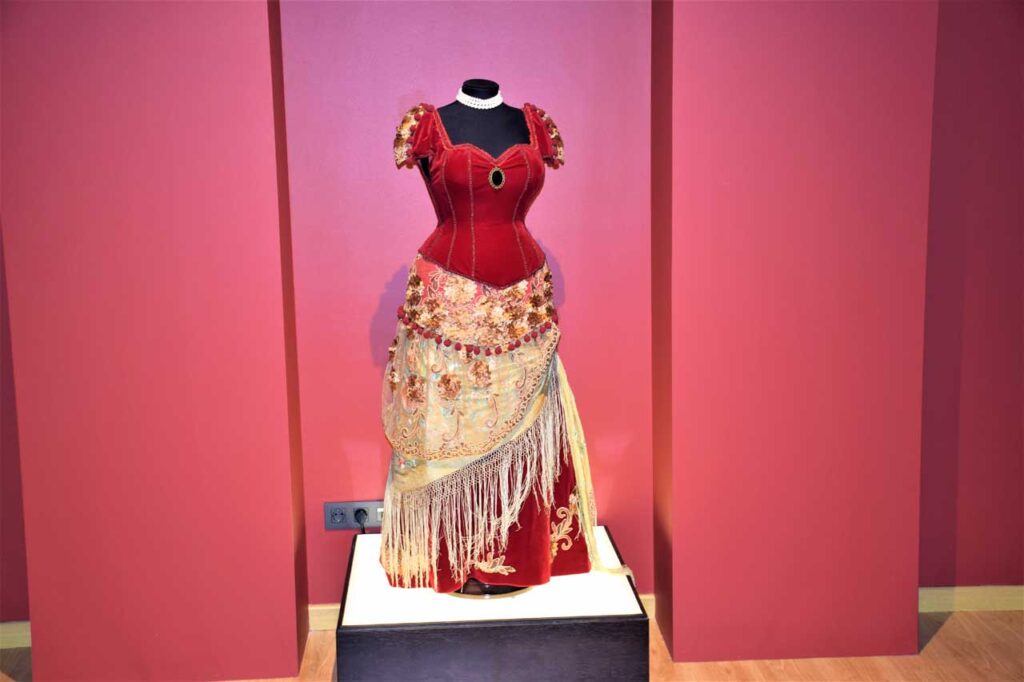
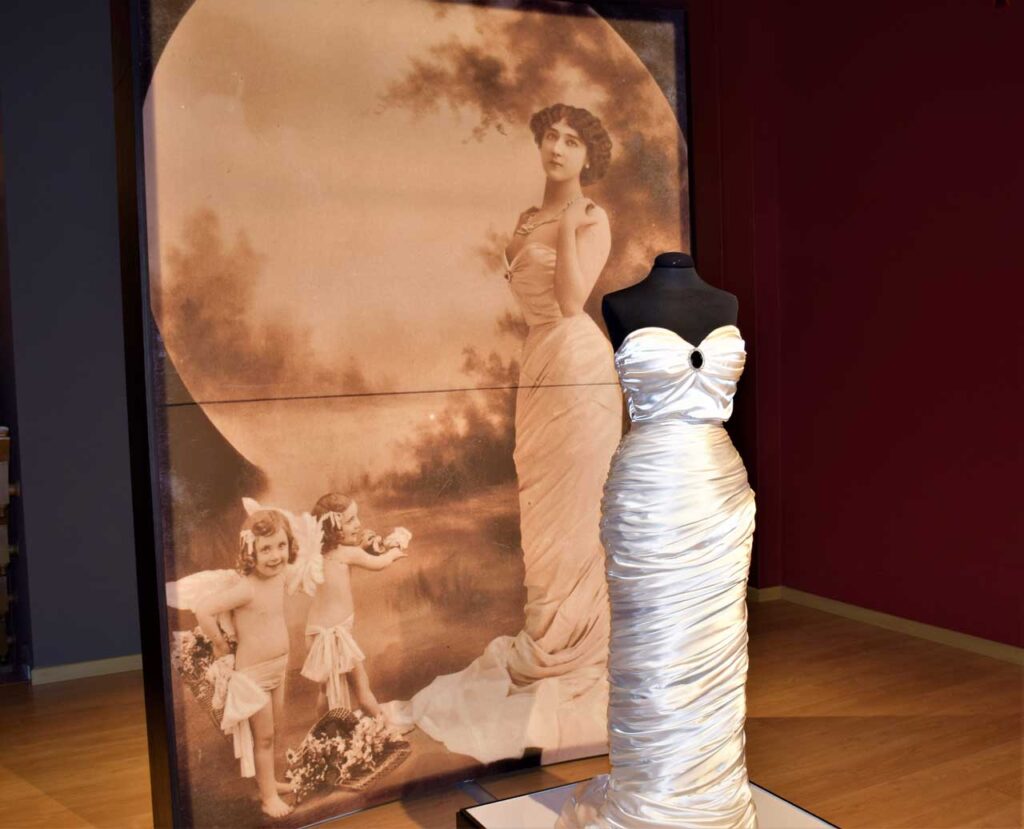
The space on the top floor revolves around the exciting figure of the “Bella Otero";. It has a chronological exhibition of the chapters of the character's story, within a worldwide socio-economic and political context. It also reflects the role of women throughout history and their contribution to society.
Attached is another exhibition building. It is a representation and recovery of the traditional Galician house of the late nineteenth century. This house, linked to the Bella Otero's childhood and with a careful ethnographic recreation, reflects not only the Galician culture and traditions, but also how the first years of the artist who crowned the Belle Époque were.
To learn more
Bella Otero lived in France in the Belle Époque Française. She was a dancer, singer, actress and courtesan.
A part of the centre is configured around this character of the Bella Otero in her birthplace, because of her uniqueness and her wide world knowledge. Her home village´s appreciation was reflected in her will where she bequeathed her property to the neediest people of Valga, which at the time was limited to 609 francs.
The building has three floors with a careful and attractive aesthetic that allows a pleasant approach to Valga´s environment and its historical past.
On the ground floor there is a presentation of Valga´s territory, its natural resources (Ulla river, Parafita waterfalls, Mina Mercedes) and the main roads that cross the municipality such as the Portuguese Way or the Royal Way. To place the visitor in Valga´s geographical context.
The first floor brings the tourist closer to the history of Valga itself. It begins its historical journey from 1800 to. C. until today and a review of the main historical and artistic elements is carried out.
The visitor gets information about the Romanesque or neoclassical churches and then can visit them live. There are also archaeological remains of the “Igrexa Vella” (Old church) or an old Roman port on the Ulla´s banks, Mercado dos Mouros, all of them still visitable.
You can see landmarks or works of art, such as the Battle of Casaldeirigo, which marked the victory of Valga´s residents against the Napoleonic troops, or see a piece of great beauty as the Capital of Setecoros, which dates from the sixth century.
The floor dedicated to illustrious people is the second one. On the one hand, the area dedicated to Xesús Ferro Couselo, where both the erudite figure and the person are addressed. On the other hand, the special and mysterious Bella Otero, with unique pieces such as a facsimile of her birth certificate, international newspapers of the time, ceramic figures or the only recording left of what was the most recognized artist of Belle Epoque, a small video shot by the Lumiere brothers' camera, only 10 years after the cinema was invented.
The “Casa de Bella Otero” (Bella Otero´s house) is located in an annex building. It is a traditional house, recreated with ethnographic pieces, which gives an idea of the way of life at the end of the 19th and beginning of the 20th century, not only in Valga but also in Galicia.
To know it better
Valga is a municipality that belongs to the province of Pontevedra. It borders the municipalities of Dodro and Pontecesures to the north and Catoira and Caldas de Reis to the south.
Valga has a museum where you can learn about the history and heritage of the municipality: the Local Historical Museum. One of the most important figures of the City Council has been Agustina Carolina Otero Iglesias, better known as La Bella Otero. In fact, the museum is located on his family's property, as it has been restored as a tourist attraction.
La Bella Otero was a dancer, singer, actress and courtesan living in France, but born in Valga. Her house is the new museum and it reflects the love that this woman had for the town.
There is a chronological exposition of her life and role as a woman throughout history. Furthermore, in her will reflected her desire to leave her assets to the neediest in the municipality.
On the other hand, in the museum we can also find remains found in “Igrexa Vella” (Old church), the archaeological research of Agramar and the site of the Mercado dos Mouros.
Gallery
Location
- Town
- Valga
- Municipality
- Valga
- Province
- Pontevedra
- Country
- Spain
The asset
- Type
- Museum
- Eco-destination
- Ría de Arousa
- Environment
- Rural
- Relevance
- Local
How to get there
- Access
- By land
- Distance
- 3,500 km
The visit
- Schedule
- Ticket Type: Free / Opening hours from Monday to Friday From 10:00 to 13:00
- Visitable
- Yes
- Accessible
- Sí
- Parking
- No
Coordinates
- Latitud
- 42.69923900
- Longitud
- -8.64846900