


A Guarda. Santa Cruz Castle (Interpretation Centre and San Sebastián´s bastion)
About this heritage
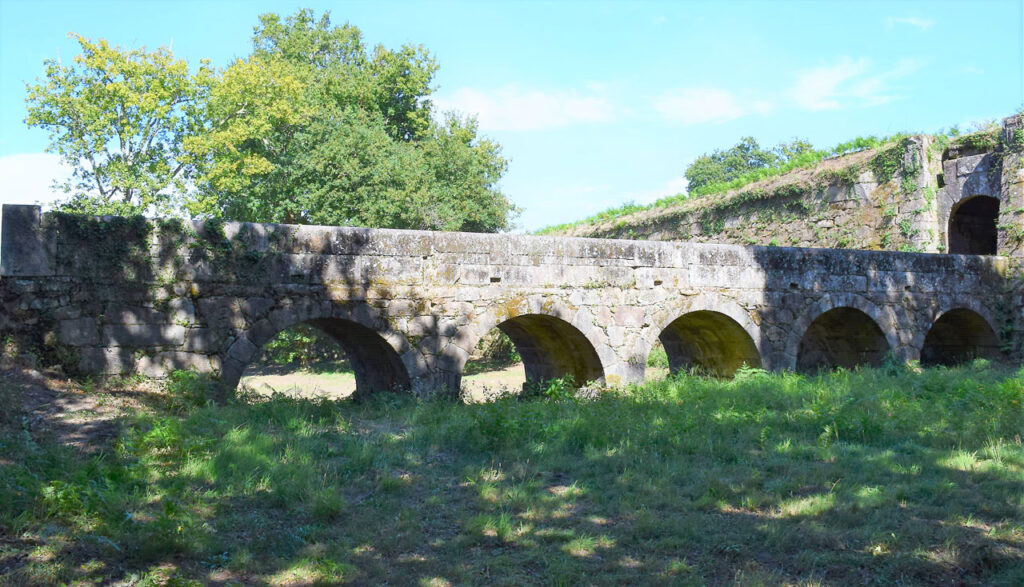
Spain, Portugal, War of Independence, 17th Century, Miño River, are the references that we will use to explain the construction of this fortress-castle known as Santa Cruz Castle, which was part of the defensive framework built by Spain in the final stretch of the Miño River. It was built in 1664 and stones were used to form the medieval wall that surrounded the town, sections of which are still preserved. The floor plan is an irregular polygon with four bastions in which there are stone sentry boxes.
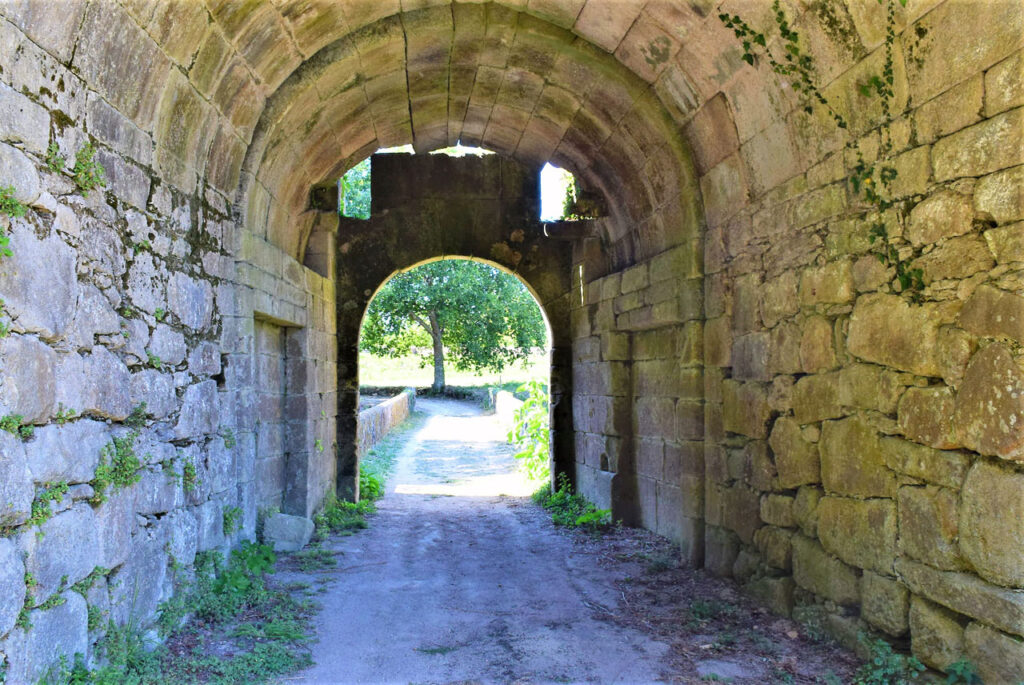
Access is through the Puerta de la Villa. In the parade ground there was a chapel, the governor's house, the barracks for the troops, warehouses, a ammunitions storage and another series of spaces that are detailed in the plans that are preserved from that time.
The fortress was taken by the Portuguese army in 1665 and it was occupied by Portuguese troops until 1668. But this was not the only occupation suffered by foreign troops, since in 1809 it was occupied for a few months by French troops during the Napoleonic invasion at the hands of General Merlé until troops made up of Galician and Portuguese soldiers recovered the castle. These same troops would later come to free Tui.
A Guarda is known for many other interesting tourist proposals, but we want to highlight the Castro de Santa Tegra (traditional military fortress) , located in the mountain with the same name and which we will talk about later.
A Guarda also belongs to the municipalities through which the Portuguese Coastal Route of the Way of Saint James passes.
To learn more
To see part of the medieval wall that surrounded the town, one must go to Baixo Muro Street and Ireira Street, which, as we already mentioned, was used to build the castle. The presence of this fortification shows the strategic importance of A Guarda in the Middle Ages.
At the beginning of the 20th century, a ceramic factory called La Santa Cruz – who served the Royal family - was installed inside the fort.
Today, inside the castle is the interpretation centre of the fortress so that visitors can learn about its importance and historical context. To visit it is necessary to go on a weekend or holidays, the prices are very popular and the first Saturday of each month is free.
But A Guarda has a lot to do with it and, as an example, its impressive castro of Santa Tegra. This castro (traditional military fortress) had an extension of more than 20 hectares, although at present only four sectors are visible. The first written references to this site are from the second half of the 19th century. It is considered to be one of the most important examples of Castro-Roman culture in the northwest of the peninsula.
In addition to the castro, Santa Tegra chapel and its crosses and cruceiros (stone crosses) are also worth mentioning. Santa Tegra mountain also provides us unbeatable views towards the Miño estuary, Portugal, O Rosal valley and the Atlantic Ocean
A Guarda, besides Oia, O Rosal, Tomiño and Tui, is part of the so-called O Baixo Miño, a combination of mountain and sea with a great landscape value and rich archaeological heritage.
To know it better
A Guarda is a municipality in the southwest of Galicia, located in the province of Pontevedra. It stands out for being a seafaring town.
In this town, you can find the Castle of Santa Cruz. It is a fortification that served as a defence system during the 17th century in the Independence War between Spain and its neighbour, Portugal.
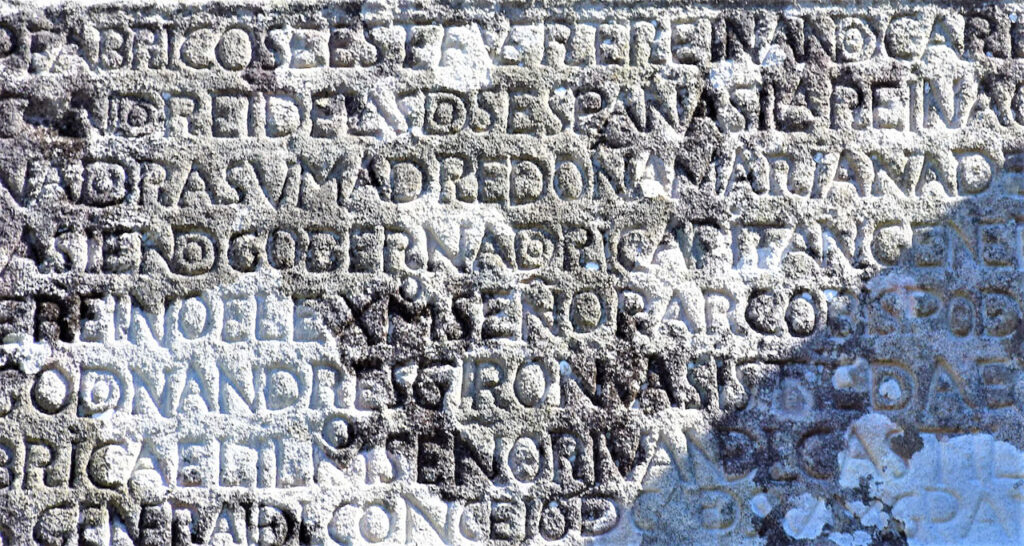
The fortification, built with the stone that surrounded the town´s wall, dates from 1664 and is part of the cross-border fortresses of the lower Miño. The name of this castle comes from the Marquis of Santa Cruz de Marcenado and its access is through the Puerta de la Villa.
This construction passed through different hands. First, in 1665, it was owned by Portugal until the end of the war, which ended in 1668. Later, the French managed to occupy it in 1809 but it only lasted a few months. Finally, from the middle of the 19th century, with the disentailment it became the property of private individuals until its recent recovery for public use.
Today, in this Castle we can find interpretative tables and downloadable audio guides to learn a little more about the history of this fortress. All this thanks to its complete Interpretation Centre.
Gallery
Location
- Town
- A Guarda
- Municipality
- A Guarda
- Province
- Pontevedra
- Country
- Spain
The asset
- Type
- Castle
- Eco-destination
- Río Miño
- Environment
- Urban
- Relevance
- National
How to get there
- Access
- By sea By land
- Distance
- 1,000 km
The visit
- Visitable
- It can be visited all year round.
- Interpretation
- Information panels on the second floor of the main building facilitate understanding of the historical context and the role played by the Guard fortress in the cross-border stronghold system /// Audio guides are also available
- Accessible
- No
- Parking
- No
Coordinates
- Latitud
- 41.90450400
- Longitud
- -8.87258300