


Pontedeume. Historic Center
About this heritage
Pontedeume is a municipality in the A Coruña Province. It borders the municipalities of Miño, Cabanas, Capela, Vilarmaior, and Monfero, located between the cities of A Coruña at 38 km, Ferrol at 18 km, near Betanzos at 26 km, and As Pontes de García Rodríguez at 31 km.
The patron saint festivities are celebrated in September, specifically, the Our Lady of Virtues or riparian woodland (La Virgen de las Virtudes o Del Soto) holiday on the 8th and Saint Nicolas of Tolentino on the 10th. The latter is the patron saint and co-patron of the town, the principal patron being Saint James (Santiago).
The Pontedeume town's history begins in the XIII century when Alfonso X of Castile and Leon, known as "the Wise," granted the inhabitants of Pouzos and Bezucos the benefit of dwelling or living in the area called Ponte do Eume, where they could hold an annual market and judge themselves.
This King governed the village until 1371, when King Henry II granted the lordship to Fernán Pérez de Andrade, undoubtedly one of the most prominent personalities in the Galian history and one of the most relevant Galician noble families in the Middle Ages.
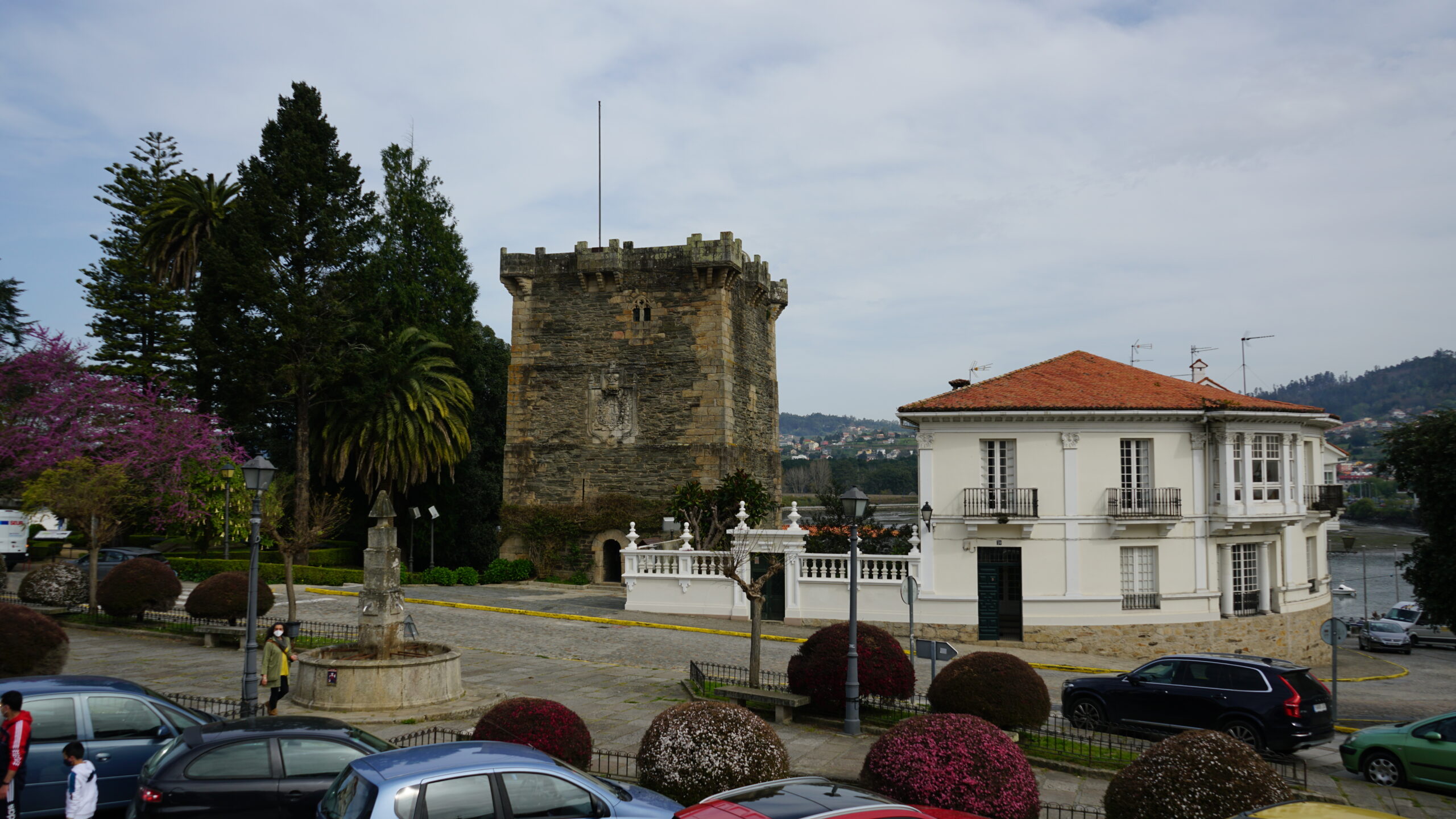
At that time, the Andrade lineage acquires transcendent relevance since Pontes de Eume has become the capital of all its estates, and a perfect location to build strategic bridges and a fortress, of which, currently, only the Tower remains. Its heraldic symbols were the bear and the wild boar, emblems of the Council.
In the mid-1800s, the most significant infrastructure works were carried out, getting electric light, inaugurating the street lighting and actual port, and setting the tiling of the arcades of the Rúa Real (Royal Street). In 1867, the works of the bridge were finished that remains today.
Pontedeume is part of the English Way, so it is the route taken by pilgrims from Northern and Western Europe. In the past, traveling by sea to Santiago de Compostela reduced the round trip to three weeks, an advantaged from the 5-month round-trip journey of those crossing the Pyrenees. The English Way of Saint James became popular in the 15th century.
To learn more
Pontedeume is a coastal town of medieval origins. This municipality comprises several parishes: Santiago de Pontedeume, Santiago de Boebre, San Martiño de Andrade, Santa María de Centroña, San Cosme de Noguierosa, San María de Ombre, San Miguel de Breamo, and San Pedro de Vilar.
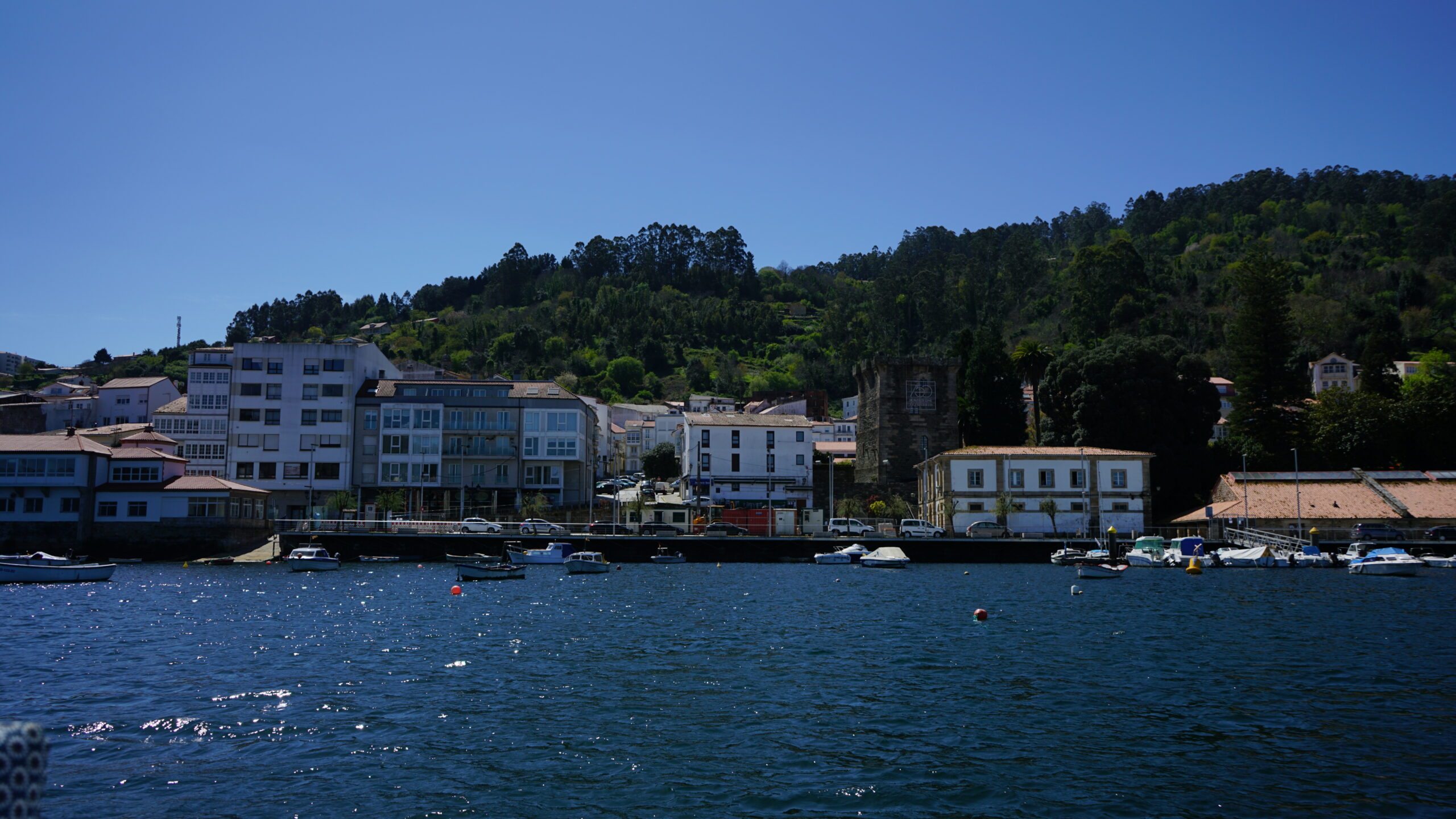
Pontedeume is in the Ártabro Gulf at the mouth of the Eume River in the Ares Estuary. It borders the Ares estuary and the Cabanas municipality to the north, the Monfero municipality to the east, the Vilarmaior and Miño municipalities to the south, and the Betanzos estuary to the west.
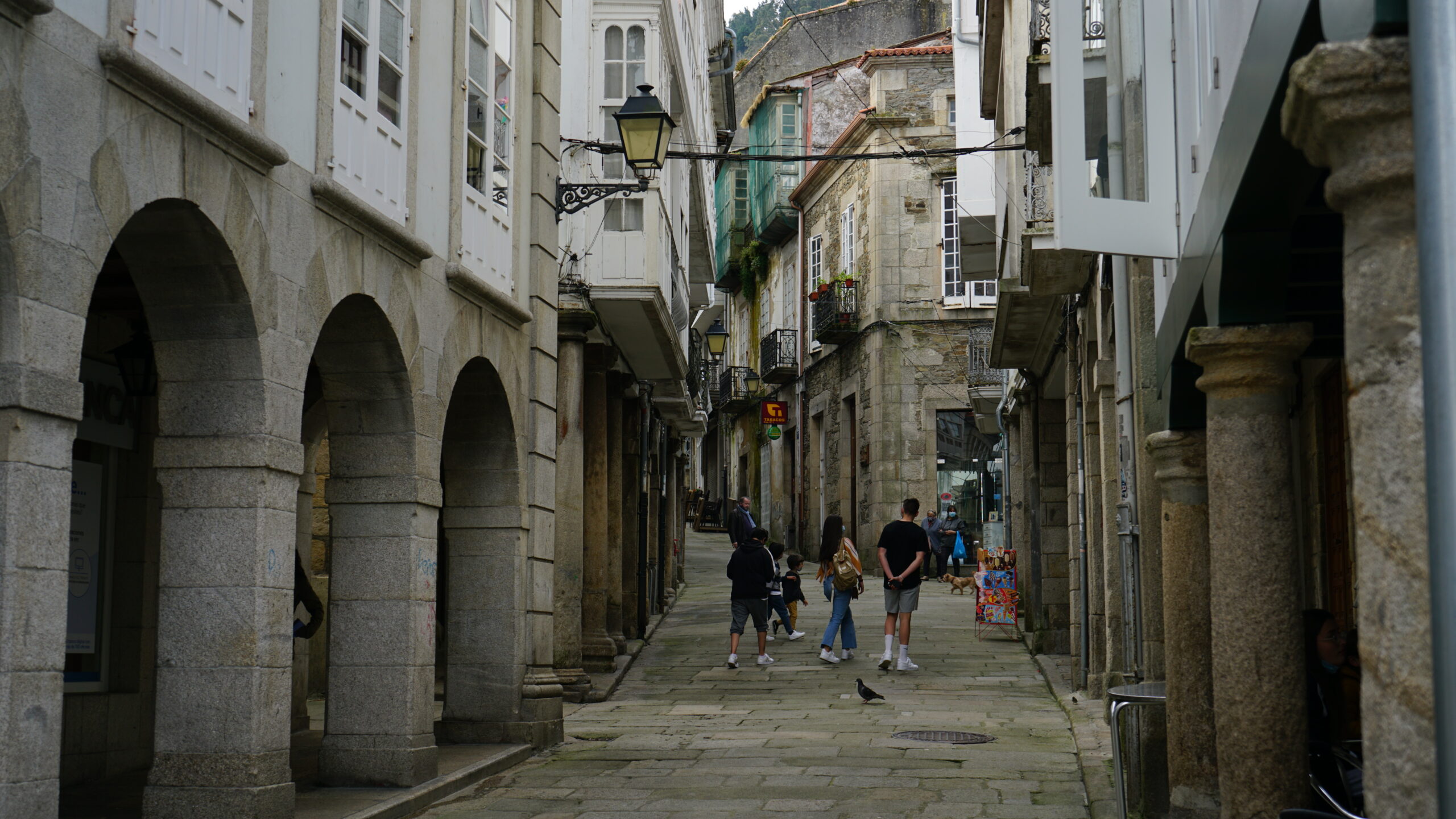
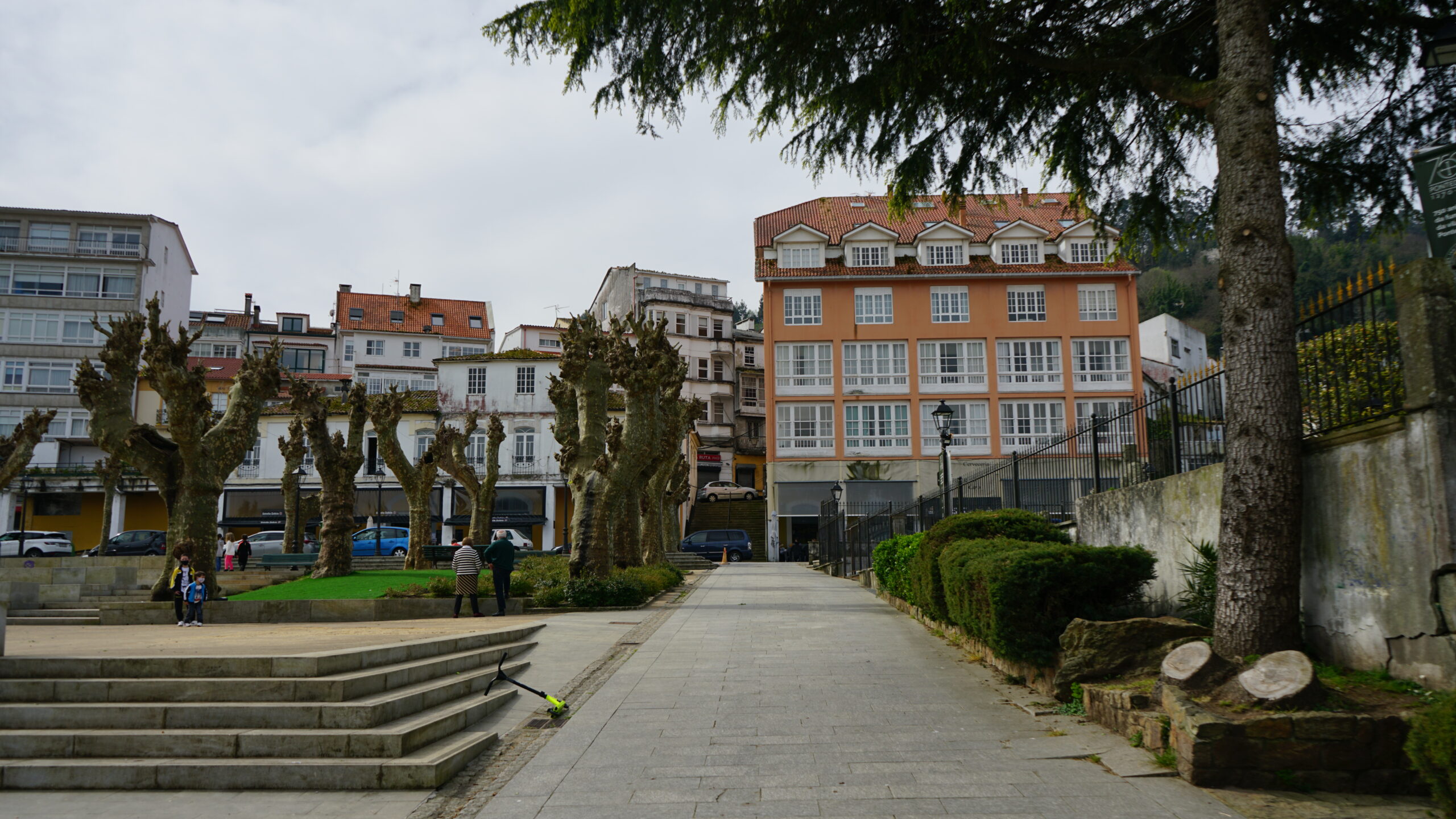
The Pontedeume's historic center is like a journey into the past. The indelible mark of history, the Andrade family, and numerous personalities stand out in Pontedeume's history, leaving an extraordinary legacy in this municipality through a series of monuments, like the Andrade Tower, which was this powerful noble family's palace, and monuments of religious origin, such as the Church of Santiago. Its cobblestone streets retain the centuries-old structure, forming a stunning and incalculable historic center.
The old town has a great cultural and architectural value with enjoyable points of interest and one of the entrances to the natural park of Las Fragas del Eume.
The significant monuments in the historical center are:
• The Stone Bridge with an essential structural foundation that was the replacement of a Gothic one. This one was longer than 840 meters, built by Fernán Pérez Andrade or Bo between 1374 and 1380. From the old bridge, only the Bear and the Boar remain, which today flank the road.
• The Conde Square (Plaza Conde), the Count's property transferred to the town and expanded in 1936 with the absence of the Palace. The square's center has a fountain that supplied water from the hills of Mount Breamo.
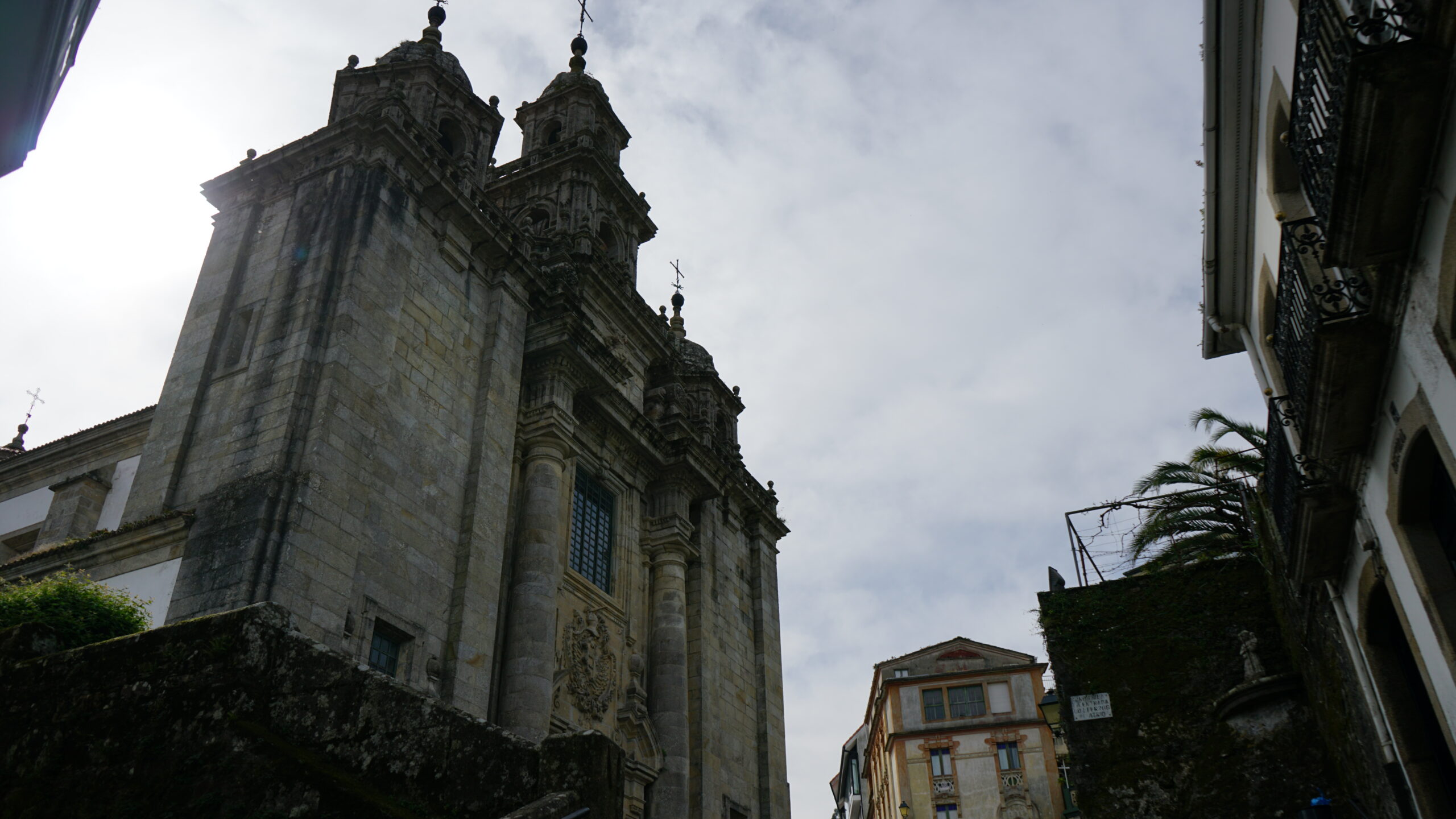
• The Church of Santiago was a construction that gave shelter to the archbishop of Santiago, Bartolomé Rajoy, created by Manuel Mártires between the years 1756 and 1763. Except for the main chapel and the sacristy built under Fernando de Andrade in the sixteenth century, of which stand out the Renaissance altarpiece as a domain of a stylistic unit that was closer to the Gothic than the Renaissance. Other exceptions were the façade and its towers, built by Alberto Ricoy.
• The Church of the Virtues, commonly known as Our Lady of the riparian woodland (Del Soto), was built under Nuño Freire de Andrade in 1378, which preserves, from that time and in good condition, the ashlar with the Andrade family's emblem and the door's tympanum with the Virgin's image. Its current appearance is due to Andrés Copeiro, "el Indiano," who rebuilt it between 1672 and 1680. It is worth noticing the baroque altarpiece, made in the late seventeenth century and painted later.
• The archbishop Rajoy's Lordly House (Pazo) was a palace built in the 18th century under Pontedeume's archbishop, Bartolomé Rajoy y Losada, atop his father's house, the apothecary Nicolás Rajoy. The façade is a combination of elements from the Compostela School and other more classist elements of French influence. The Lordly House (Pazo) borders Bread Square (Plaza del Pan) to the north, a former municipal grain warehouse.
• The Convent of Saint Augustine was the work of Fernando de Andrade in 1538 under the name of Saint Mary of Grace (Santa María de la Gracia), which closed in 1835 by the Law of Disentailment. From that period, remains a Renaissance cloister on one side, although the current main façade is Baroque from the second half of the 18th century. In the 20th century, the town bought the convent and restored it as the House of Culture. In 1867, the church was demolished, opening onto Rajoy Avenue.
• The Cátedra de Latinidad (Latin Language and Culture Lecture) is a building dedicated to the Municipal Library and bequeathed by the Alderman Beltrán de Anido in 1580.
• The Town’s Wall extended along the seashore and had five gates and nine towers to protect the entire town.
To know it better
Pontedeume is a Galician municipality located in the Betanzos Region in the A Coruña Province. The municipality comprises the parishes of Ombre, Nogueirosa, O Vilar, and Pontedeume.
The Eume River flows through this town to, subsequently, enter into the Atlantic Ocean. Therefore, according to history, Pontedeume receives its name for being the municipality that gave birth to this river.
The first settlers of the Eumean Region were the Celts, proven by findings in this municipality of numerous archaeological remains, such as forts and golden torcs. There is also evidence recorded of the Romans thanks to two archaeological sites, one in Zopazos and another in the parish of Centroña.
The Pontedeume's historical center preserves its narrow cobblestones streets with traditional Galician elements, such as arcades, wooden glazed balconies, and several public stone fountains. In the village was of great importance the Andrade family since Fernán Pérez de Andrade, the "O Boo," was the first Pontedeume’s lord rewarded for his support in the war against King Pedro I, "the Cruel." Therefore, one can find various symbols and monuments to the Andrade family, including the medieval festival of (Feirón Medieval) of the Andrade, celebrated every July.
The most significant monuments of Pontedeume are its stone bridge, one of the longest in Europe, the Andrade family's Tower and its ancient Lordly House (currently the marketplace), the town wall, the Maldonado arch, and the Parish Church of Santiago, among others.
Gallery
Location
- Town
- Pontedeume
- Municipality
- Pontedeume
- Province
- A Coruña
- Country
- Spain
The asset
- Type
- Old town
- Eco-destination
- Rías de Ares y Betanzos
- Environment
- Urban
- Relevance
- Local
How to get there
- Access
- By sea
- Distance
- 0,240 km
The visit
- Visitable
- Yes
- Accessible
- No
- Parking
- No
- Signposted
- Yes
Coordinates
- Latitud
- 43.406722298716026
- Longitud
- -8.171019072550152