


Cangas. Legend of María Soliño. Playa de Rodeira and Saracen Invasion
About this heritage
According to historical documents, Turkish and Saracen pirates arrived by surprise at the maritime station of the Pontevedra town of Cangas do Morrazo one day in 1617; minutes before eight in the evening. With few forces and poorly armed, with rudimentary barricades and farming tools, the resistance was useless and the first casualties soon began to fill the streets at the pace of the advancing invader. A crowd difficult to quantify and estimated by promoters at "several thousand people" became witnesses to the dramatic consequences. In the Eirado do Costal, the embers of the disaster were visible, with the town searching among the rubble for their loved ones. Among them Pedro Barba, husband of María Soliño, who was killed in the conflict leaving a widow and a drama as an inheritance of his assets. The hierarchies watched the tragedy from a shiny balcony on Cervantes street, while the common people sought space in the front rows or among the heads of their neighbors to be witnesses. "I think they are looking for the dead, but there is no way...", a mother comforted her daughter who was losing the scene among the crowd. After the barbaric attack, without homes and with their fishing gear and boats destroyed, the town was left utterly desolate. Cangas sank into a more than notable economic crisis that even prevented the vassals from paying the rents that the nobles demanded for the use of their lands. Thus, the nobles of the time, unwilling to lose the economic power they had held for decades, began a campaign with the support of the Holy Inquisition - of which many of them were part - to accuse women of the time who enjoyed a good economic position of witchcraft, mixing among them other women declared solemnly poor.
To learn more
Many of them widows as well, after the Turkish invasion in Cangas, to prevent their true interests from being revealed. This was the case of Maria Soliño, who upon widowhood of Pedro Barba became the owner of all his assets. The death of her husband and her brother in the Turkish invasion plunged her into a deep depression - every night she walked along Playa de Rodeira, listening to the waves, remembering her dead relatives. The repeated nighttime visits to the beach were sufficient cause to initiate a process against her for various accusations related to witchcraft. María Soliño was taken to the secret prisons of the Holy Office in 1621. Accused of giving her soul to the devil and possessing demonic powers capable of causing the most terrible evils, she was subjected to physical and psychological torture until she confessed to being a witch for more than two decades, also claiming in her despair that she had engaged in carnal relations with the devil. Although it is confirmed that Maria Soliño was born in 1551 in the town of Cangas itself, nothing certain is known about the date of her death. There is no death certificate, nor is the place where she might have been buried known, which has undoubtedly contributed to fueling the myth of the never dead character: María Soliño.
To know it better
One of the most beautiful stories preserved in the popular memory of Cangas de Morrazo is told by legend, and it is remembered 400 years later in lively performances during full moon nights at its popular festivals. It is the story of Maria Soliño, who was condemned back in the 17th century by the Holy Inquisition, accused of witchcraft. In reality, this poor woman may have simply been a victim of a Machiavellian plan orchestrated by the Holy Office and the nobles of the time, who intended nothing more than to strip her of all her possessions. Cangas was then a fishing village in full economic boom. A good part of the population lived off the considerable economic gains generated by fishing and fish salting.
The year was 1617 when Turkish-Berber pirates ravaged the Ría de Vigo. After attempting to land in Vigo, where they met strong opposition from the locals, they headed to Domaio, plundering everything in their path; leaving several dead on the beach, including Antonio Soliño and Pedro Barba, Maria Soliño's brother and husband. Next, they devastated the town of Cangas, leaving it in absolute poverty. However, upon widowhood of Pedro Barba, Maria Soliño became the owner of all his assets: a two-story stone house, several estates, a dorna, and most importantly: presentation rights in several chapels and parishes in the area, including the Church of San Martiño in Moaña, the Colexiata of Cangas, and the Church of San Cibrán in Aldán.
Presentation rights were powers whereby the holder—usually successors of a church founder—could choose its leader when vacant and also received a percentage of the parish's earnings.
Immersed in deep depression over the loss of her loved ones, she walked the beach of Rodeira every night, listening to the waves and remembering her deceased family. Her repeated nighttime visits to the beach were enough cause to initiate proceedings against her on various accusations related to witchcraft. Maria Soliño was taken to the secret prisons of the Holy Office in 1621, accused of selling her soul to the devil and possessing demonic powers capable of causing the worst evils. Subjected to physical and psychological torture, she confessed to being a witch for more than two decades, also claiming in her despair to have had carnal relations with the devil. She was stripped of all her possessions and sentenced to wear a penitent's habit for six months.
Although it is confirmed that Maria Soliño was born in 1551 in the town of Cangas itself, nothing certain is known about the date of her death. There is no death certificate, nor is the place where she might have been buried known, which has undoubtedly contributed to fueling the myth of the never-dead character: Maria Soliño.
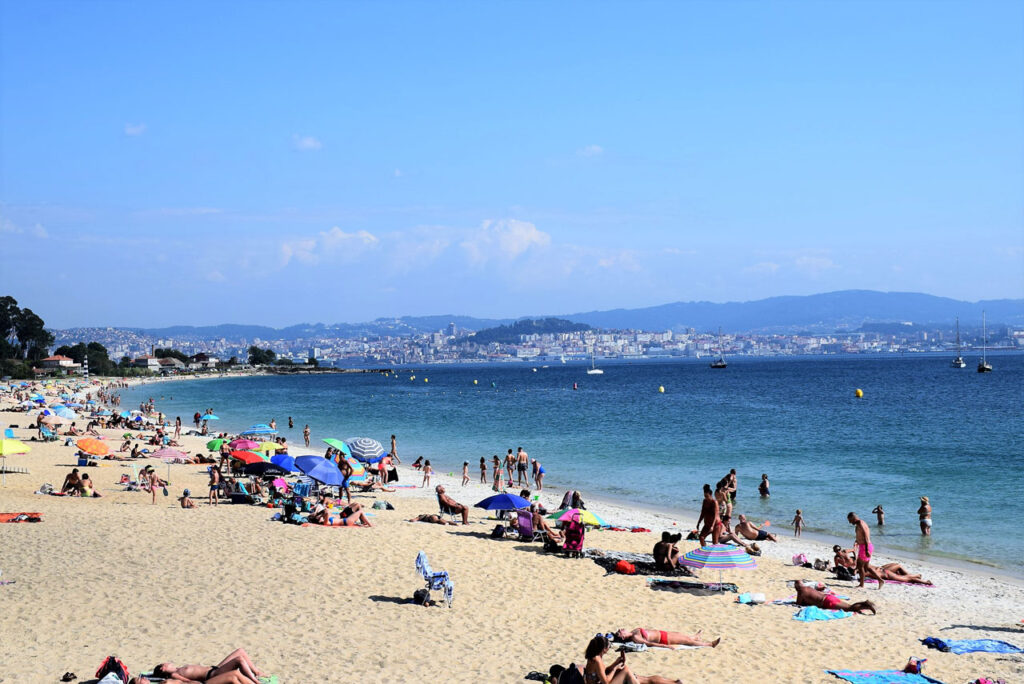
Maria Soliño was not the only "witch" tried in those times. Many women unjustly suffered these false accusations born from the greed of those in power. Legends and old trial documents tell that in these sands of Rodeira, also called Praia de Áreas Gordas, women gathered to perform demonic and witchcraft rites. It was said that on nights one could see witches having carnal relations with the devil. Today, beyond rites and legends, the beach is a meeting and enjoyment place for thousands of people who sunbathe on the sand, bathe
Gallery
Location
- Town
- Urbano
- Municipality
- Cangas
- Province
- Pontevedra
- Country
- Spain
The asset
- Type
- Beach
- Eco-destination
- Ría de Vigo
- Environment
- or practice water sports taking advantage of the good conditions and safety offered by the shelter of the estuary. Rodeira beach is a small luxury: it is a beach located in the heart of the urban center—although geographically it belongs to the parish of Coiro—which is something Cangas can boast about. The beach gradually lost area, first with the construction of docks for the canning industries, and shortly after by the Maritime Promenade which shortened it a bit more.
- Relevance
- Pontevedra
How to get there
- Access
- By sea By land
- Distance
- Menos de 10 minutos en coche
The visit
- Accessible
- No
- Parking
- No
- Website
- cangas.gal/gl
Coordinates
- Latitud
- 42.26164900
- Longitud
- -8.77042300