


Baiona. A Ramallosa Marshes
About this heritage
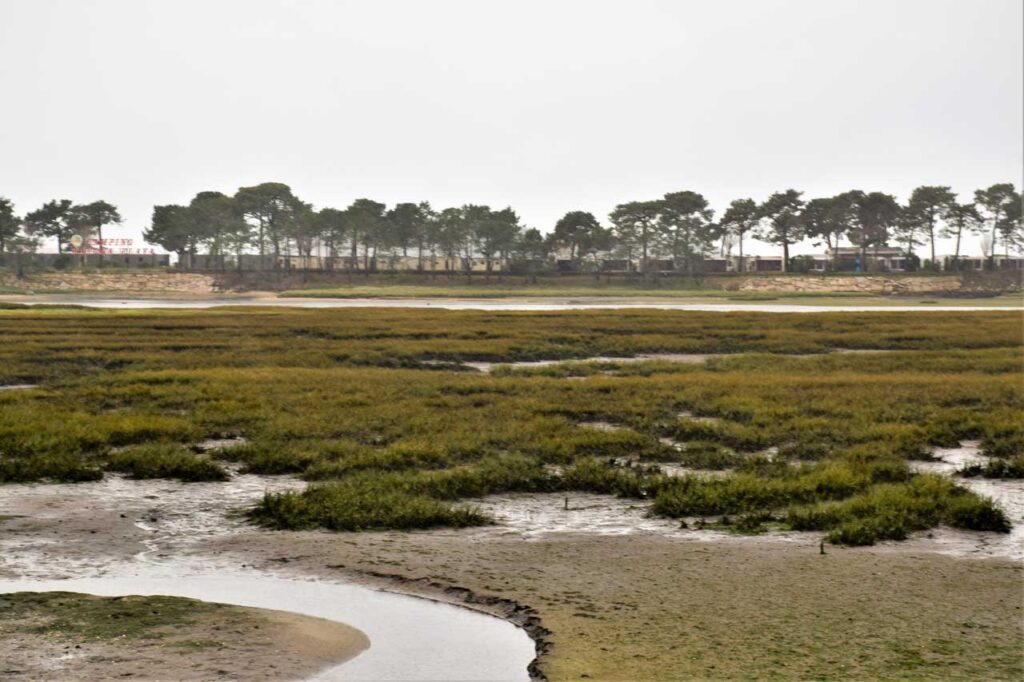
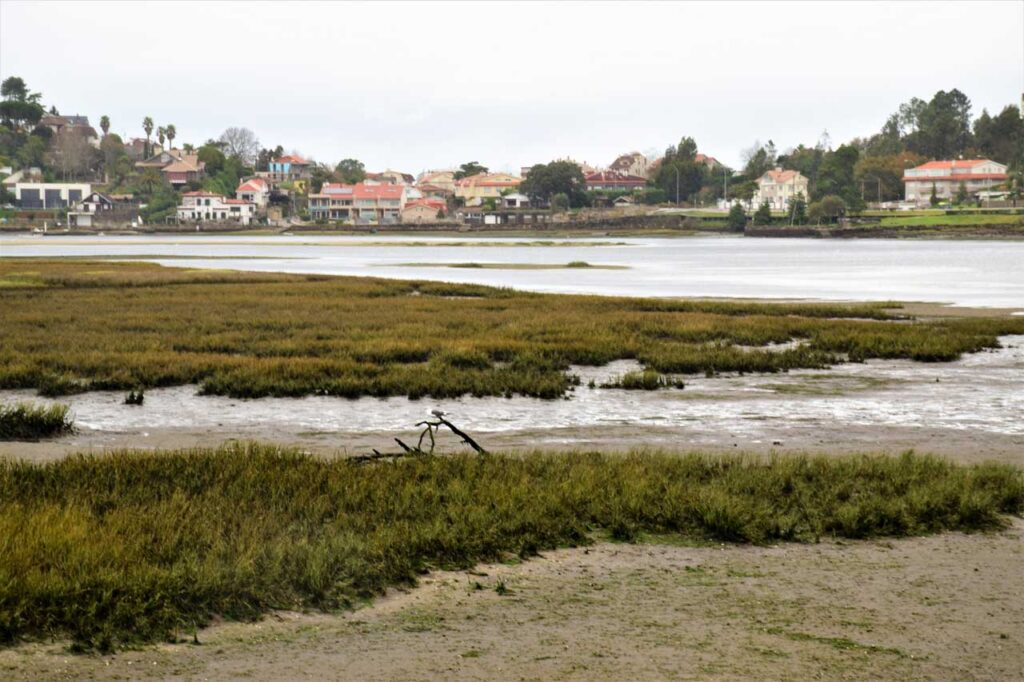
The mouth of the Miñor River forms a marsh declared a Special Conservation Area (ZEC) due to its high ecological value, included in the Natura 2000 Network, ZEC A Ramallosa. This estuary extends from the A Xunqueira area in Nigrán, expanding into the parish of A Ramallosa, called A Foz do Miñor, until its entrance into the Bay of Baiona. The Miñor River and other watercourses such as Belesar and A Groba flow into it. The complex ecosystem forms a sand tongue where Playa Ladeira is located along with a campsite built on top of the old dune system. The protected area covers a surface of 92 ha, serving as a boundary between the municipalities of Baiona and Nigrán. However, the area of this combination of ecosystems extends about 200 ha among dunes, marsh, reed beds, lagoon, river, and riparian forest. The marsh is used for fishing at various points along the river or for recreational purposes practicing water sports. It features a pedestrian walkway surrounding the perimeter of this wetland that comes from Baiona, crosses the bridge where the tram used to pass, and continues through Ramallosa. Opposite this walkway, the construction of the ancient 12th-century Romanesque bridge of A Ramallosa can be seen. The walk has ornithological stations where visitors can observe the diversity of birds in the estuary, both migratory and nesting birds: grey herons (Ardea cinérea), little egrets (Egretta garzetta), curlews (Numenius sp.), anatids, and a variety of gull species and other seabirds such as the cormorant (Phalacrocorax sp.). Birds of prey such as the marsh harrier (Circus aeruginosus) and the common buzzard (Buteo buteo) can also be seen. In the marsh, there is a multitude of flora linked to wet environments such as grasslands dominated by maritime spartina (Spartina marítima) typical of the intertidal zone and various species of rushes (Juncus sp.). Zostera (Zostera marítima) communities are also of high interest. The wetland is rich in fauna with mollusks such as cockles (Cerastoderma edule), carpet shells (Ruditapes decussatus), and peppery furrow shells (Scrobicularia plana) living in sandy bottoms. Reptiles such as Seoane's viper (Vipera seoanei), common lizard (Podarcis hispánica), and the European pond turtle (Emys orbicularis) are found. In freshwater areas, amphibians like the Iberian frog (Rana iberica), the Lusitanian salamander (Chioglossa lusitanica), and mammals such as the otter (Lutra lutra) stand out. The Coastal Way of the Camino de Santiago passes nearby, and it is possible to take a walk from the center of Baiona to Panxón beach, thus covering much of the beaches of the Miñor Valley.
To learn more
The Miñor River originates in the Galiñeiro mountain range at 400 m altitude and is a small river 16 km long that receives waters from the Zamáns River at its confluence passing through the municipality of Gondomar. The river flows through the three municipalities that make up the Val Miñor region: Gondomar, Nigrán, and Baiona. It empties into the parishes of A Ramallosa and Santa Cristina da Ramallosa, belonging to the municipalities of Nigrán and Baiona respectively. Connecting both parishes is the Romanesque bridge of A Ramallosa, one of the most beautiful medieval bridges preserved in Galicia. It is Romanesque in style and was built in the 13th century, probably replacing another bridge of Roman origin since it is located on the route of the Roman road XX (per locca marítima) of the Antonine Itinerary. In the middle of the bridge stands a small altar with a cross featuring an image of San Telmo and a scene of souls burning in purgatory. Until a few decades ago, fertility rites were celebrated on this bridge. According to tradition, a woman who could not have children had to pour river water on her belly. For the spell to be effective, it had to be performed at midnight, with the first person to cross the bridge afterward being the father of the child. In 2011, a pilgrim's shell was placed at the northern tip as the Portuguese Coastal Way of the Camino passes through here.
To know it better
A marsh is a wetland ecosystem formed by herbaceous plants that grow in water. In this case, it is formed by the tides of the Miñor River along with the Groba and Belesar streams. In these A Ramallosa marshes, also known as the A Foz Estuary, different bird species can be observed such as gulls, cormorants, or herons. The marshes located in A Ramallosa, Nigrán, are a Site of Community Interest (SCI), protected by the Natura 2000 Network, covering an area of nearly 92 hectares. The main species found in its waters are eel, sea bass, and some salmon. Additionally, the Miñor River crosses the Romanesque bridge of A Ramallosa, dividing the municipalities of Nigrán and Baiona. This construction has about ten arches and is crowned by a cross with an image of San Telmo, patron saint of sailors.
Gallery
Location
- Town
- Ramallosa
- Municipality
- Nigrán
- Province
- Pontevedra
- Country
- Spain
The asset
- Type
- Marshes
- Eco-destination
- Ría de Vigo
- Environment
- Natural
- Relevance
- Regional
How to get there
- Access
- By sea By land
- Distance
- Caminando: 38 minutos. Distancia en coche: 6 minutos
The visit
- Visitable
- Yes
- Interpretation
- There are interpretive panels
- Accessible
- Sí
- Parking
- Sí
- Signposted
- Yes
Coordinates
- Latitud
- 42.11743600
- Longitud
- -8.81858400