About this heritage
We are facing a unique place, with more than two thousand years of history.
In Roman times, in O Seixal, Camposancos, coastal salt pans were built that were already in operation when the Santa Trega hillfort was still inhabited. Their purpose was clear: to obtain salt through solar evaporation. A fundamental resource not only for trade but especially for the salting of fish, one of the great riches of this Atlantic coast.
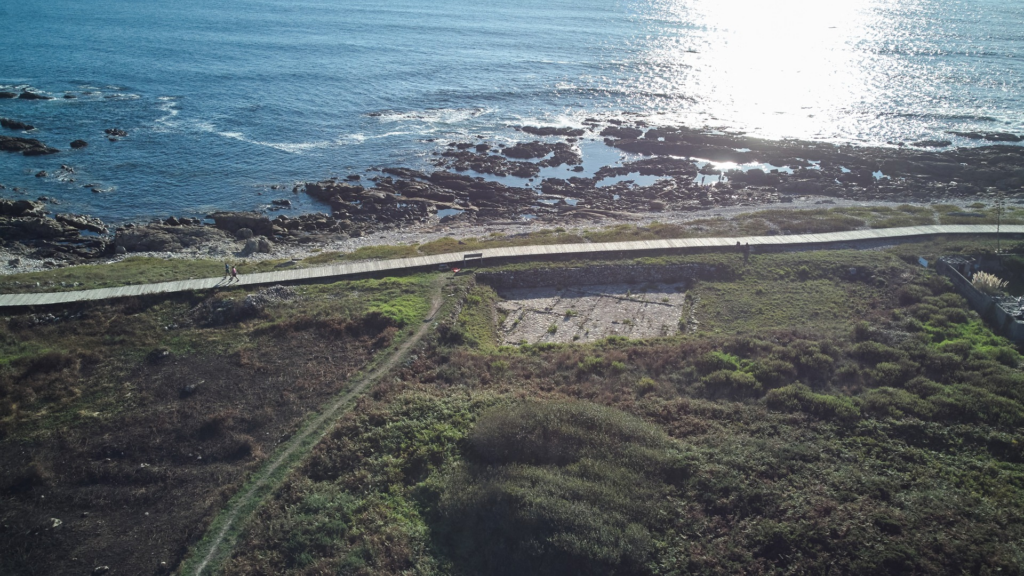
When touring the site, we can still recognize rectangular ponds paved with stone, small walls, and channels. These are the visible traces of a much larger salt complex that extended on both sides of the ancient Roman province of Gallaecia.
What makes this place especially important is its scale. We are not dealing with small domestic salt pans, like those also preserved in the rocks of the Miño, but with industrial facilities, something scarcely documented throughout the Roman Empire.
In fact, the salt pans of A Guarda were part of the largest known marine salt exploitation complex in the Empire, along with other locations such as Vigo, Cangas, Oia, Viana do Castelo, and Matosinhos.
Today, this archaeological site allows us to travel back in time and discover how Roman ingenuity harnessed the resources of the sea to transform the life and economy of an entire region.