


Arbo. Miño River. Fluvial Beach of Sela
About this heritage
Arbo is a county with forty-three square kilometers of extension and located in the heart of the Pontevedra province. In its southern border, it opens to the Miño River, becoming a natural bridge between Galicia and the North of Portugal. One of the main attractions of this county is the natural treasure hidden by the waters of the Miño River as it passes through this town, the lamprey. This fish has found in this place, one of the best environments to grow, making this town be known as "the capital of the lamprey."
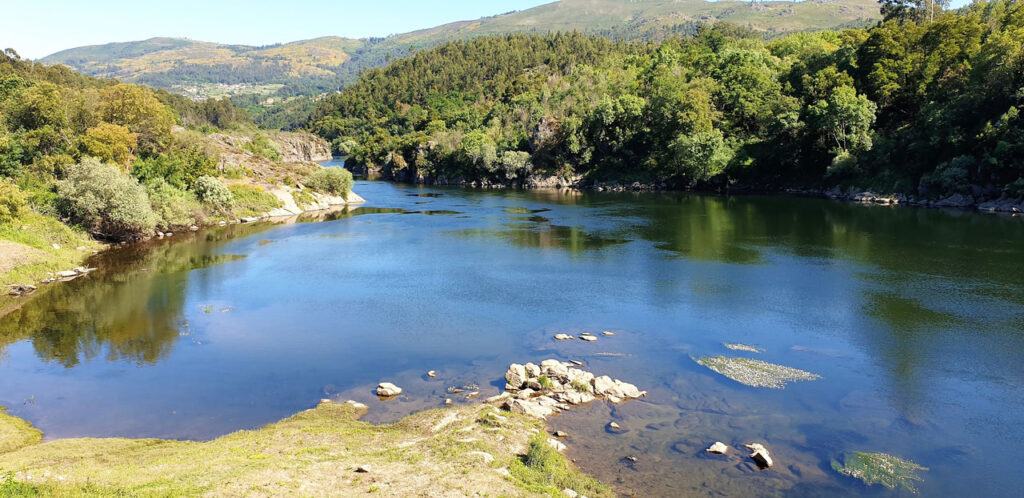
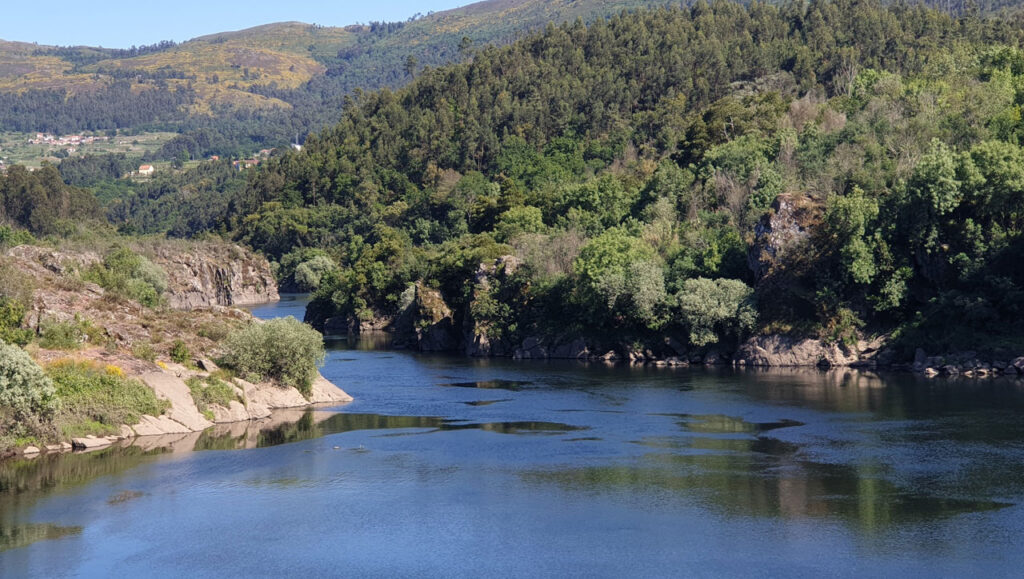
The Miño River is one of the longest rivers in Galicia and the most abundant once it joins its main tributary, the Sil. As it passes through Arbo, it is the parish of Sela with its beach as the main attraction, which receives the same name, Fluvial Beach of Sela. It consists of a leisure zone with a picnic and fishing areas, making it an exclusive environment to relax. Relatively close to the fluvial beach, on the back of the "Pesqueira" is the Spring of Medicinal Waters of Sela in what is known as "el Puntal do Canelas." These waters were once bottled and exported to various areas of Galicia.
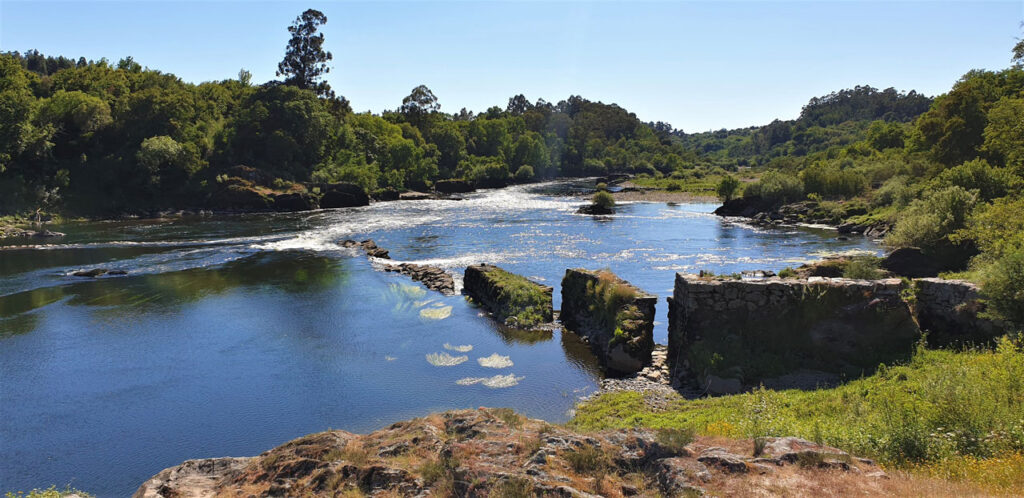
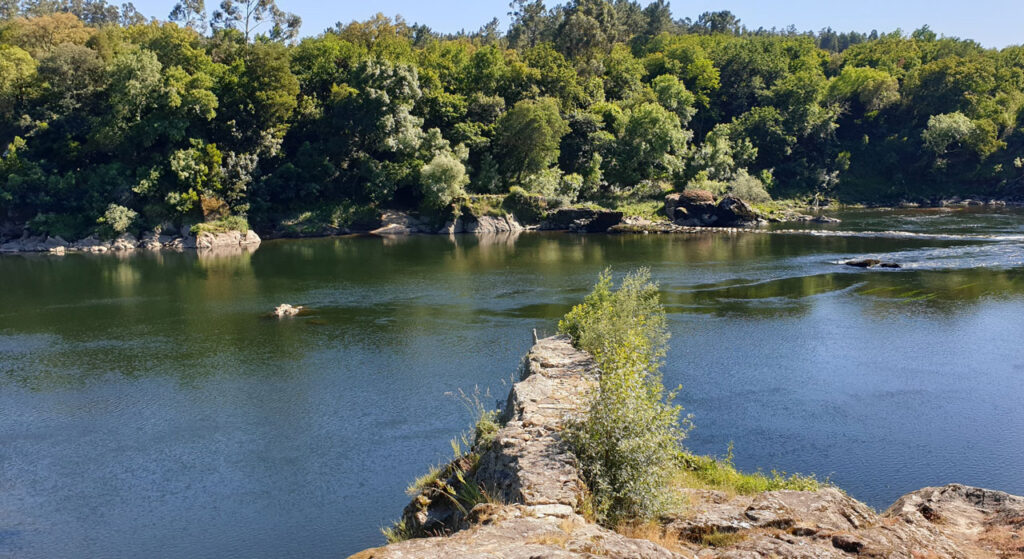
A Pesqueira is a Roman construction of architectural and ethnographic interest, which they already used for lamprey fishing. Currently, it is part of the life, culture, and gastronomy of the inhabitants of Arbo and used for the same purpose. These artisanal, sustainable, and environmentally friendly techniques allow the enjoyment of fishing throughout the year.
To learn more
The three rivers that bathed Arbo County, namely Deva, Cea, and Miño, give this area a distinct microclimate, allowing the practice of any natural activity at any time of year. On top of that, this makes it one of the most suitable areas to grow grapes; thus, originating a variety of the most exquisite wines, such as Albariño and Condado.
Located in the northwest of the Iberian Peninsula, the Miño River is 310 kilometers long and has an average flow of 340 m3/s.
On its way through Arbo is the parish of Sela with one of its main attractions, its fluvial beach, which receives the same name, Fluvial Beach of Sela. It consists of a leisure zone with a picnic and fishing areas, making it an exclusive environment to relax. Relatively close to the fluvial beach are the Spring of Medicinal Waters of Sela.
In this parish in 1900, the parish priest José Pérez Domínguez discovered the therapeutic value of these waters. Then, Don Antonio Pérez y Barreira, the mayor at that time and neighbor of Sela, obtained the commercialization of the mineral water, selling bottled and commercialized water under the name of Mineral Waters of San Martin de Sela. Waters that emerge at a temperature of 20º, and present with a daily supply capacity of about 500 liters. Nearly, visitors can find the deposit of O Cabrón, where the lithic tools found proof that the first man that lived in the lands of Arbo was the Archaic Neanderthal Homo. From this first history of man as a social and sedentary being, we have manifestation, such as the mámoas of Chan do Rei in Cabeiras or the one of San Martiño de Sela; as well as, more than fifty groups of rocks with petroglyphs, such as the one of San Xoán de Mourentán or the one of Cándido.
To know it better
In Arbo, its parish of Sela has a fluvial beach with the same name, formed by the waters of the Miño River, where everyone can enjoy walks, its picnic area, as well as a stunning fishing site. Besides that, one can make an exciting tour along the river bank course known as "The Pesqueiras Route."
The Pesqueiras are stone constructions created by the Romans, made of walls positioned opposite to each other and fastened with irons. This arrangement causes the water to pass through the middle of each wall, so that, in this gap, anglers can place a cone-shaped net, called "Butron." Through this technique, the current guides the lampreys into these traps to be finally caught.
In Sela, there is also the Spring of Medicinal Waters, which water was bottled and exported to different areas of Galicia. This parish is in the Arbo County in the Pontevedra province.
Gallery
Location
- Town
- Arbo
- Municipality
- Arbo
- Province
- Pontevedra
- Country
- Spain
The asset
- Type
- River beach
- Eco-destination
- Río Miño
- Environment
- Natural
- Relevance
- Regional
How to get there
- Access
- By land
- Distance
- Menos de 30 minutos en coche
The visit
- Accessible
- No
- Parking
- No
Coordinates
- Latitud
- 42.09116800
- Longitud
- -8.35484900