


Arcos de Valdevez. Historical centre

About this heritage
Arcos de Valdevez is a Portuguese municipality in Viana do Castelo district, which at the same time is included in the northern region and sub-region of Minho-Lima. Viana do Castelo district borders Galicia to the north and east, Braga´s district to the south and the Atlantic Ocean to the west.
This town is characterized by being bathed by the Vez river which has its source in the Soajo mountain range, it has buildings on both sides of the river, but the historical centre is on the highest side. Using the Arches stone bridge or old bridge as a reference, we leave behind an interesting cross of the Senhor dos Milagres and the S. Paio church, from the XVIII-XIX centuries situated in a square.
Crossing the river towards the centre, to the right, the Jardim do Campo Trasladário (gardens) extends where equestrian sculptures representing two knights in a tournament are on display. This scene recalls the moment in the year when Alfonso VII de León and D. Afonso Enriques faced their troops, choosing the tournament mode since both were weakened and did not want to lose combatants since they had a common enemy, the Almoravids. In this way, the Portuguese forces managed to give rise to the consecration of the Portuguese kingdom in 1140.
Continuing along this promenade, one can see the Valletta river beach where hundreds of bathers enjoy its waters every summer. Crossing the road, there is a path that leads to the Espírito Santo church (Holy spirit church) in the highest part of the city where there is a small garden in the municipal square and the Casa das Artes or Casa do Terreiro, from the 18th-19th century, of which the murals inside stand out. This square reaches the parish church or Igreja Matriz of the 17th century has wrought iron doors and abundant decoration inside. Also, in the same square, there is the 16th century pillory or Pelourinho of Manueline style and declared National Monument.
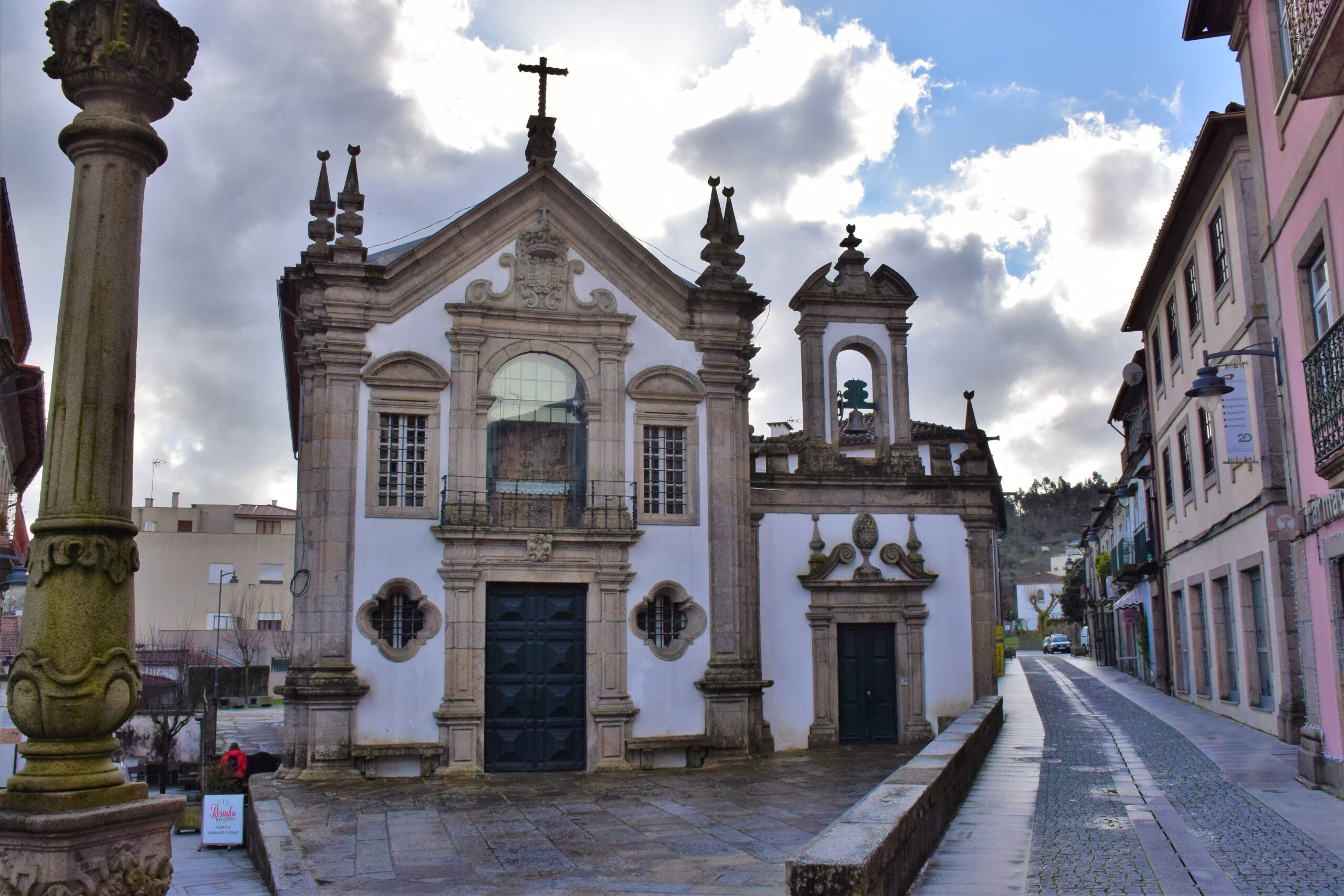
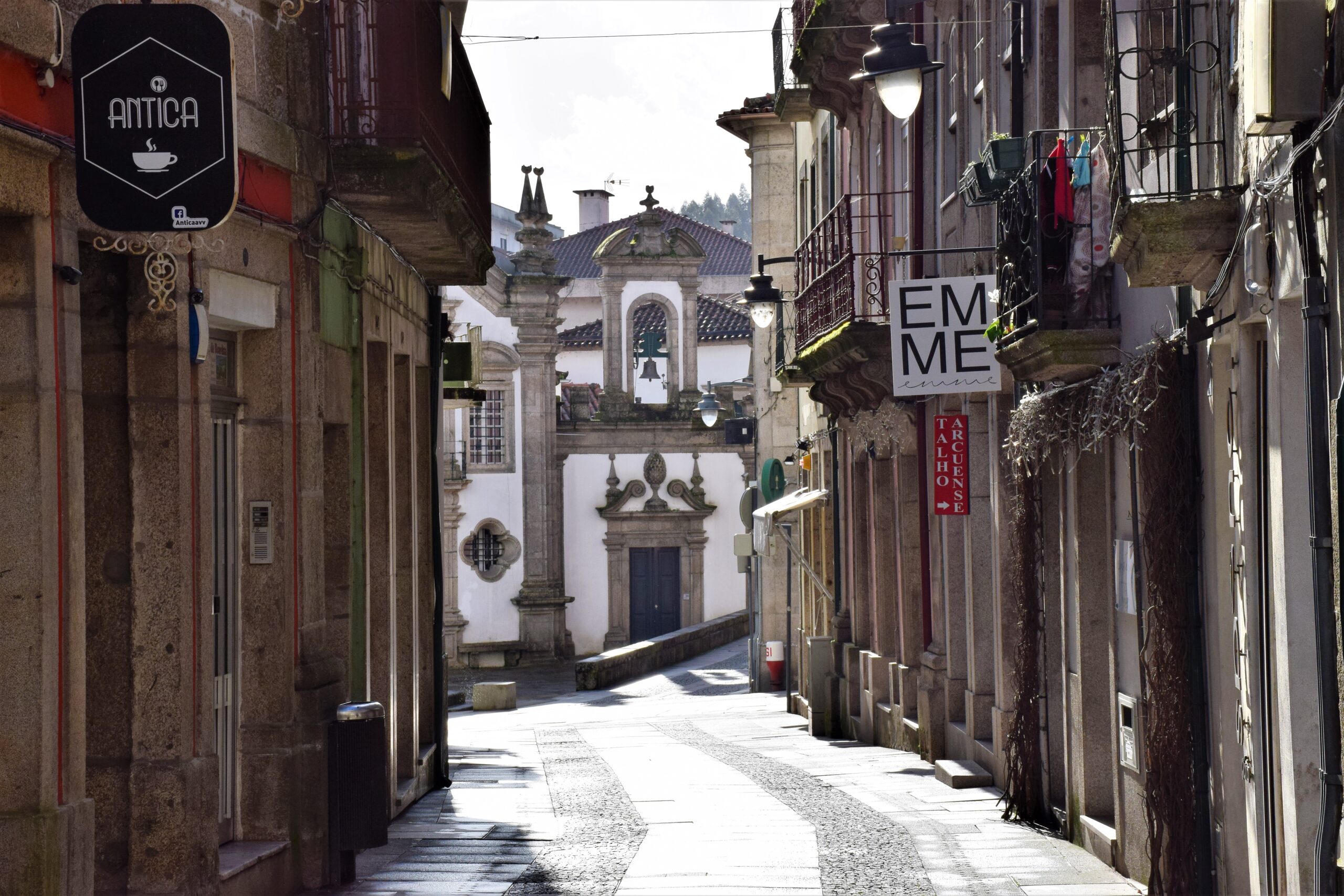
Going straight on and passing in front of the town hall house, you will reach a small street, where, if you turn right, you will first see the Capela de Nossa Senhora da Conceição in Romanesque-Gothic and 18th century style and, at the end of the street, the Iglesia da Lapa in 18th century Portuguese Baroque style. If you follow this street, and closing the circle, you will reach the Misericórdia church, rebuilt in 1710 in a baroque and neoclassical style. And a transept located in the annex of the rear facade is from the 18th century.
To learn more
Arcos de Valdevez was a historical place, the tournament´s scene between Alfonso VII de León and D. Afonso Enriques where they faced their troops, giving rise to the consecration of the Portuguese kingdom in 1140.
One of the town's most striking characters was the inventor Manuel Antonio Gomes, who was born on 21 December 1868. Also known as Father Himalaya, a nickname he received for his high stature during his time of study at the Conciliar Seminary in Braga.
He was a student of several science fields like physics, chemistry and medicine which were the disciplines that most caught his attention. Two great inventions made him famous in Portugal. One of them, an explosive of vegetable and mineral origin of easy and safe handling. He called it Himalaíte and it was produced in Portugal from 1911 by the company Companhia Himalayite that built an explosives factory in “A Quinta da Caldeira", in o Seixal.
He was also interested in the use of renewable energy sources and that is how he experimented with solar energy. He wanted to concentrate the strength of the sun's rays in a kind of furnace that would melt metals and stones. He called it a “pyreliumphore", and it was a device that consisted of a combination of large mirrors that converged light to a single point. With his first device he managed to reach a temperature of 500 degrees and with a second device, this time at an altitude of 80 meters he managed to concentrate the temperature of 3500 degrees.
Father Himalaia tried to get support to develop and commercialize his inventions, but contributions would never come. Oil as an energy source was booming and there was no economic interest at that time. He was a man ahead of his time who spent his last days at Nossa Senhora da Caridade Hospital.
To know it better
Arcos de Valdevez is a small municipality in Portugal that belongs to the district of Viana do Castelo and has been inhabited since prehistoric times. Located in the north of Portugal, it has very green landscapes and traditional architecture, which are bathed by the Vez river.
Legend has it that Arcos de Valdevez was a very important place in Spain and Portugal history. In fact, in 1141, a heavy fight took place between the two troops and some say that the waters of the Vez river turned red.
On the other hand, this Portuguese town has a beautiful old town where visitors and neighbours can enjoy various buildings. Among them is the Espírito Santo (holy spirit) church. This building was completed in 1681 and is characterised by its Mannerist style; that is to say, a 16th century Italian artistic style in which the abundance of difficult and unnatural shapes stands out. The oldest monument in the town, the Nossa Senhora da Conceiçao Chapel or the Capela da Praça, is also a must. It dates from the XV century and is in Romanesque style.
Gallery
Location
- Town
- Arcos de Valdevez
- Municipality
- Arcos de Valdevez
- Province
- Distrito de Viana do Castelo
- Country
- Portugal
The asset
- Type
- Old town
- Eco-destination
- Río Lima
- Environment
- Urban
- Relevance
- International
How to get there
- Access
- By land
- Distance
- 52,5 km / 36 minutos en coche
The visit
- Visitable
- Yes
- Accessible
- No
- Parking
- No
Coordinates
- Latitud
- 41.84592600
- Longitud
- -8.41903400