
Betanzos. Historic Center. Constitution Square
About this heritage
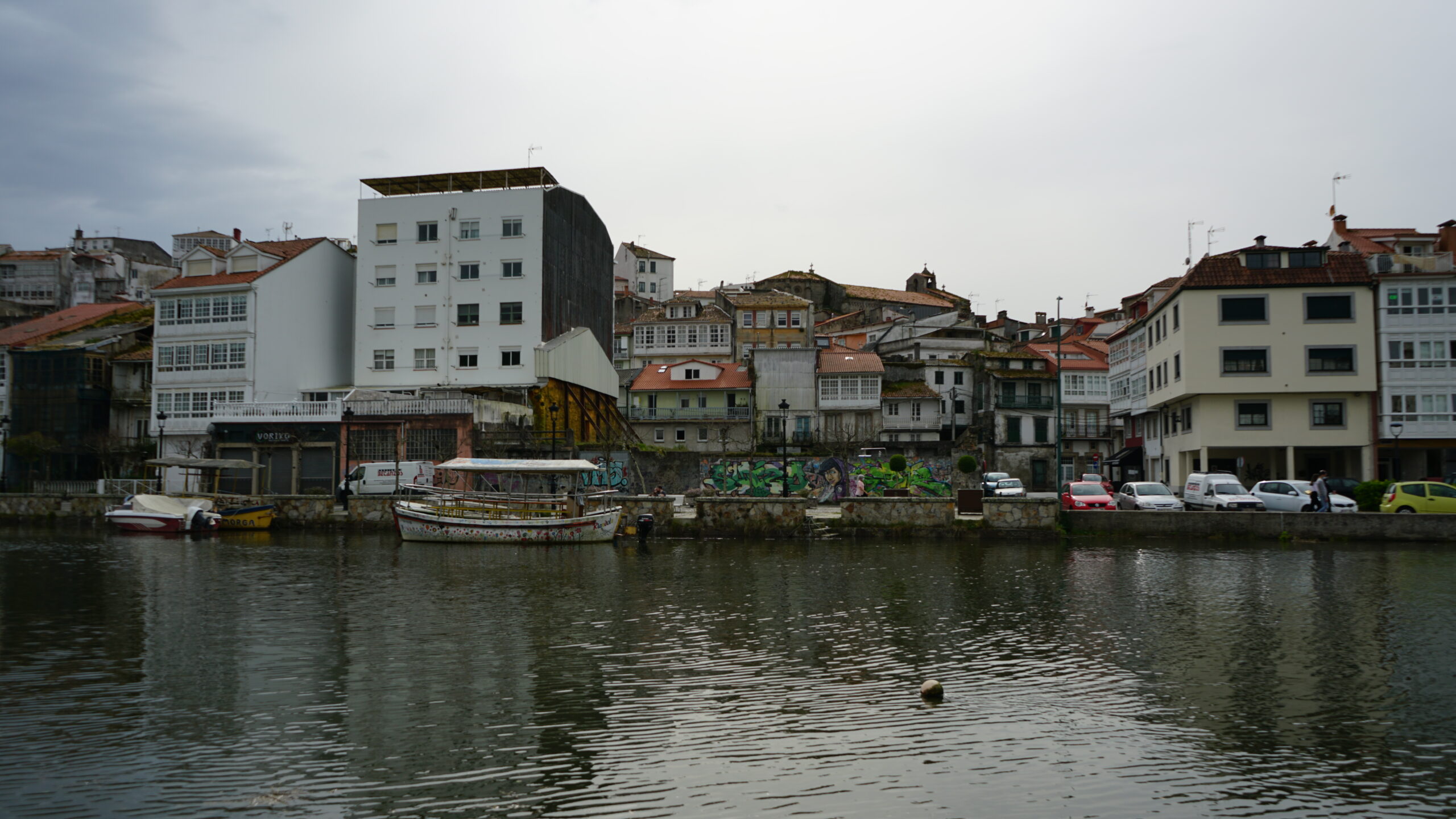
Betanzos is in the A Coruña Province in the High Estuaries and in the northwest of the Iberian Peninsula. Its center is a historic-artistic site and a site of cultural interest (BIC) since 1970.
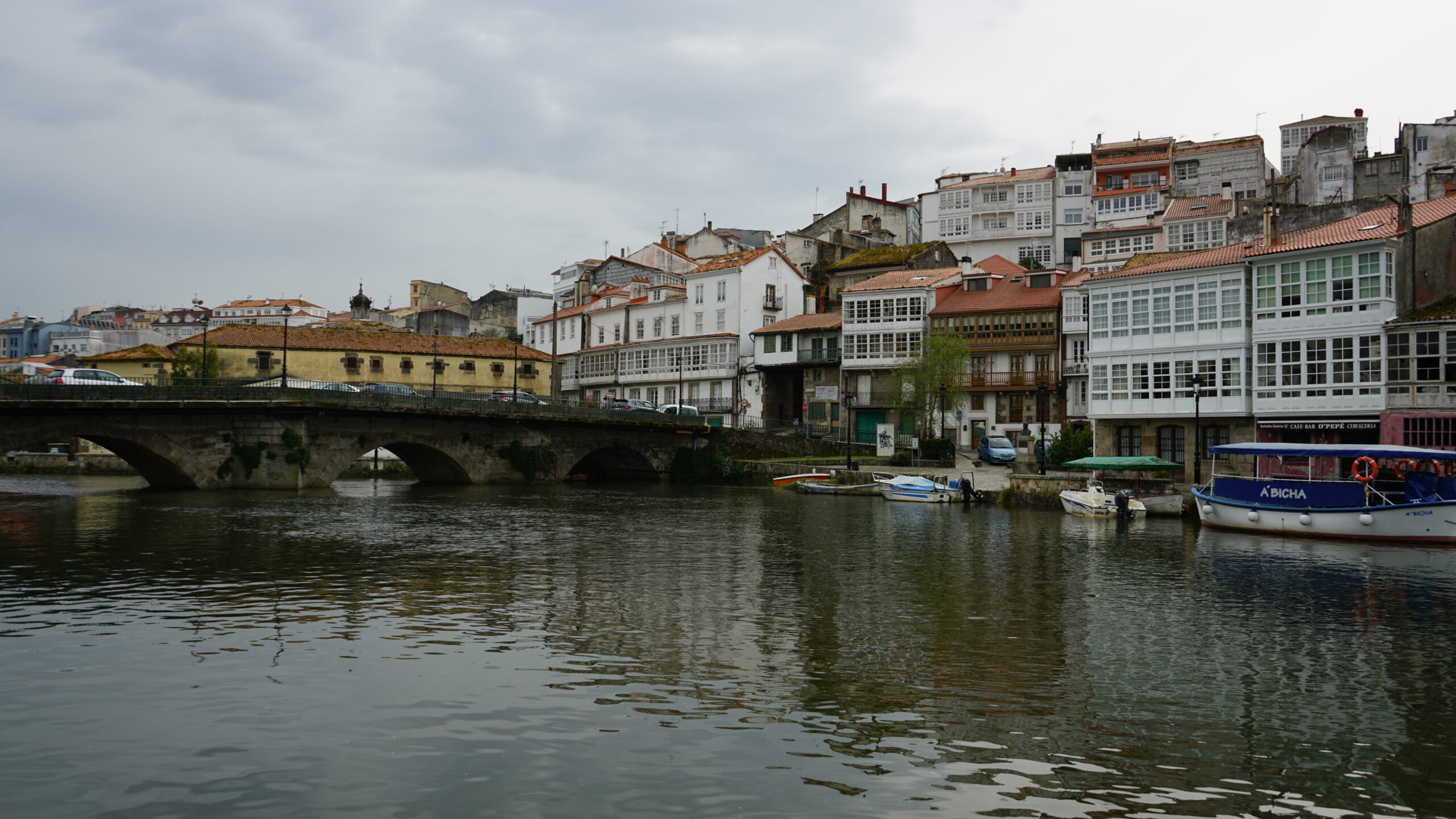
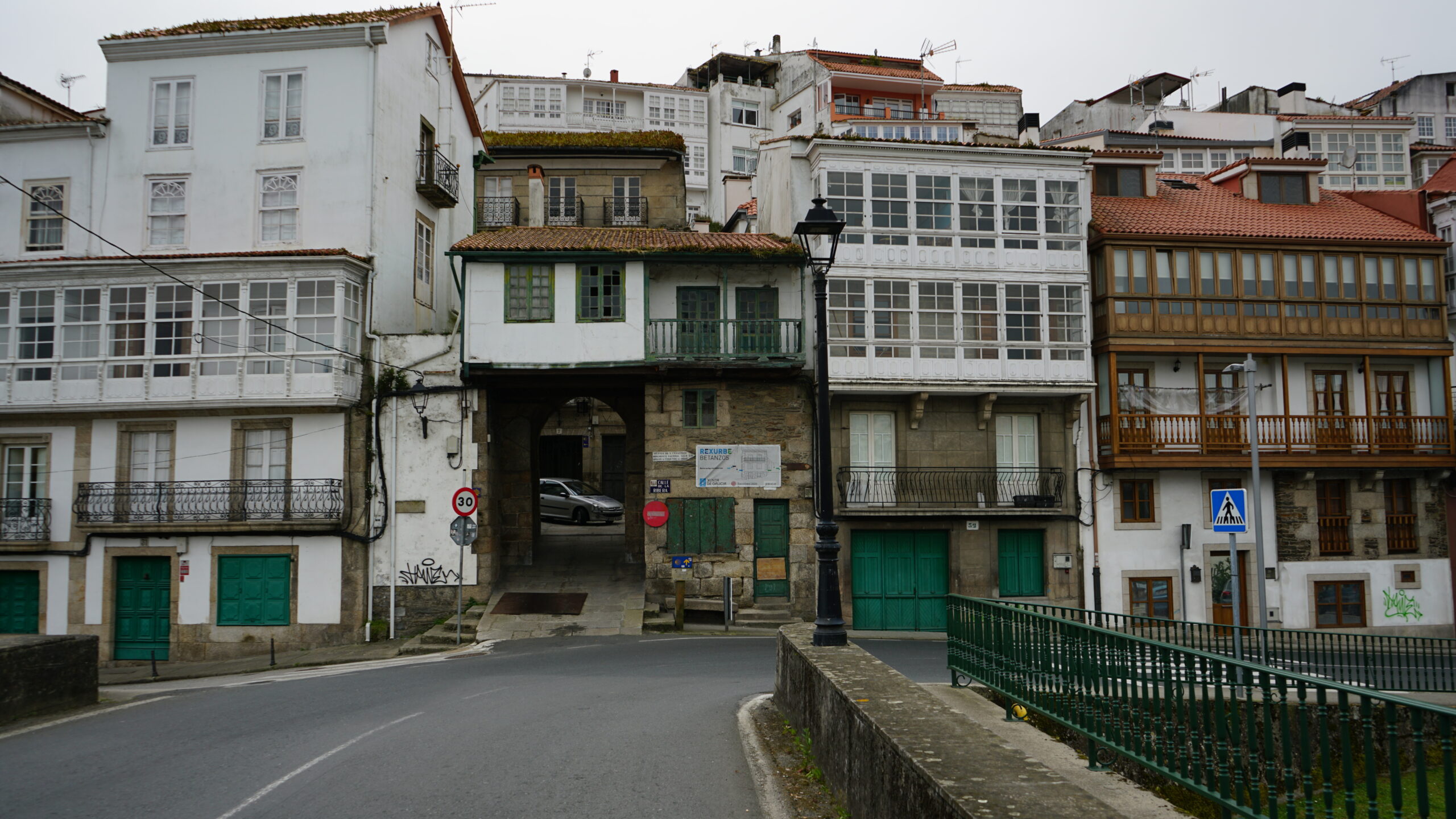
Betanzos is within an ancient wall with five gates, three of which are well preserved today. The principal gate, called Puerta de la Villa (Villa Gate), no longer exists, but its three coats of arms are still visible on the side of a house. The three gates that are still standing are the Puerta Del Puente Nuevo (New Bridge Gate), the Puerta Del Puente Viejo (Old Bridge Gate), and the Puerta Del Cristo (Christ Gate).
Throughout the visit to the historic center of Betanzos, we can find many more monuments, such as the Constitution Square with the eighteenth-century Town Hall and the Clock Tower, to highlight a few.
Beside the Town Hall stands the International Center of Contemporary Print (CIEC: Centro Internacional de la Estampa Contemporánea) in the old Núñez House. The 16th century Clock Tower dominates the square and is attached to the church of Santiago.
The Betanzos historic center also has two national monuments, the churches of Santa María del Azougue and San Francisco, located in the Fernán Pérez de Andrade, "El Boo," Square. Saint Francis (San Francisco) Church has a Latin cross plan, where it houses the tombs of medieval knights, and Saint Mary (María) Church has a basilica plan with three naves, highlighting its altarpiece and the capital with the only agrarian calendar in Galicia.
Betanzos is the capital of Galician Gothic.
To learn more
Betanzos is a Spanish town and a municipality in the A Coruña Province in the Autonomous Community of Galicia. It is part of the metropolitan area of A Coruña.
The Betanzos historic center is a historic-artistic site, declared as such in 1970. An ancient medieval wall with five gates formerly delimited the town. The gates of Ponte Nova, Porta do Cristo, and Ponte Vella remain, nowadays, in perfect condition. The three are pointed-arch gates, the first and third have grating doors, and the second presents above a small balcony a Christ and, painted behind, a town with a sun and a moon.
It was one of the most relevant medieval towns in the ancient Kingdom of Galicia because it was part and capital of one of the seven provinces of the period. It was declared a town in the year 1465 because of its length of history and the territory's surrounding landscapes, such as the Mandeo, Mendo, and Mero rivers that cross its region, containing a lush variety of cultural heritage.
The town constitutes the capital of the Galician Gothic because of its churches, convents, the renowned representation of its agrarian calendar, and its emblematic buildings.
The Betanzos historical center is in the Fort (Castro) of Untia on a hill located between the Mando and Mandeo Rivers, and at the top lies Constitution Square. King Alfonso IX, King of León and Galicia, ordered its cession in 1219, and in 1467, King Henry IV granted it the title of town. Years later, the Catholic Monarchs decided to proclaim it the capital of one of the seven Galician provinces. Because of its typography, the design of its streets and buildings resulted in an oval-shaped area.
Strolling through the historical center, visitors can appreciate the glorious old trade union that constituted this town. In Constitution Square, one can find the historic buildings, such as the Bendaña Palace, the Town Hall, the Foundation CIEC, the Lordly House (Pazo) of Lanzós, and the church of Santiago, attached to one side of the Clock Tower and overlooks the entire square.
• The Bendaña Palace, built in the fifteenth century and remodeled in the sixteenth century, had on the first floor an arcade with pointed arches, later removed for an extension. Nowadays, it is the headquarters of the regional or district branch office of the Revenue Service.
• The Town Hall (Casa Consistorial) is a house built in the 18th century and designed in a neoclassical style by Ventura Rodríguez in the last third of the same century. It is of great significance for its cultural, architectural, and historical interest and has four stories, a basement, a ground floor, and two upper floors.
• The International Center of the Contemporary Print (CIEC: Centro Internacional de la Estampa Contemporánea) is a private organization created in 1997 by the artist Jesús Núñez to promote and disseminate the visual arts and graphic art. A modern building holds a collection of contemporary art to represent many Galician artists and some other national artists of the prestige of Picasso or Dalí, as well as young consolidated artists, beginners, or even those training in workshops offered by this center.
• The Lordly House (Pazo) of Lanzós is a building erected between 1620 and 1625, preserved almost intact except for some modifications. Its exceptional value is the Tower, linked to the history of the Irmandiño revolts.
• The church of Santiago is a Gothic-style construction built in the 15th century atop an old Romanesque church by Fernán Pérez de Andrade, "the Boy" (O Mozo), a feudal lord of the region. It has a basilica floor plan that consists of three naves: the central one is wider than the lateral naves. This church is an example of the transition from Romanesque to Gothic. Built in the mid-sixteenth century, the clock tower has a height of almost 18 meters and formerly functioned as a defensive element, a public clock, and an emblem of the municipal force.
The Betanzos' wall was declared of cultural interest (BIC) on October 17, 1994, the church of San Francisco on September 29, 1919, and the church of Santa María de Azogue on September 29, 1944.
There are municipal and private tourist routes to visit and get to know the historic center of Betanzos. Throughout the tour of the medieval enclosure, visitors can discover historical episodes and visit the town's principal monuments.
To know it better
The Galician municipality of Betanzos, known as "Betanzos of the Knights" (de Los Caballeros), is in A Coruña in the High Estuaries (Rías Altas), and its urban center lies on a hill extremely close to the Mandeo and Mendo Rivers.
Betanzos was one of the seven provinces forming the ancient Kingdom of Galicia. When civilization settled, its most characteristic feature was its walls, and during the Middle Ages, Betanzos had plenty of commercial traits, principally from the fishing activity.
The town started its development from the Fortress (Castro) of Untia location; thus, building it from the highest point, where today lies the Constitution Square's along with the neoclassical town hall, the Lordly House (Pazo) of Bendaña, the Tower, and the Church of Santiago. Additionally, in the historic center, everyone can enjoy a series of monuments declared Historic-Artistic Ensemble in 1970. This artistic heritage has two national monuments, the church of Santa María Del Azougue and San Francisco.
Reformed on many occasions, the Constitution Square can be considered the center of Betanzos as it houses representations of the past powers of the town, such as aristocratic powers reflected with the Lordly Houses (Pazos) of Bendaña, Lanzós, and Taboada, and the ecclesiastical powers through the temple of Santiago.
The Betanzos municipality still preserves from the medieval walls several gates from the fourteenth and fifteenth centuries.
Gallery
Location
- Town
- Betanzos
- Municipality
- Betanzos
- Province
- A Coruña
- Country
- Spain
The asset
- Type
- Old town
- Eco-destination
- Rías de Ares y Betanzos
- Environment
- Urban
- Relevance
- Regional
How to get there
- Access
- By sea
- Distance
- 0,700 km
The visit
- Visitable
- Yes
- Accessible
- No
- Parking
- Sí
- Signposted
- Yes
- Website
- betanzos.es/
Coordinates
- Latitud
- 43.2819460369148
- Longitud
- -8.211651967637351