
Betanzos. Paper Balloon

About this heritage
In Betanzos, they celebrate the patron saint festivities in honor of Saint Roch (San Roque) from August 14 to 25. Its origin dates back to 1415, when the town underwent the great plague epidemic, reducing its population considerably. The inhabitants of Betanzos, frightened, prayed to Saint Roch, the pilgrim of Montpellier, who walked among the plague-stricken people and took care of them while they begged for his protection. The citizens, grateful for the favor granted by the Saint, proclaimed him their patron saint. In 1416, they solemnly vowed to celebrate his holiday in perpetuity. The celebration includes dances, fireworks, music, pilgrimages, and fabulous food, but everything centers on the release of what locals so-called, Huge Paper Balloon (Globo Grande de Papel), an aerostat quite similar to the balloon that the Montgolfier brothers made ascend in Annonay, France in 1783.
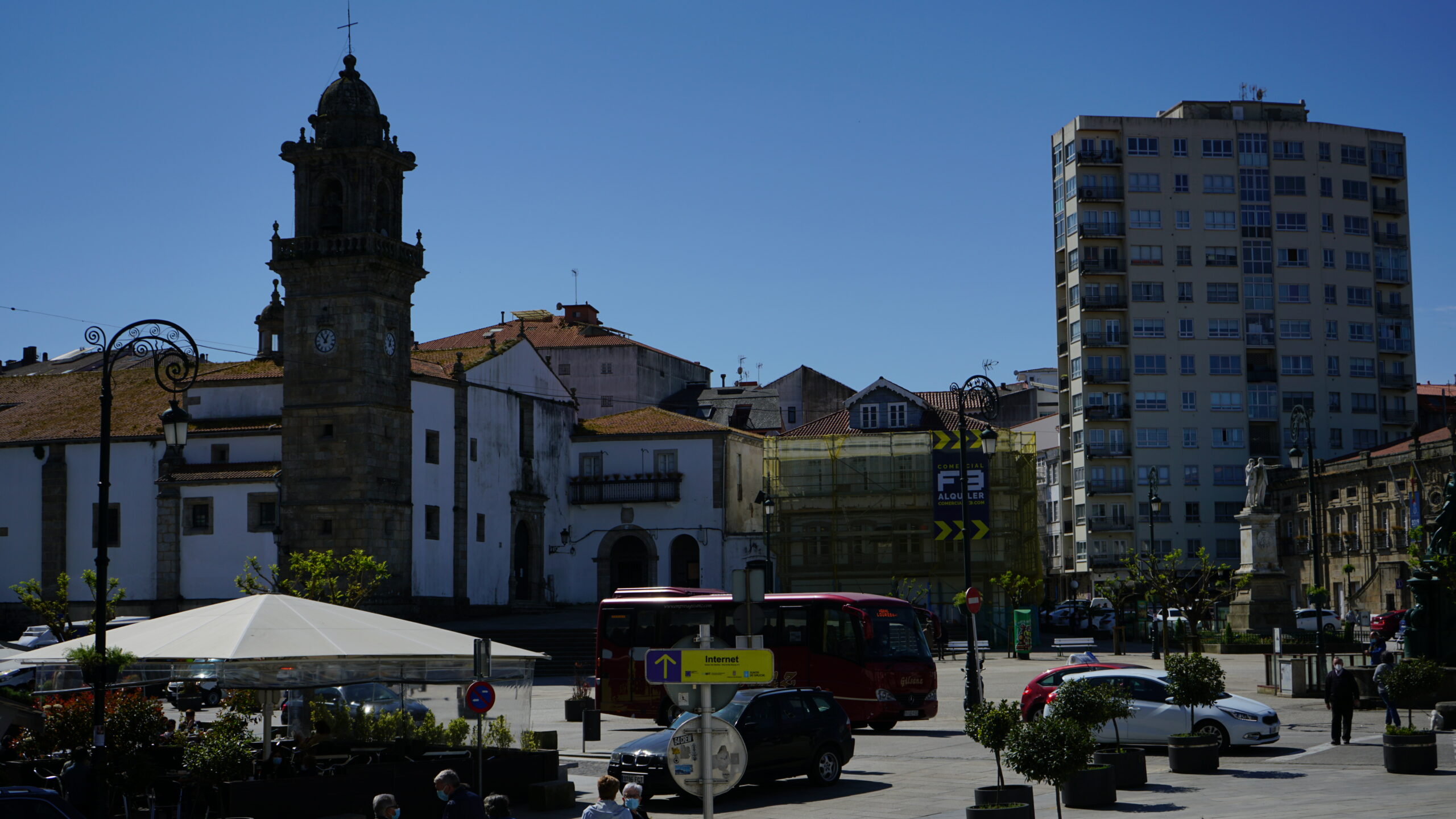
From 1875, on the night of August 16 to 17 and in honor of San Roque, Betanzos releases its famous paper balloon, becoming one of the events that attract more visitors and lasts about half an hour. The place chosen for the release is the Brothers García Naveira Square.
It is handmade and with traditional materials, gluing the brown paper used for its manufacture to a paste of rye flour and reinforced with cotton tape. This balloon, considered the world's largest paper balloon in the world, can hold up to 2300 cubic meters of air, with a height of 25 meters, a diameter of 16 meters, and a weight of 150 kilograms. As a fuel, it uses rye straw bundles tied in a traditional way known as "pachuzos" and tightly packed paper impregnated with car oil or old oil called "chorizos."
They used 16 panels for its construction, on which local artists draw themes related to aspects of local life, bringing humor, originality, and charm to this unique artifact. They also reserve two spaces on the panels, one for the town's coat of arms and another for the Pita family, traditionally in charge of the construction of the artifact.
To learn more
The Betanzos paper balloon was built and raised for the first time in 1874. A distinguished son of Betanzos, Don Claudio Pita Pandelo created this balloon because he was very fond of aerostats, and thanks to his work as a postal official, he could keep abreast of developments concerning his passion. He introduced several modifications to the Montgolfier brothers' balloon, which was of fabric and covered by paper, so Claudio Pita made it entirely of paper and gave it a pear shape, increasing its size. Probably, he was the one who added the basket that hangs from balloons. Because of him, the balloon became a significant part of the Saint Roch festivities that would remain faithful to his appointment every year, except during the Civil War.
After the invention, Don Claudio devoted himself entirely to making balloons in an old workshop and teaching his passion to his son, Jaime Pita, who took up the tradition after his father's death, and remained faithful to the original as his father had taught him, and thus, perpetuating the continuity. Jaime has taught his sons the same way his father did, and they have continued with this task without modifying anything, as they have declared, "the tradition had to be respected and maintained in its integrity."
Every year in the first half of July, volunteers, fans, and friends of the Pita family begin the making of the balloon, in the school-theater auditorium or in the School classrooms of Betanzos. The base of the balloon has 1500 pieces of brown paper that measure half a square meter each, glued together with rye paste and reinforcing the seams with cotton tape, all forming 16 quarters, also called meridians. Despite its traditional construction, today they have added modern elements, such as insulating tape to further secure the seams.
At the ends, the balloon has canvas strips placed to make it more consistent. A wooden arch forms the balloon's mouth, and in its interior, they set a metal basket for the fuel to ignite it, made of rye straw bundles and tightly packed papers impregnated with car oil or old oils. From the balloon's mouth, falls a wooden and paper-made basket filled with gunpowder artifacts that explode when the ascent begins. Young artists of Betanzos decorate each quarter with a drawing, caricatures usually related to local or international everyday aspects. They reserve the first quarter for the Betanzos coat of arms and the second for the name of the Pita Family. They release the aerostat at midnight every August 16, before the presence of the Pita family, volunteers, and numerous spectators celebrating the traditional feast of Saint Roch, all expecting to watch the balloon rise.
They hung the balloon in the tower of the Santo Domingo Church and tied it to a thick rope, and they proceed to inflate it, which takes about half an hour to swell. After, they separate the balloon from the tower until a member of the Pita family gives the order to cut the rope, at which time; they rotate the balloon so that spectators can appreciate the work done on it. While the aerostat rises flamboyantly, locals shout as loud as they can, "Viva Claudio," and the church bells ring and the fireworks start until the balloon disappears from sight.
To know it better
The Galician municipality of Betanzos, known as "Betanzos of the knights" (Los Caballeros) in A Coruña, located in the High Estuaries (Rías Altas). Its urban center lies on a hill fairly close to the Mandeo and Mendo Rivers.
Betanzos was one of the seven provinces forming the ancient Kingdom of Galicia. When civilization settled, its most characteristic feature was its walls, and during the Middle Ages, Betanzos had plenty of commercial traits, principally from the fishing activity.
In 1415, the inhabitants of Betanzos suffered a plague epidemic and prayed to Saint Roch for protection. Since that year, from August 14 and 25, the residents celebrate the town's festivities in Saint's honor to thank him for healing the sick with the plague.
During the festivities in honor of Saint Roch, one of the activities is the balloon launching, an unmanned paper aerostat, from the Square of the Brothers García Naveira. The balloon is handmade with traditional materials, such as brown paper, rye flour paste, and cotton tape. The entire balloon has painted details of vignettes, made by local artists. Said to be the world's largest paper balloon, its weight is about 150 kilograms with a maximum height of 25 meters, a maximum diameter of 16 meters, and a maximum circumference of just over 50 meters.
Galería
Location
- Locality
- Si
- Municipality
- Betanzos
- Province
- A Coruña
- Country
- Spain
The asset
- Type
- Popular festival
- Eco-destination
- Rías de Ares y Betanzos
- Environment
- Urban
- Relevance
- Regional
How to get there
- Distance
- 1,100 km
The visit
- Schedule
- 00:00 on August 16 of each year
- Visitable
- Yes
- Accessible
- No
- Parking
- No
Coordinates
- Latitud
- 43.27970464360942
- Longitud
- -8.210207982931909