
Caldelas Beach. Caldelas de Tui Island. Flora and fauna
About this heritage
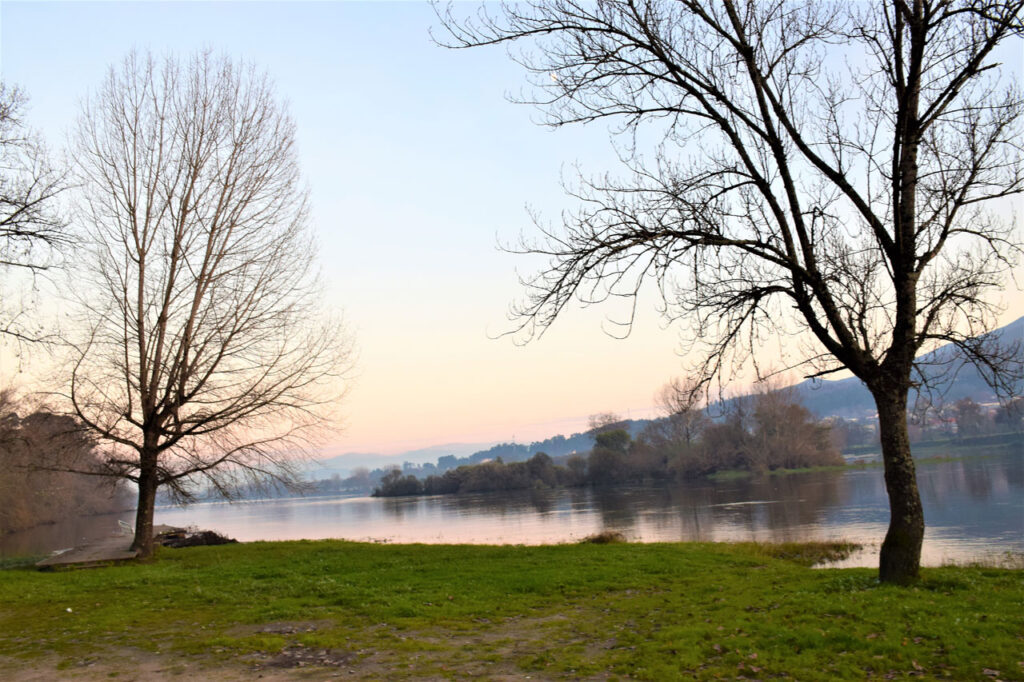
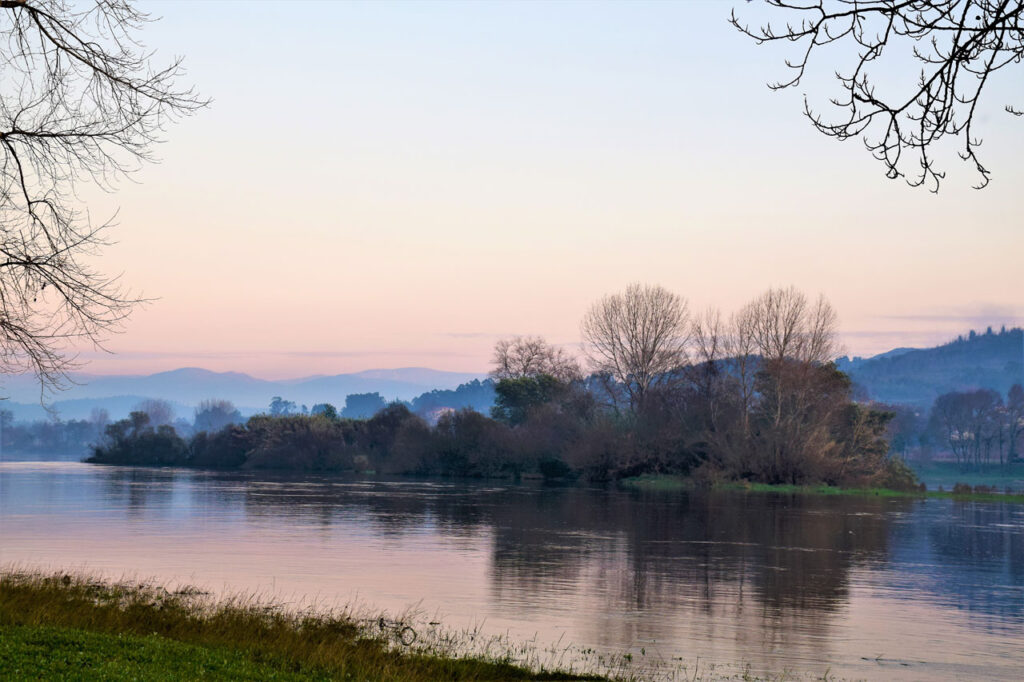
The Miño River is born in the Lugo province, runs for about 350 kilometers until it reaches its mouth, forming an estuary between A Guarda and Caminha. Its course is entirely within the Gallician Autonomous Community except for its last seventy-six kilometers, where it becomes a natural border with Portugal. UNESCO has declared the complete upper part of the Miño River a Biosphere Reserve.
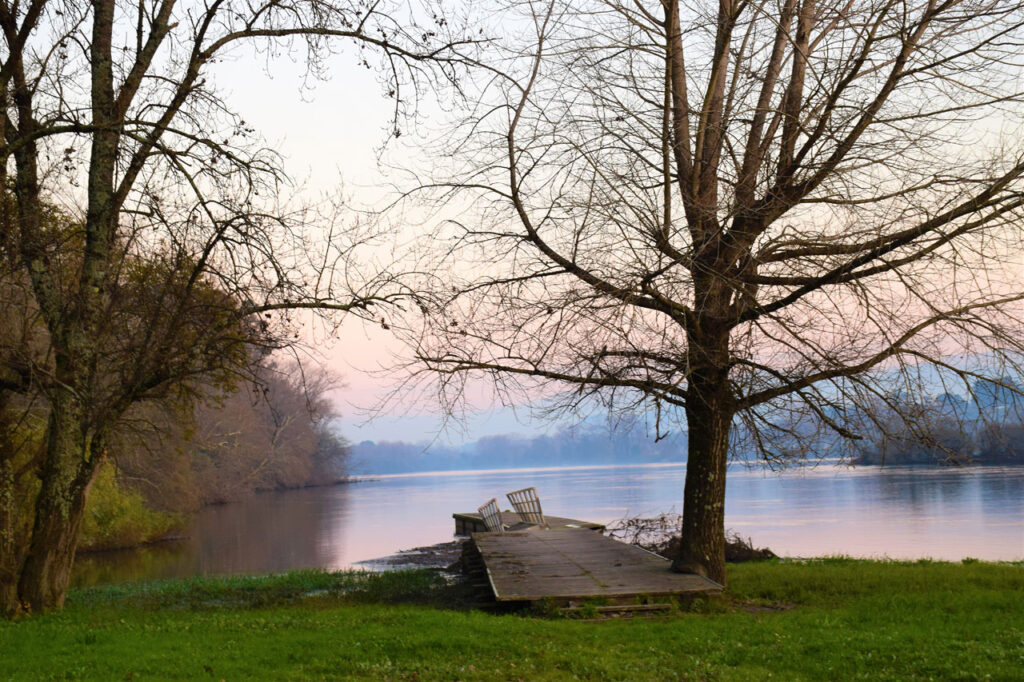
From the mouth to Tui, its waters are navigable. There are various spots within this county, where bathing is possible, such as the essential spot of the fluvial beach of Areneros in Guillarei. It has a large picnic area and a deck to go into the river. In front of this beach, one can see a fluvial island composed of the accumulated sediments in the Miño River, this type of formation is usually called "Morraceira."
Moreover, the "O Penedo" beach is also well-conditioned; it is near the bank of Caldelas de Tui, where one can walk and admire the views of this section of the Miño River.
In the Miño River, there are numerous types of aquatic ecosystems, lagoons, and flooded lands. The species, usually found, associated with the river are, among others, European eels (Anguilla Anguilla), brown trouts (Salmo trutta), sea lampreys (Petromyzon marinus), and many cyprinids such as bermejuela (Achondrostoma arcasii). There are also some mammals, such as a small semiaquatic globally threatened mammal, related to moles and shrews called the Pyrenean desman (Galemys pyrenaicus), and other more common ones like the Eurasian otter (Lutra lutra). In the lower part of the river during the winter, one can find diverse aquatic birds, such as the tufted duck (Aythya fuligula), European golden plover (Pluvialis apricaria), and the northern lapwing (Vanellus vanellus).
The vegetation is of alluvial forests of common alders (Alnus glutinosa), European ash (Fraxinus excelsior), and oaks (Quercus robur), and in the upper part of the riverbank, one can appreciate heaths (Calluna vulgaris).
To learn more
The toponymal "Candles of Tui" (Caldelas de Tui) already indicates the existence of a vein of hot springs, known since ancient times. In the 17th century, they made a reference of them in "Universal History of Mineral Waters of Spain" (Historia Universal de las Aguas Minerales de España), and in 1869, these hot springs were declared to be of public use.
Antonio Oliver Rubio decided to exploit this resource, and in 1886, built a spa facility together with a hotel in the parish of San Martín de Caldelas, on the banks of the Miño River.
At present, the complex has two stone buildings, one housing the thermal center and the other the new hotel. There is also an additional small stone house on one of the springs used for inhaling. To respect the original spaciousness, they designed charming halls using Venetian mirrors and lamps from that period. In a ten-year-old annex, one can locate the rooms, which are open onto the vineyards and the cane and corn gardens lying on the banks of the river.
A traditional Galician village, where one can visit the Saint Martin Church, characterizes the Caldelas de Tui County. This church was of Romanesque origin but rebuilt in a Baroque style at the end of the 18th century. It is located next to the mouth of the Caselas River.
At the end of August, specifically on the last Sunday of the month, the inhabitants celebrate the festival of the Virgin of the Rock, and the following day, on Monday, they celebrate the pie-like (empanada) festival on the banks of the Miño River.
To know it better
In "Caldelas de Tui" or "San Martiño de Caldelas de Tui," in the province of Pontevedra, one can find the fluvial beach of Caldelas. It has a blue flag since 2015.
It is a bathing area, about 250 meters long, formed by a stone dam in a forest with diverse trees, such as birches, chestnuts, and oaks. On top of that, its natural space, its clean and crystalline waters, and its two parks compose a spectacular landscape.
Caldelas also has two churches and hot springs, which motivated the creation of a spa. In the 17th century, Tui was already known for its waters, and almost twenty years later, Antonio Oliver Rubio decided to build the spa facilities with a hotel.
In this natural area, one can find different species, among others, frogs, blackbirds, sparrows, magpies, deer, rabbits, wolves, shrews, bats, or lizards.
Gallery
Location
- Town
- Caldelas de Tui
- Municipality
- Tui
- Province
- Pontevedra
- Country
- Spain
The asset
- Type
- Beach
- Eco-destination
- Río Miño
- Environment
- Natural
- Relevance
- National
How to get there
- Access
- By sea By land
- Distance
- Distancia 500 m / 6 minutos andando
The visit
- Accessible
- No
- Parking
- No
Coordinates
- Latitud
- 42.04383600
- Longitud
- -8.64354900