


Castro Punta Ostreira

About this heritage
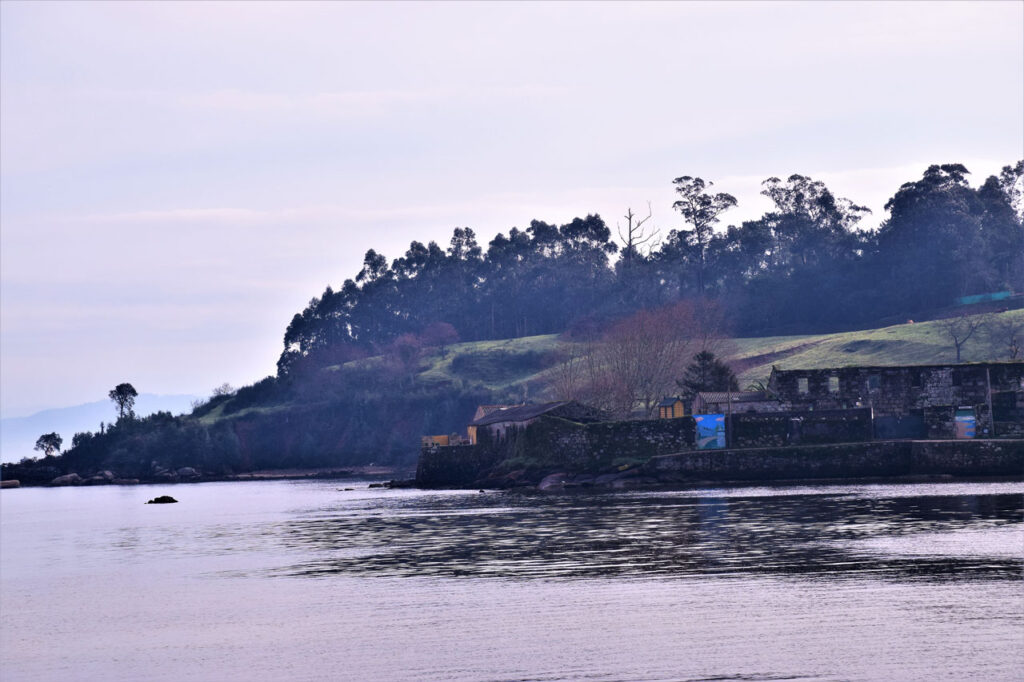
The Castro of Punta Ostreira, also known as Castro de Alberne or Os Castriños, is an Iron Age settlement. It is located on a promontory overlooking one of the entrances to the bay of A Pobra do Caramiñal, occupying one end of the former estate of the monastery of San Antonio de Xobre.
To learn more
The Castro of Punta Ostreira consists of an oval enclosure that was once protected by a parapet which took advantage of the steep drops of the castro towards the sea and other slopes. On the west side, the parapet was complemented by a still visible moat and ended at a great height. Above it, the Franciscans of the monastery of San Antonio de Xobre erected a chapel of which only one wall remains. Illegal works carried out on the castro by a later owner triggered a process that resulted in the first conviction for the restitution of an archaeological deposit by the Superior Court of Justice of Galicia. During the analysis of the damage, archaeological test pits revealed the chronology of the site, from the 3rd-2nd centuries BC, and interesting archaeological pieces, such as a set of weapons found hidden in one of the houses. Near the castro, which is privately owned, a Roman altar was recently found, currently housed in the Valle-Inclán Museum of A Pobra do Caramiñal.
To know it better
The Castro of Punta Ostreira is located in A Pobra do Caramiñal, in the province of A Coruña; more specifically, within the former estate where the monastery of Santo Antonio de Xobre was situated. The castro was hidden in a wooded area, making it difficult to know that beneath all those trees such an ancient site existed. In the 2000s, illegal works were carried out on the land, but miraculously, archaeologist Juan J. Alonso Braña revealed in his report that the castro was still in good condition. According to archaeological investigations, the castro dates from the 3rd-2nd centuries BC, is oval in shape, and was previously protected by a parapet or wall. Additionally, a set of weapons hidden in one of the houses has been found there.
Gallery
Location
- Town
- Pobra do Caramiñal
- Municipality
- A Pobra do Caramiñal
- Province
- A Coruña
- Country
- Spain
The asset
- Type
- Castro
- Eco-destination
- Ría de Arousa
- Environment
- Rural
- Relevance
- International
How to get there
- Access
- By sea By land
- Distance
- 2,6 km / 7 minutos en coche
The visit
- Accessible
- No
- Parking
- No
Coordinates
- Latitud
- 42.59597100
- Longitud
- -8.92536900