
Castros of Neixón

About this heritage
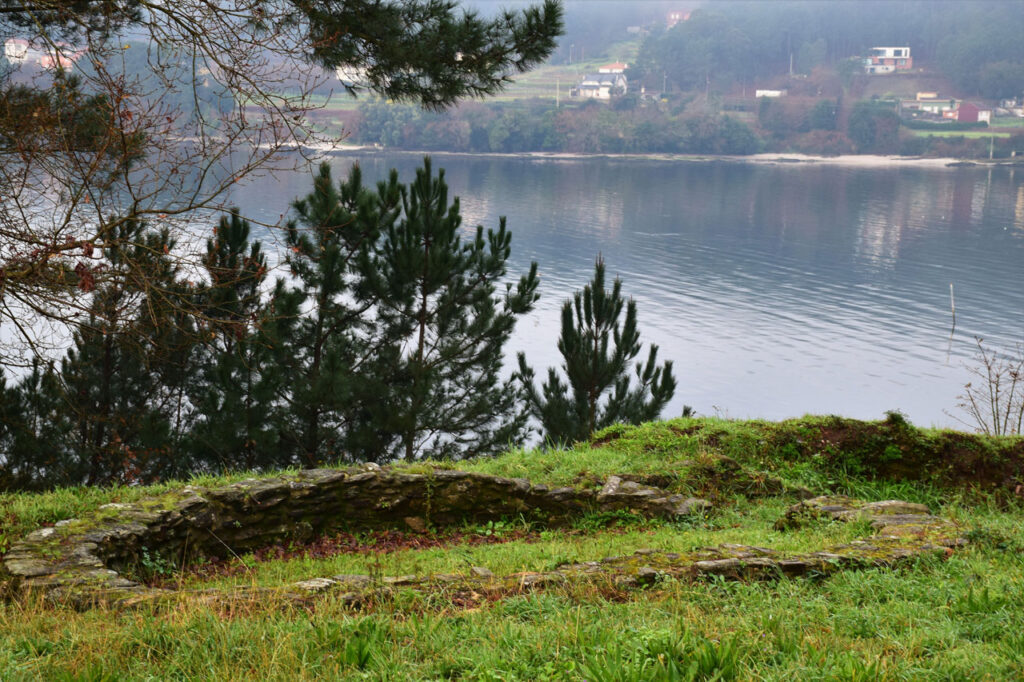
The castros of Neixón are located on a small peninsula situated inside the ría de Arousa, specifically in one of the innermost areas of it, located to the NNE. Its location is strategic in relation to the maritime trade circuit; at the same time, its placement must be related to the mining wealth of the area. This zone achieved significant local development of bronze and iron metallurgy during much of the first millennium B.C., known as the Iron Age, a period in which the so-called castro culture developed. The first studies at the beginning of the last century, following some surprising discoveries made by amateurs and scholars connected to the area, sparked the interest of researchers from various academic and scientific institutions. The interest of these intellectuals is due to the fact that human occupation was detected in Neixón during the transition between the Bronze Age and the Iron Age, with Neixón Pequeño being one of the castros with the latest occupation in the entire Northwestern peninsula. At the same time, these early studies highlighted the existence of significant metallurgical activity mainly of bronze, although with evidence of iron smelting. Later, in the 1970s, with the appearance of aríbalos (containers for aromatic oils made of polychrome glass of Punic origin), it was confirmed that Neixón maintained long-distance trade contacts, specifically with the Mediterranean world. In the 1980s, the Neixón archaeological complex became a degraded and marginal space; tracks were opened, forest plantations were made, and numerous garbage dumps appeared. In 1996, a new stage began for Neixón, as the regional administration together with the municipal authorities considered the possibility of revaluing the archaeological complex. Subsequently, around the year 2000 and under the project for the creation of the Galician Network of Archaeological Heritage (2001), part of the archaeological structures exposed to the open air since the early 20th century were consolidated and restored. In 2003, systematic archaeological excavations began with the intention, among others, of characterizing the archaeological site and continuing the process of revaluing the archaeological complex, which continues to this day.
To learn more
According to the most recent studies, the Castro Grande de Neixón shows evidence of three distinct periods of occupation; a pre-Roman occupation (Phase I), a Roman occupation (Phase II), and finally a late Roman occupation (Phase III).
Phase I. (5th-2nd century BC) In this first period of occupation at Castro Grande, its inhabitants came into contact with Punic trade circuits and other producing areas of the castro world, engaging in short, medium, and long-distance trade. In this first phase, it appears that the main enclosure of Castro Grande largely served as a large space dedicated to the storage of surpluses, as evidenced by the large number of pits or storage silos found in the areas intervened in recent years.
Phase II. Coinciding with the turn of the era, 1st century BC - 2nd century AD; a peak moment when a large quantity of products from Roman trade circuits began to appear; similar to what occurs in castros such as Santa Tegra, Castro de Vigo, Facho de Donón, La Lanzada, etc.
Phase III. Chronologically coincides with the crisis at the end of the 3rd century of the Roman Empire, with the castro being abandoned around the 4th-5th century AD.
From a physiognomic point of view, the main enclosure has a slightly oval shape, measuring 95 meters north-south and 105 meters east-west.
The upper enclosure of Castro Grande was rebuilt around the 5th-4th centuries BC. At the turn of the era, an urban restructuring took place; the oldest occupation level was clearly dismantled, and the material was used to fill the southeast entrance.
Outside the acropolis, both in the eastern and western sectors, as well as in the space between the two castros, terraces are preserved that could be a habitat area or elements of the defensive system, such as a ditch opened near the southeast access whose functionality could be justified as the configuration of the adjacent terraces as a form of terracing, or even as a delimitation of space or possible mining exploitation, or even as part of the defensive system.
The majority of recovered material remains are ceramic in nature, mostly corresponding to items used in the daily life of Neixón's inhabitants, such as pots for cooking or storing various products.
Additionally, Punic imitation ceramics were recovered, such as the unguentarium found in the ditch, and even some of Iberian tradition.
Besides ceramic remains, numerous stone tools were also recovered, such as polishers, axes, weights, mills, etc.; for which local raw materials like pebble, schist, and quartzite were used.
A very important set of metal items was also recovered, mainly bronze (fibulae, needles, pendants, etc.).
The inhabitants of Castro Grande de Neixón relied heavily on livestock for their subsistence. Their livestock included species such as sheep, goats, pigs, and cattle. Sheep and goats were the most abundant group, although cattle provided a larger volume of meat, while pigs ranked third in importance. The use of sheep and goats seems to have been exclusively for meat supply.
The ancient inhabitants of Neixón required wood, either for fuel to make fire or to build structures and artifacts; they used tree and shrub species, showing a certain preference for oak wood.
According to available data on Castro Pequeño, there is confirmed continuity of occupation between the Bronze Age and the Iron Age. Possibly at first, Castro Pequeño de Neixón was a small open village, delimited only by a small ditch towards the peninsular area, taking advantage of the natural terrain conditions.
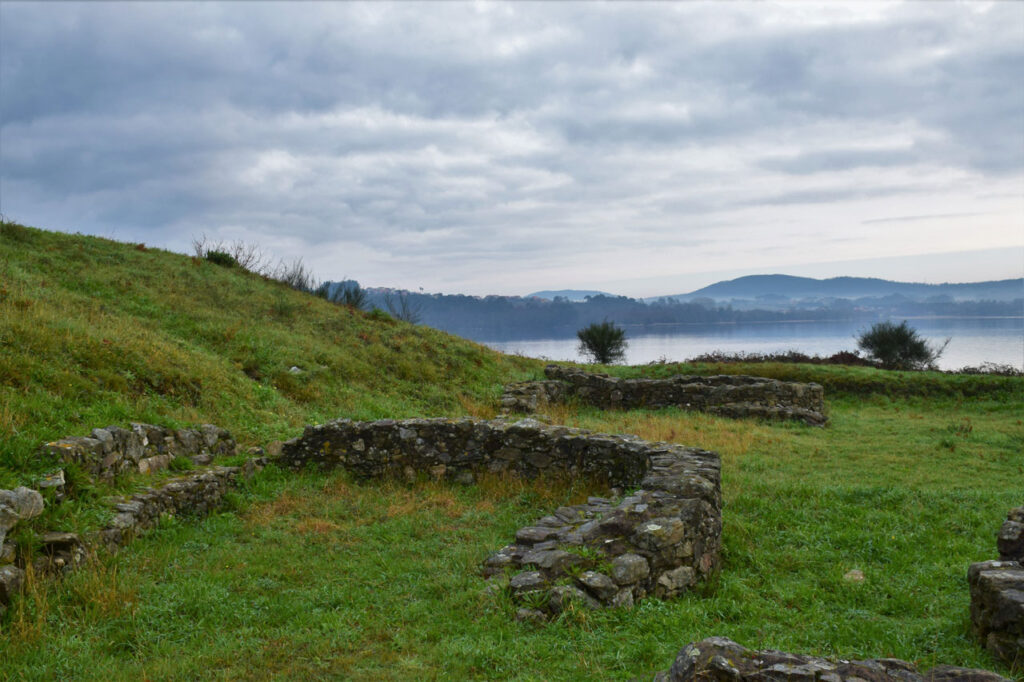
At this site, the transition from architecture made with perishable materials to one consisting of circular huts with stone bases, adobe walls, and straw roofs characteristic of the early Iron Age is evident.
In the recently intervened area, a set of three huts was found, one with a stone base, and the others made with perishable materials, preserving only the wedges and post holes and a hearth.
Also significant is the concentration of bronze remains and pieces of ceramic molds for bronze casting, documenting the entire technical-operational chain of the metallurgical process.
A total of 26 crucible fragments and 6 molds were recovered, along with numerous metal artifacts: fibulae, cauldron pieces, rods, knife or razor.
Visits are adapted for people with visual disabilities.
To know it better
Boiro is a coastal municipality located in the comarca of O Barbanza, in the province of A Coruña. This municipality of the Rías Baixas, bathed by the Ría de Arousa, boasts a wide variety of beaches such as Carragueiros and Barraña. Likewise, one of the most popular coastal visits in the area is Cabo de Cruz and the Barraña cove. Additionally, Boiro is close to places like A Pobra do Caramiñal, Rianxo, and Ribeira.
This municipality has a Celtic past so characteristic of our area. Celtic traces can be found in Cespón, more specifically in the Castros de Neixón. These fortified settlements, dated to the Bronze Age and Iron Age, correspond to the 5th century BC and the 4th century AD. It is important to remember that it was declared a Site of Cultural Interest by the Xunta de Galicia in 2011.
The Castros de Punta Neixón were among the first Galician archaeological sites excavated during the 20th and early 21st centuries, with participation from those now considered part of the fathers of Galician archaeology, D. Fermín Bouza Brey and D. Florentino López Cuevillas.
The main characteristics of these castros are:
The Castro Pequeño shows signs of older occupation and, according to studies, its construction evolved from architecture with more durable materials to that characteristic of the castro period: circular huts with stone bases, mud and wood walls, and straw roofs.
On the other hand, at a distance of 100 meters, we find Castro Grande. A castro that was likely inhabited once the smaller one was abandoned.
Gallery
Location
- Locality
- Boiro
- Municipality
- Boiro
- Province
- A Coruña
- Country
- Spain
The asset
- Type
- Castro
- Eco-destination
- Ría de Arousa
- Environment
- Rural
- Relevance
- International
How to get there
- Access
- By sea By land
- Distance
- 8,6 km
The visit
- Visitable
- Yes
- Accessible
- No
- Parking
- No
Coordinates
- Latitud
- 42.66385400
- Longitud
- -8.84318200