
Lordly House (Pazo) of Mariñán. Bird Observatories
About this heritage
The Lordly House (Pazo) of Mariñán is in the municipality of Bergondo, in the A Coruña Province. We have to go back to the mid-fifteenth century to know the origins of this locality, declared a Historic-Artistic and Monumental Site in 1972, built as a defense by the noble knight Gómez Pérez de las Mariñas. Nowadays, it hosts many different events, including the Lordly House (Pazo) Museum.
Restored in 1975, the House (Pazo) houses a collection of Galician authors' writings, especially from the 19th century.
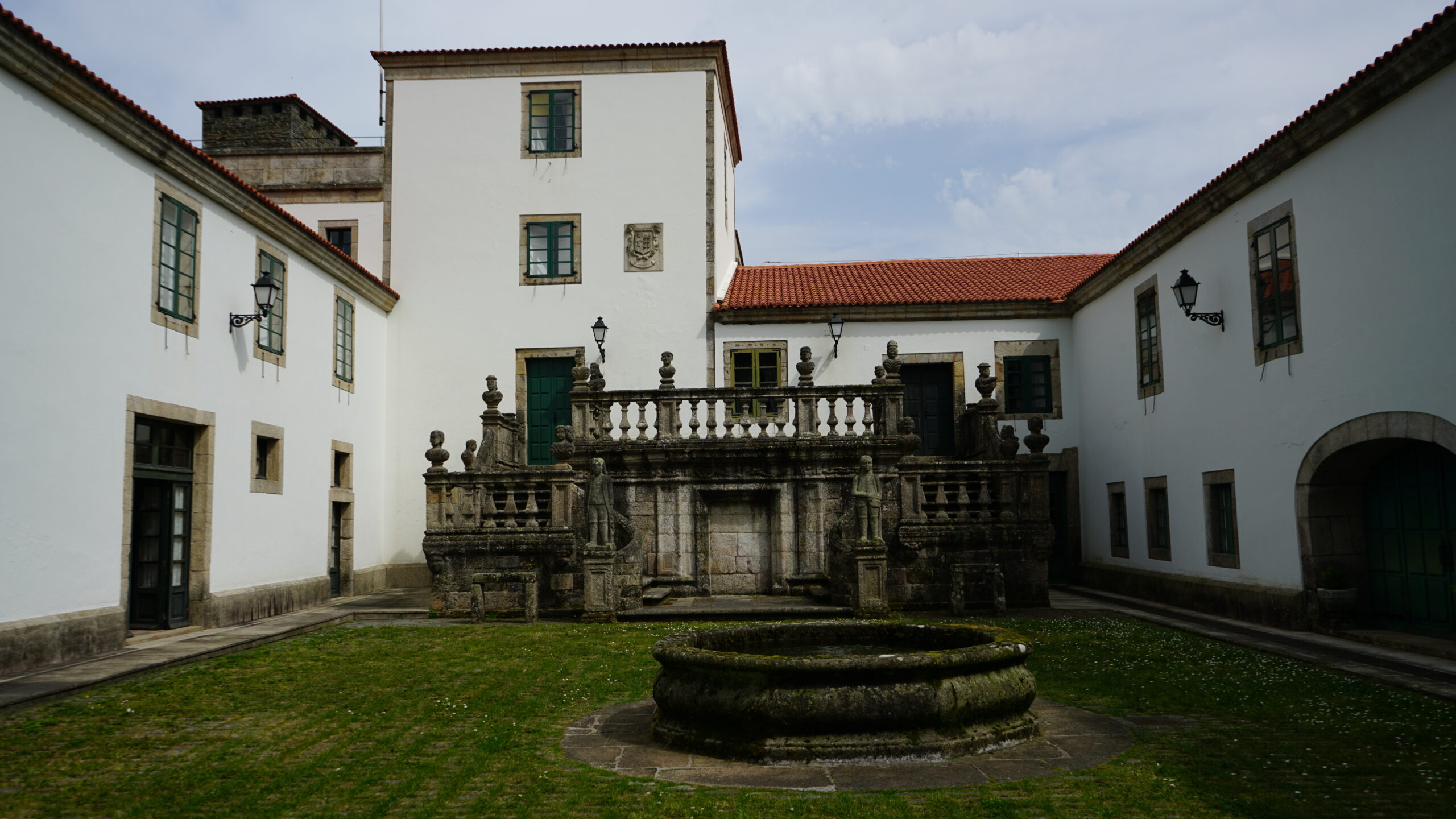
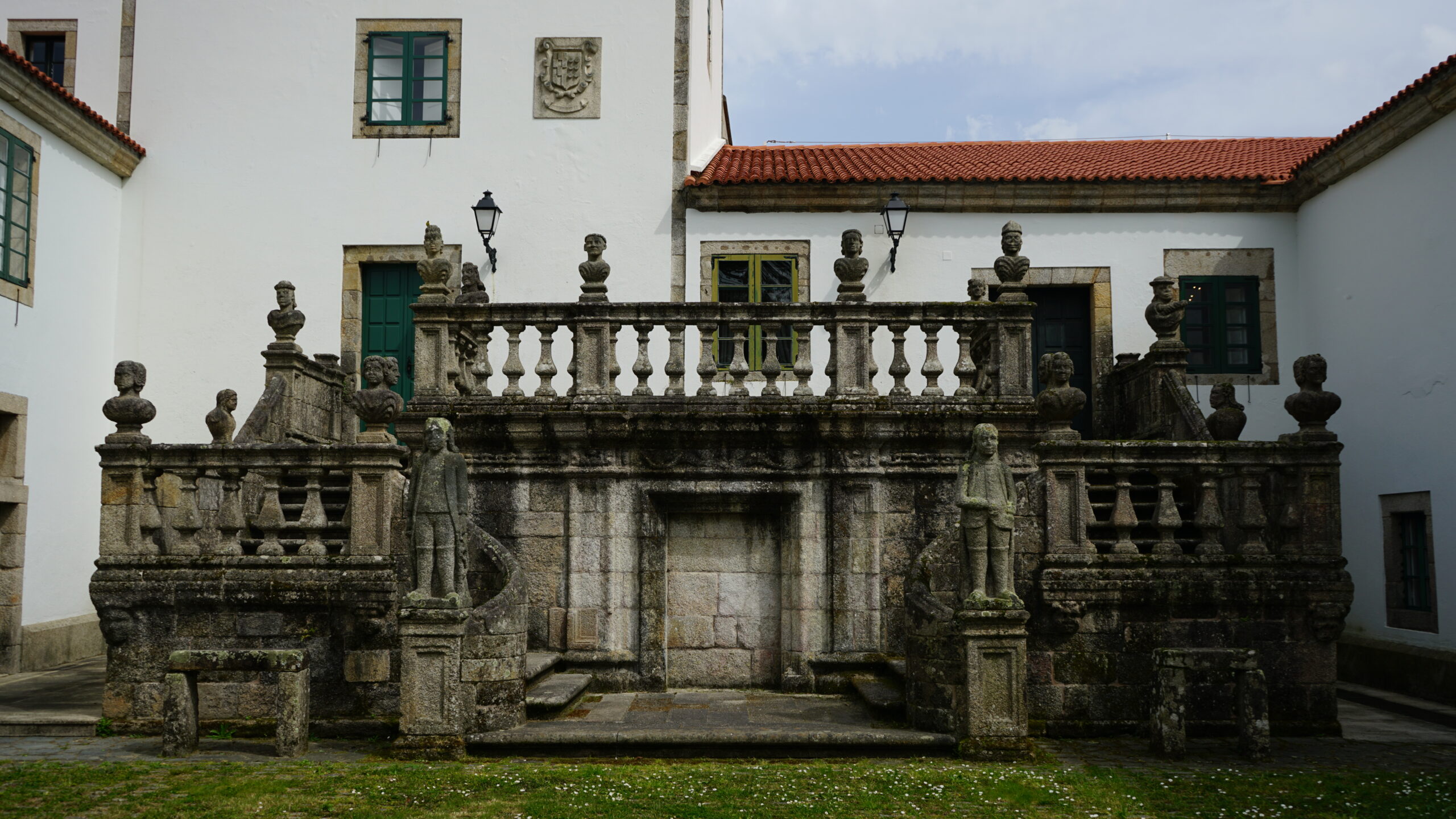
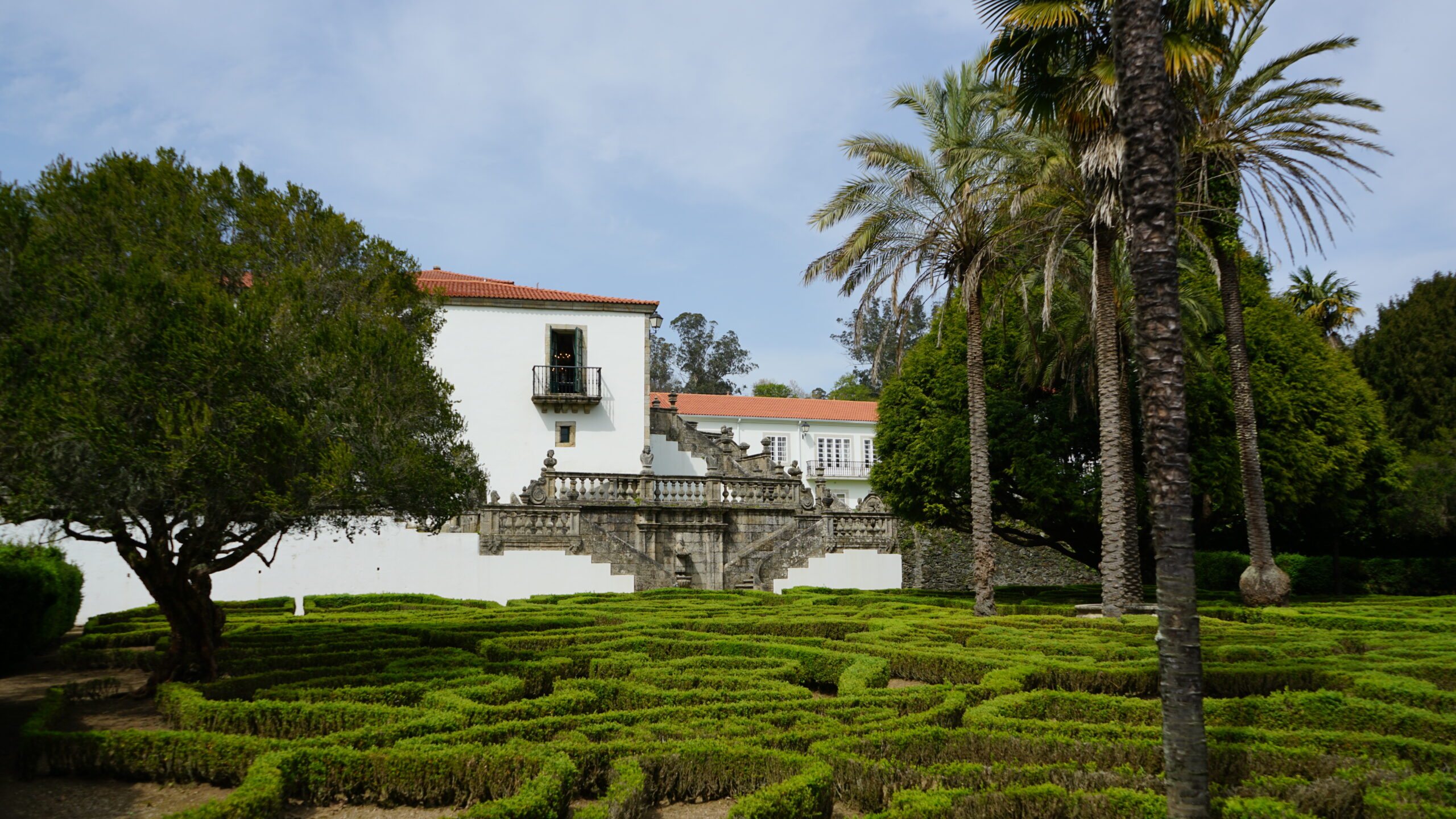
It has a U-shaped construction, which is the standard for this type of building. On the principal façade side, two servant statues, made of granite, stand at the base of the imperial staircase, which leads to the hall, giving access to the rest of the rooms. The rear façade houses a large terrace, decorated with sculptures, garden urns, fountains, and canals for water games, with pleasant and unbeatable views of the whimsical shapes and fittings of the trimmed myrtles. Former residents used to enjoy this terrace in the warm and sunny summer afternoons, which connects to the interior of the old dining room. Other rooms and spaces stand out too, such as the kitchen with its large fireplace and the garden, renovated by a French landscaper.
This garden has three distinct zones, ornamental, wooded, and horticultural, forming small botanical gardens, and has a small pier, used as a leisure area and to cross the estuary. It contains Caucasian fir, boxwoods, yews, cypresses, and strawberry trees, among other many plant species. Since 1997, they created the "garden of the word," in which illustrious visitors could plant a tree and leave at its foot a message for the future.
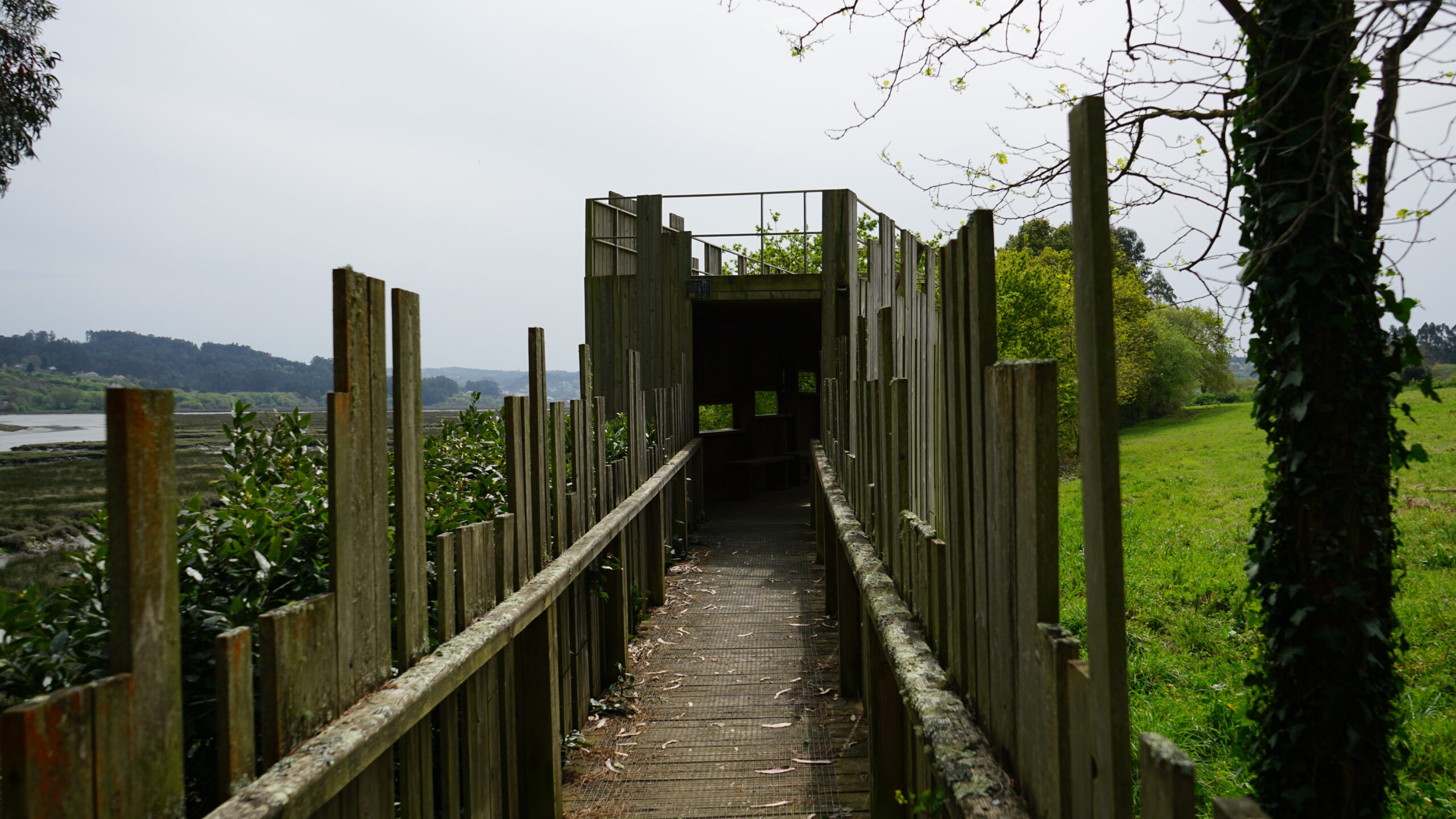
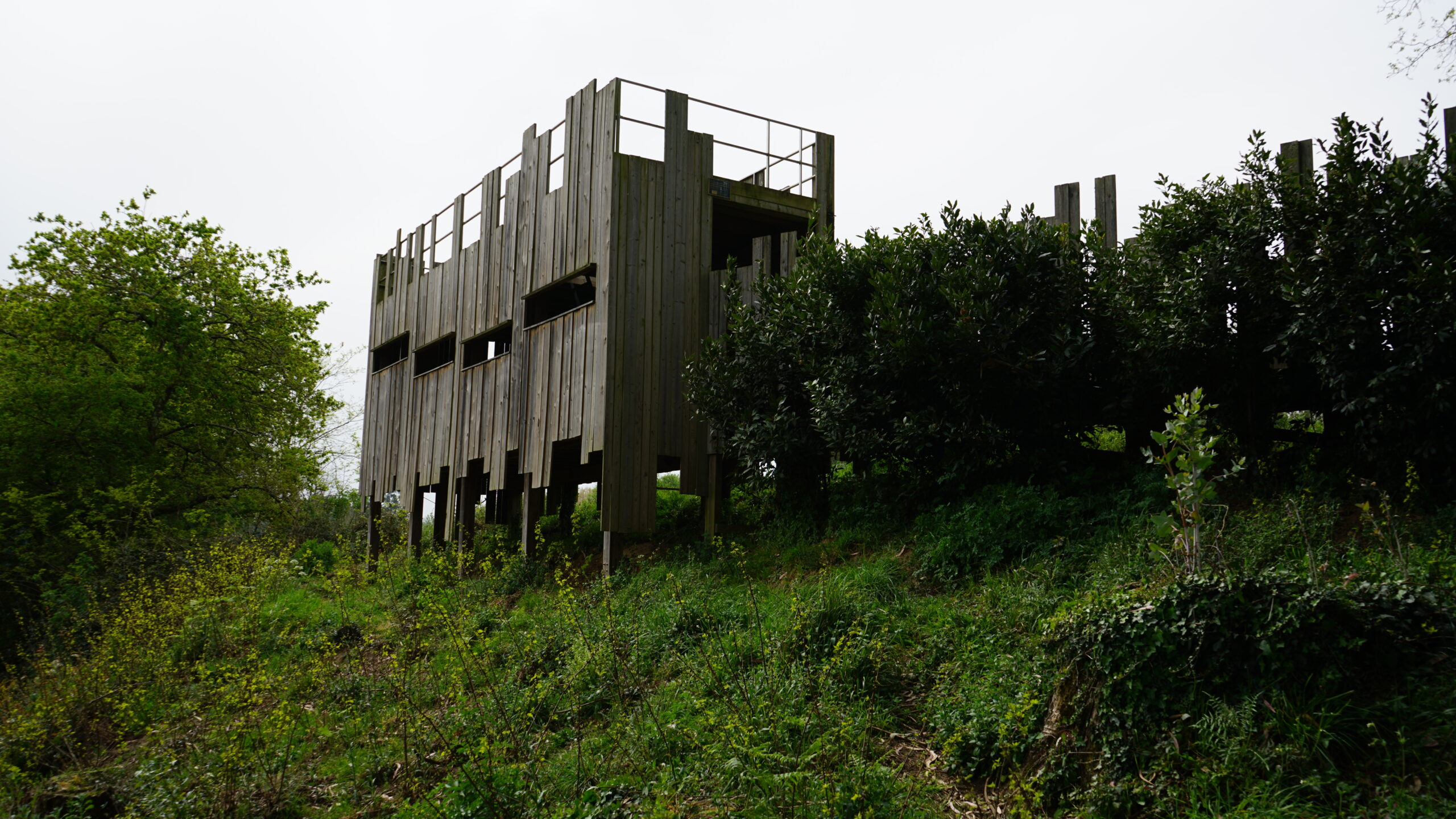
The House (Pazo) has a wooden observatory overlooking the Betanzos Estuary so that bird-watching (ornithology) aficionados can appreciate those species related to forest gardens, such as the yellow or white-browed woodpeckers, great spotted woodpeckers, common chaffinches, European robins, common blackbirds, song thrushes, black redstarts, tawny owls. They can also enjoy other species, such as the ospreys, western marsh harriers, Eurasian whimbrels, mallards, black-headed and yellow-legged gulls, grey herons, great cormorants, little grebes, and some Eurasian spoonbills.
The gardens visiting hours are from 9.00 to 21.00 every day of the week (free visit), and offers guided tours of the interior.
Nowadays, the museum requires visitors to wear a mask, except for children under six years of age, and respect the capacity indicated.
On the Betanzos estuary eastern shore, the Souto bird observatory offers an astonishing panoramic view of the Estuary right bank of the Mandeo River just before its mouth. Wide reed beds and halophyte meadows, crossed by numerous channels, form one of the most extensive coastal marshes of Galicia, included as a Special Conservation Zone (ZEC) Betanzos-Mandeo Estuary, and therefore, in the Natura 2000 Network of the European Union. The trail leading to the observatory also crosses a well-preserved traditional countryside.
The diversity and abundance of birds are the most diverse between September and April, particularly between November and January.
Among the most easily observed ducks (Anatidae family of water birds) are mallards, northern shovelers, and Eurasian teals. Alongside them but on the channels' shores, it is also easy to see Dunlins, Eurasian curlews, green and common sandpipers, grey plovers, grey herons, little egrets, and if lucky, some water rails, and more than one Eurasian spoonbill, accompanied, during migrations, by species of waders (shorebirds).
Although frequently, other species only fly over these reed beds, such as western marsh harriers, black kites, and ospreys; whereas others find shelter on the fields near the shore at different times of the year, among others, European turtle doves, barn and tawny owls, common cuckoos, European green woodpeckers, common house martins, red-rumped swallows, Eurasian crag martins, sardinian warblers.
Additionally, in the autumn migration, the species visiting the reed beds are, among others, northern wheatears, European pied flycatchers, and willow warblers; other species breed among the banks of these reeds like western yellow wagtails and streaked fantail warblers; and others hibernate like the common reed bunting.
Likewise, we can watch some of these birds at the end of the spring and during the summer, such as black kites, western yellow wagtails, and European-turtle doves.
To learn more
The noble knight Gómez Pérez de las Mariñas built in the mid-15th century the Lordly House (Pazo) of Mariñán, conceived as a military fortress since this nobleman actively collaborated in the Irmandiño revolts. Formerly, the Lordly House (Pazo) was popularly known as the "Lordly House (Pazo) of Bergondo," which later belonged to aristocratic Galician families, but in 1936, it got transferred to the La Coruña Council since the last owner had no direct relatives for the bequeathal.
Nowadays, the La Coruña Government utilizes it for socio-cultural purposes, specifically for three applications, institutional events, a learning center, and the Lordly House (Pazo) Museum that joints much of the art collection of the Council.
Ascending the staircase, one enters the entrance hall. The rear façade presents an ample terrace with granitic balustrades. Garden urns, fountains, and channels decorate, all with materials of Galician granite, this terrace for water games.
This terrace, intended for sunbathing, contains benches attached to the wall and connects with the interior through doors, acting as a nexus between rooms by extending the rooms inwards. The dimensions are characteristic of the baroque tendency to seek the surprise effect and the sense of instability; therefore, it is common to place large volumes in the upper parts of the buildings. The chapel had a primitive foundation, but during the 18th-century reconstruction, they placed a bell tower and pinnacles topped with balls of the period.
The House (Pazo) holds an art gallery comprising principally Galician artists, including a diversity of scholars, modernists, and renovators. One of the oldest art pieces is a Flemish-style panel painting from a pilgrims' hospital in Santiago de Compostela, a 15th-century antependium attributed to Francisco de Gallego.
The garden has three distinct zones, ornamental, wooded, and horticultural, revealing the use of the land. The introduction of foreign species in this garden makes practically discrete little areas, forming small botanical gardens and other spaces decorated with typically Galician floral designs. It is believed that Bishop Fray Rosendo Salvado, who held a post in an Australian diocese, brought the first eucalyptus trees to this Lordly House (Pazo) Garden.
The landscape of the Betanzos estuary enhances the entire complex. Additionally, the garden has a small pier, used to cross the estuary before the O Pedrido bridge construction, and later used as a leisure area. In the twentieth century, they created the "garden of the word," in which illustrious visitors could plant a tree and leave at its foot a message for the future.
Overlooking the Betanzos estuary, the wooden observatory inside the House (Pazo) allows visitors to observe common redshank and greenshanks, mallards, yellow-legged gulls, grey herons, and little grebes.
Located near the Lordly House (Pazo) of Mariñán, we find the marshes of the Biosphere Reserve of Mariñas Coruñesas and Terra del Mandeo. They are of great value as a shelter or refuge for birds and hold 49 habitats of community places of interest, 12 of which are considered a priority. Additionally, more than 300 species, protected under some international, European, state, or Galician protection instrument, have their refuge in these marshes.
The Biosphere of Mariñas Coruñesas e Terra does Mandeo comprises 17 municipalities, and its surface area consists of 116,726 ha, 113,969.7 of which are terrestrial and 2,756.4 marine. It is home to countless spaces, which are of immense natural and scenic value for which UNESCO declared it a Reserve in May 2013.
The ornithological promenade runs from the center of Betanzos to the junction of the Mandeo and Mendo rivers, where the most impressive river's mouth of northern Galicia begins. This promenade offers the opportunity to observe both urban species and those linked to the rural and fluvial environment. The streets and squares sheltered, in spring, common swifts, common house martins, and throughout the year, black redstarts, Eurasian magpies, house sparrows, spotless starlings, and Eurasian collared doves. Once along the rivers, it will be possible to see mallards, common sandpipers, grey wagtails, barn swallows, zitting cisticolas, during spring and summer, black kites and European honey buzzards, and throughout the year, common buzzards, Eurasian sparrowhawks and maybe a peregrine falcon.
These marinas are of great ornithological attraction between the months of February and September. Its diversity of landscapes shelters throughout the year an extensive list of bird species. Some remain in this area, whereas others come from northern Europe during the colder months or Africa to stay in spring and summer and return in autumn, adding to the latter, but just in spring and autumn, birds passing through during their migrations. The reserve has several international and regional qualifications for safeguarding and conserving biological diversity and associating natural and cultural resources.
We can find elements from megalithic and Castro (Galician) cultures, represented by burial mounds, dolmens, petroglyphs, rock art, and Castros (remains of a pre-Roman fort). There is also an important Roman road of communication called Via Romana XX from Astorga to Oporto.
To know it better
Bergondo is a Galician municipality in the A Coruña in Province in the Betanzos Estuary that borders with Sada, Cambre, Abegondo, Betanzos, and Paderne municipalities, and on its banks sits the Lordly House (Pazo) of Mariñán, specifically on the left bank of the Mondeo River, very close to Betanzos and Pontedeume towns.
Declared a Historical-Artistic Site in 1972, this Lordly House (Pazo) dates from the 18th century, built by order of Gómez Pérez das Mariñas, and formerly known as Lordly House (Pazo) of Bergondo. Subsequently, it was inherited from father to son until it came into the hands of Gerardo Bermúdez de Castro y Suárez de Deza, Lord of Láncara. After his death, the property got transferred to the A Coruña Council for social purposes. This property has also been called Lordly House (Pazo) of Láncara, Manor (Quinta) of Bergondo, or House of Láncara.
The building has a Chapel, built in the 18th century, and two staircases decorated with pinnacles, of which one descends to the gardens. On the left side is a stone fountain attached to the wall that leads to the central courtyard with a U-shaped plan. This garden consists of low-trimmed bushes, highlighting a circular stone and marble fountain.
Near the House, we can enjoy the Betanzos estuary and more marvels of interest thanks to the installation of two ornithological observatories. One of them is on the side of the Bergondo municipality and the other opposite to it, in Paderne. The views offered are mainly to the estuary and the marsh area known as "O Xuncal," where we can observe many bird species, such as cormorants, herons, little egrets, and black-headed and yellow-legged gulls, among others.
Gallery
Location
- Town
- Bergondo
- Municipality
- Bergondo
- Province
- A Coruña
- Country
- Spain
The asset
- Type
- Manor house
- Eco-destination
- Rías de Ares y Betanzos
- Environment
- Rural
- Relevance
- Regional
How to get there
- Access
- By sea
- Distance
- 7,200 km
The visit
- Visitable
- Yes
- Accessible
- No
- Parking
- Sí
- Signposted
- Yes
Coordinates
- Latitud
- 43.31825074033515
- Longitud
- -8.216200178915695