
Marín. Castiñeiras mountain and lake. Abelaires Petroglyphs. Cotorredondo viewpoint
About this heritage
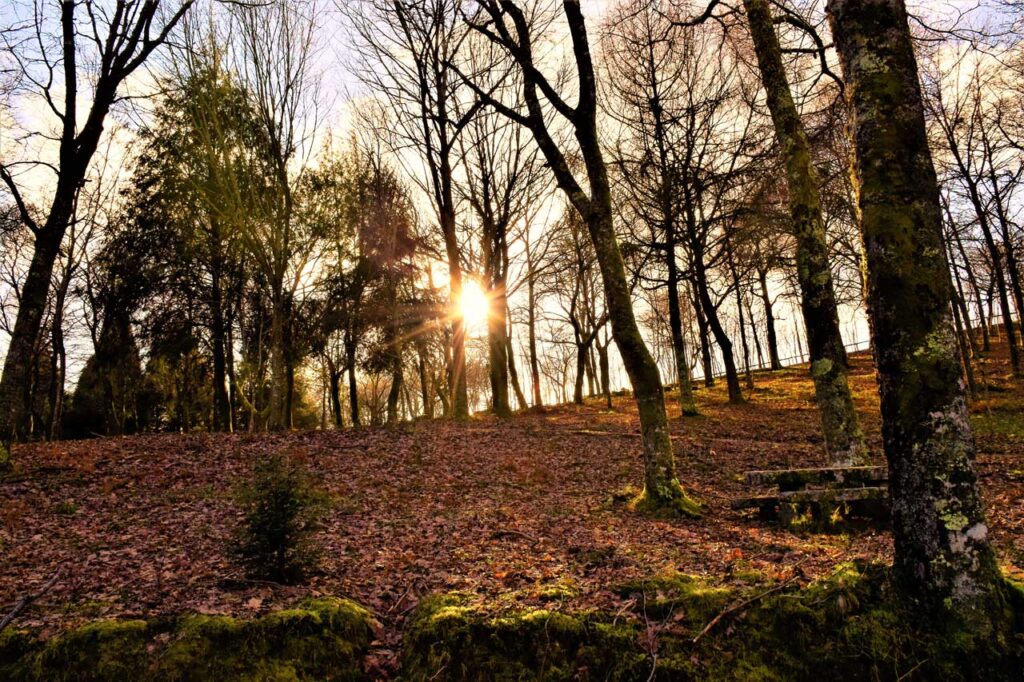
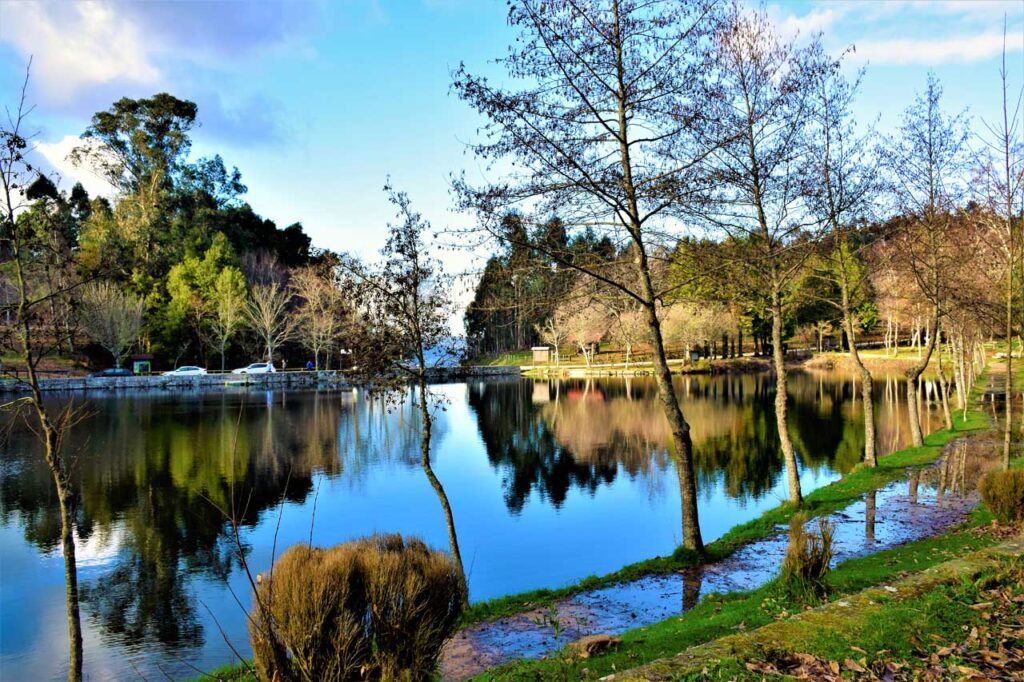
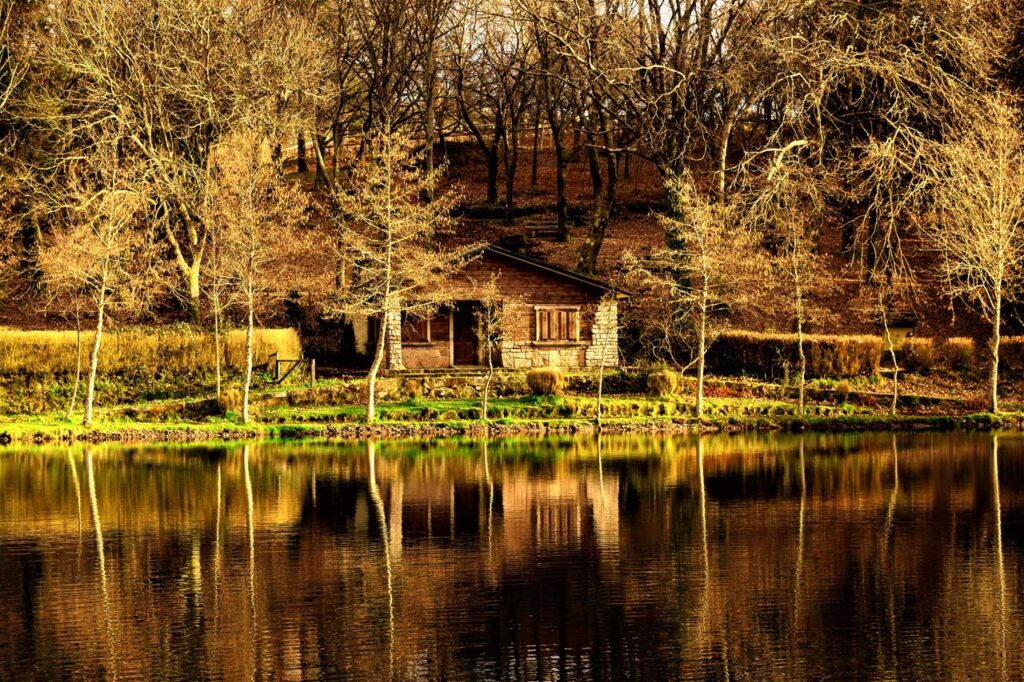
Castiñeiras lake is the epicentre of the Cotorredondo Nature Park. It is located between the municipalities of Vilaboa and Marín. Although its artificial origin (it dates back to 1950), its charm is unique and completes the environment as an important refuge and breeding area for many wild species, giving rise to a unique space where different native species coexists with trees of different origins.
Castiñeiras lake is also an important recreational area where its many visitors have trails, fountains, playground, tables and barbecues and everything necessary to enjoy nature.
The area is at an altitude of 550 meters above the sea level. The most common accesses are though the PO-101 road (Castiñeiras indication) or through Figueirido going up to the PO-103 road.
In the area you can also find the Abelaires Petroglyph, which is a group of cave engravings that are 4.000 years old. Like the rest of Galicia´s great cave heritage, they reproduce circles bowls and labyrinths.
Very close by, and belonging to Vilaboa City Council, we can find the impressive viewpoint of Cotorredondo. From this Viewpoint you can see the San Simón cove in Vigo and Pontevedra estuaries. If luck is with us and the day is clear, we could get to see Arousa estuary.
To learn more
The Castiñeiras mountain and lake extends over the territory of Vilaboa, Marín, and Moaña. It is well located geographically and is one of the most interesting and attractive parks in the area. In this natural park we find the Castiñeiras lake.
The flora is very varied, predominantly American oak, laurel and pine. In the fauna we can find birds and trout, it is easy to see fans of this fishing practising and enjoying their free time in the fishing season. In this facilities we can find the Nature Classroom, where visits for groups are organized.
We can also approach the petroglyph Das Abelairas. Petroglyphs are the background to pre-writing symbols. There are graphic representations engraved on stones or rocks, engraved in the open air and with complex and difficult to interpret symbolism.
The word petroglyph comes from the Greek terms petros and glyphein, meaning stone and workshop. They were found on all continents, with similar characteristics among them. Although most of the petroglyphs we find in Galicia belong to the Metal age, being almost all of them from Bronze age , they may belong to very different periods of history.
The Galician petroglyphs are one of the most genuine representations of our prehistoric art. They represent mazes, animals, geometric symbols, human figures.
To know it better
A few kilometres away from Marín, near Vilaboa, in Pontevedra, we find an incredible natural landscape. We are talking about the Castiñeiras lake and the natural park of Cotorredondo (in the San Xulián mountain).
With an attitude of about 550 meters above the sea level, the area of Cotorredondo is a place where you can enjoy nature and a walk in the countryside. The park has about 70 hectares of surface with trees such as chestnut, birch or American oak, among others. Around the park we can find picnic areas, fountains and tables with a view of the famous Castiñeiras lake, which belongs to Marín in the north and Vilaboa in the south.
In addition, in the park there are archaeological settlements from the Megalithic and Bronze periods such as dolmens and petroglyphs forming what is known as “Chan de Castiñeiras”. In fact, here you can find the “Dolmen del Rey” (The king´s dolmen) which is, nowadays, the biggest dolmen found in Galicia. A few kilometres away, we find ourselves at the Cotorredondo viewpoint with impressive views of the Pontevedra, Vigo and Arousa estuaries.
A petroglyph that is suffering the passage of time is the well-known “O Abelairas” in O Alto da Portela, located between Cangas and Bueu. It corresponds to the Neolithic period and its state of conservation is not very good. In this petroglyph, about 10 meters long and 7 meters wide, you can recognize certain engravings of circles, lines and ovals.
Gallery
Location
- Locality
- Marín
- Municipality
- Marín
- Province
- Pontevedra
- Country
- Spain
The asset
- Type
- Natural Park
- Eco-destination
- Ría de Pontevedra
- Environment
- Rural
- Relevance
- National
How to get there
- Access
- By land
- Distance
- 8,000 km
The visit
- Visitable
- Yes
- Accessible
- Sí
- Parking
- Sí
Coordinates
- Latitud
- 42.35315900
- Longitud
- -8.67531900