
O Rosal. Folón and Picón mills.
About this heritage
The municipality of O Rosal, where the mills of Folón and Picón are located, is in the south of Pontevedra´s province, bordering the municipalities of A Guarda, Oia and Tomiño. Like the entire Baixo Miño area, it has been graceful by a unique natural beauty.
Apart from the mills we will be dealing with now, O Rosal is known – above all - for its wine quality and taste.
To get to know the mills, which have also been declared of cultural interest, the best thing to do is to follow the Route of the Folón and Picón Mills. This is a low-difficulty route and is 3. 5 km long.
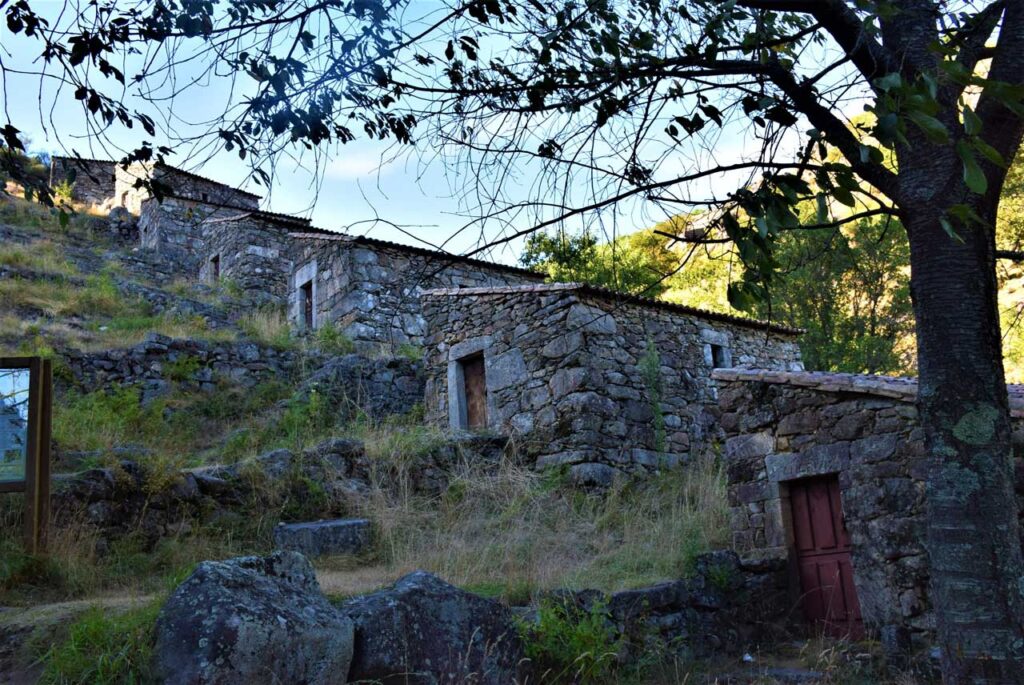
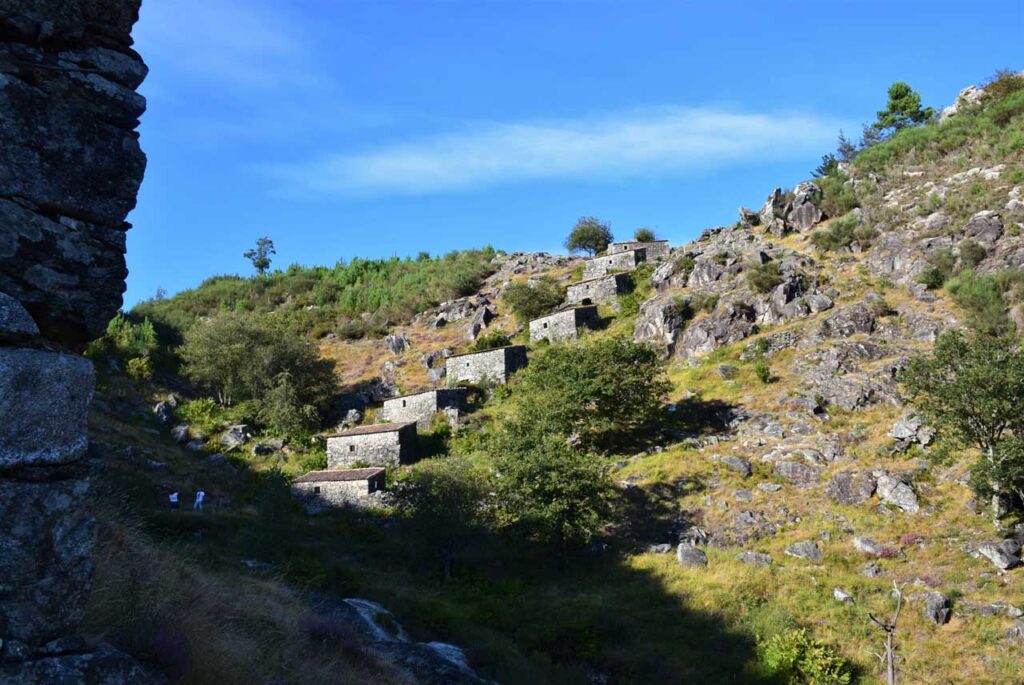
During the journey you can count up to 67 hydraulic mills strategically located on the Campo do Couto slopes between the places of Martín and Picón in the parish of Santa Mariña de O Rosal. These mills date back to the 17th and 18th centuries.
The route is perfectly signposted. To get to A Guarda via the PO-552 from Tui, take the PO-3302 to O Rosal and go to the Puente de las Penas (Penas bridge). You only need to follow the signs.
After the route, it is more than advisable to enjoy one of the most recognized white wines in the wine panorama, and it is that we are in a subzone of the Rías Baixas Denomination of Origin. If we make our visit coincide with the second weekend in July, we will also coincide with the Rosal Wine Fair.
To learn more
Water-mills were used in the past to grind the different cereals that were grown in the area, in general it was wheat, rye and corn, which, using the force of water moved the mechanism that crushed the cereal. It is a typical construction of Galicia that besides serving to turn the cereals into flour, also contributed to develop our folklore.
Thanks to this ingenious device, which is supposed to have been introduced by the monks in the 11th century and with the corn´s arrival from the Americas, we managed to overcome times in our history that were not very fortunate.
The route starts and ends at the Penas Bridge and heads for the Picón mills, the Folón mills to get back to the starting point.
O Rosal, has other natural wonders such as the Fisherman's Path of the Tamuxe river that starting from Praia das Eiras connects with this recreational area, an enclave that is included in the Natura Network 2000, and invites us to enjoy a natural ecosystem formed by riverside forests, reeds, rushes and pine forests. The difficulty of this trail is low, its length is just over 7 km, Its route starts and ends in the same place: Aceñas mills, Eiras beach, Eiras recreational area, O Cruceiro (traditional catholic stone cross), Rego de San Miguel, Porto Vello recreational area and back to Aceñas mills.
To know it better
The municipality of O Rosal, known for its wines and vineyards great quality, is part of O Baixo Miño region in the province of Pontevedra. It is located on the Miño River´s banks, bordering the municipalities of A Guarda, Oia and Tomiño.
In O Rosal you can find the Muíños do Picón and Folón. These mills were built between the 17th and 18th centuries by the Martín and Picón neighbourhood to take advantage of the force of the waterfall of the Folón river, a tributary of the Miño. These water-mills were the first machines that made people's work easier, as they were used to grind the grain.
The Muíños do Picón and Folón were abandoned in the 1940s, but in the 1990s their remains came to light. They were declared Goods of Cultural Interest (BIC) by the Xunta de Galicia and they are currently owned by the municipality of O Rosal.
Gallery
Location
- Town
- O Rosal
- Municipality
- O Rosal
- Province
- Pontevedra
- Country
- Spain
The asset
- Type
- Mill
- Eco-destination
- Río Miño
- Environment
- Rural
- Relevance
- International
How to get there
- Access
- By land
- Distance
- 8,800 km
The visit
- Visitable
- Yes
- Interpretation
- Customer SupportLanguage: Portuguese, Spanish, English, Galician
- Accessible
- Sí
- Parking
- Sí
Coordinates
- Latitud
- 41.95655100
- Longitud
- -8.83739500