


Ons island (Buraco do Inferno views and associated grotto). From land and sea
About this heritage
Ons island is an archipelago that belongs to the Maritime-Terrestrial National Park of the Atlantic Islands of Galicia (PNMTIAG). It is formed by two larger islands that would correspond to Ons and Ounce (or Onceta), and the Freitosas islet.
Because of its size and possibilities Ons is the island that can be visited, while Onza and the rest of the islets belong to the Reserve Area of the park. The marked paths show its treasures.
On the southern route, there is the Fedorentos viewpoint (in galician language “fedorento” means smelly) . It was called that way because a quantity of algae from the currents accumulates and then decomposes in the small fedorentos cove and the smell rises to the road.
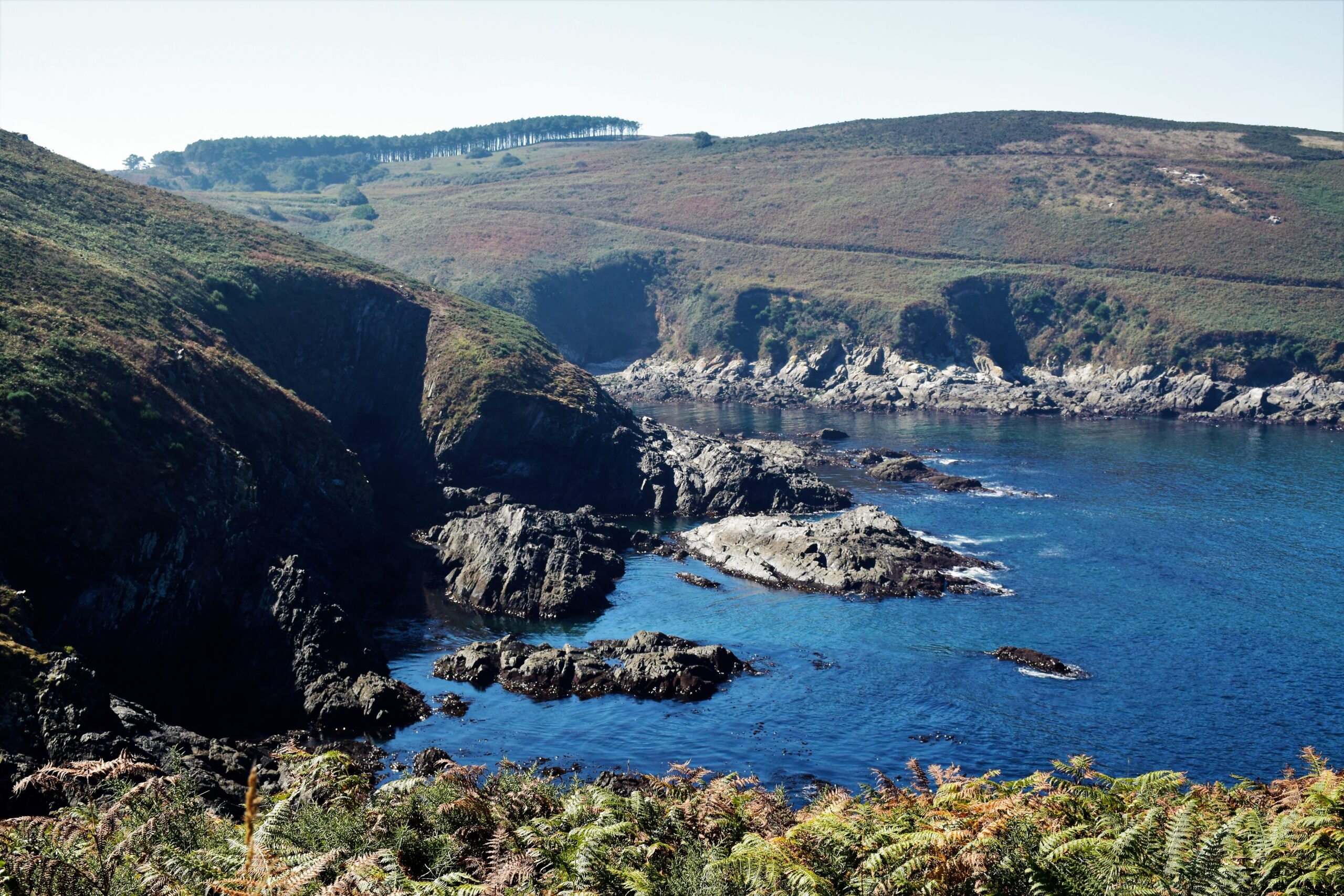
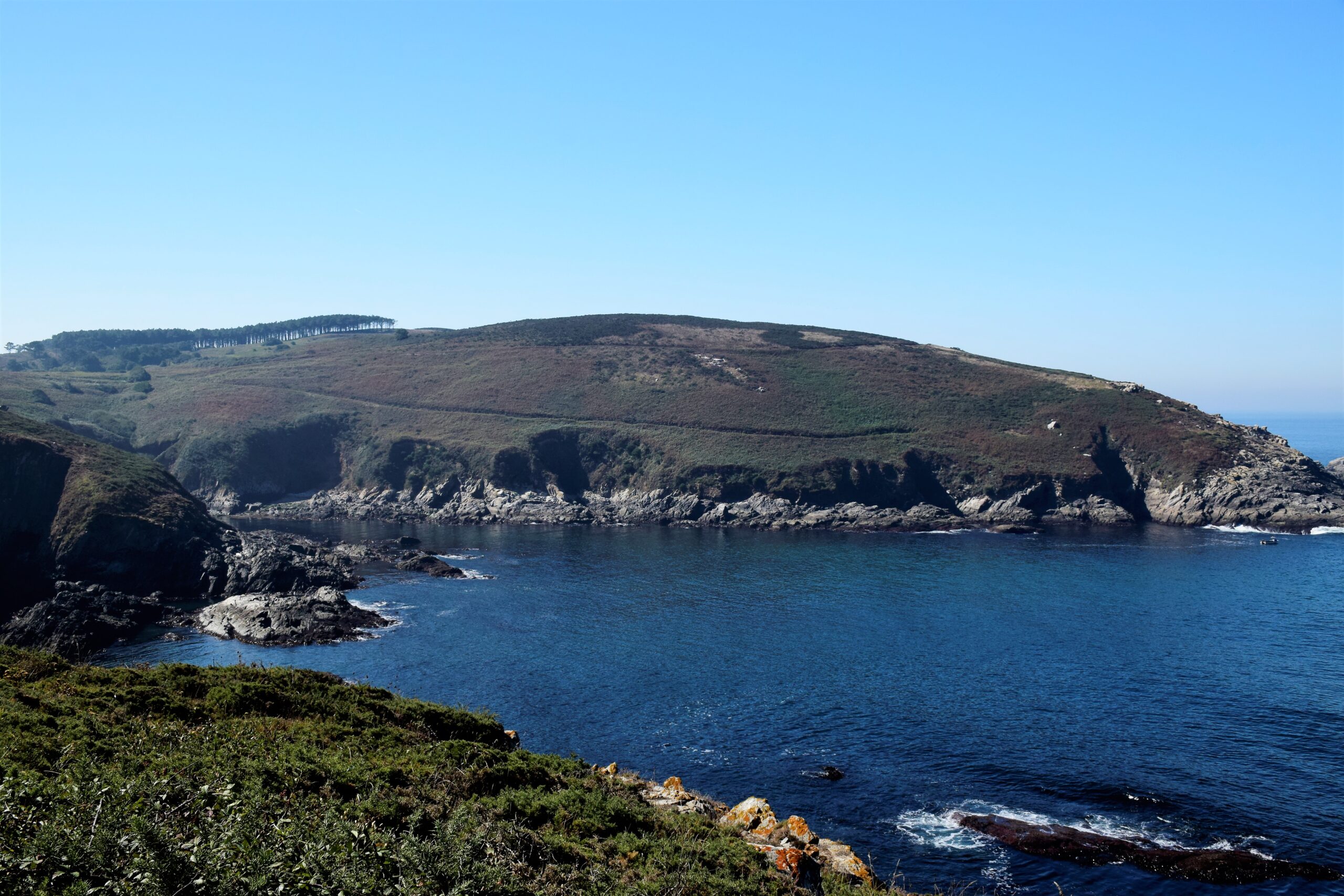
From the viewpoint you can see spectacular views. Just in front is located Onza island, a destination without roads and populated entirely by coastal scrub. Behind, further away are the Cíes Islands, which also belong to the PNMTIAG. Towards the coast you can see the outgoing capes, which on a day of good visibility you can see as far as Cabo Silleiro cape located further south in Galicia. In front of Cíes is the Costa da Vela cliff, dominated by Facho mountain. It's an abrupt cliff where the waves hit hard. After that, the Aldán estuary would come, finishing in Cabo Udra, and behind it the Pontevedra estuary begins.
From the sea, you would see the Fedorentos cove, which forms a small white-sand cove, and a sea grotto, the Fedorentos furna.
Continuing the southern route and walking through an extension of coastal scrub composed of different species capable of surviving these extreme conditions of wind, salinity and sun exposure. There is a fork that goes down to an area called Buraco do Inferno (Hell´s hole).
To learn more
The island´s population was always disassociated from the land´s advances, this generated numerous superstitions and legends that explained the phenomena that occurred and that they did not understand.
In the cave called Burato do Inferno, the sound of the waves beating and entering the cave on stormy days terrified the inhabitants of the island for a long time. These were thought to be the cries and groans of the people who were left at the devil´s mercy. In fact, it was probably a combination of the sound of the water and the cries of a colony of birds nesting inside.
In the same place you can see a white cross in memory of a midshipman who died when he slipped on the edge and fell into the cave. The place is protected from approaching it and from suffering the same fate.
The vegetation on the island is very conditioned by the winds, high salinity, summer aridity and the scarce development of the soil. At this point, the coastal scrub ecosystem predominates. It is located at the top of the cliff and is the waist less influenced by the splashes.
In Ons there are humid hydrophilic heaths, which grow in deeper and wetter soils. The most important are the heather Erica ciliaris and the thistle Cirsium filipendulum and above all the gorse Ulex europaeus subsp. Latebracteaus.
Another type of bush vegetation is made up of the broom that is abundant in Ons and there is one in particular, endemic exclusively to the National Park, the broom Cytisus insularis.
The formations of blackthorn Prunus spinose are curious, which correspond to previous stages to the natural tree vegetation, and could be considered as indigenous spiny communities of forest edge.
To know it better
Ons archipelago is located in front of the Pontevedra estuary and is formed by two islands: Ons, larger and still populated, and Onza, smaller.
On Ons island you can enjoy nature in all its splendour, its beaches, landscapes, cliffs. . . Thanks to the different routes available, you can also discover the island from one end to the other.
One of the essential stops is the visit to Buraco do inferno, of which different legends are told and you can enjoy impressive views. This space, which is now protected for the safety of visitors, includes a vertical crack that connects directly to the sea. By people´s stories, the cries of souls taken by the devil can still be heard in this place. In addition, there is also a white cross to remember a midshipman who slipped and fell inside.
On the other hand, Ons island has miles of cliffs. Among them, it is worth mentioning some very special ones that have formed a kind of furnas (grottos); that is, sea caves produced by the erosion of the sea in more weakened areas. In fact, Buraco do inferno is one of them. There are about 33 furnas or sea caves in this archipelago, among which the following stand out: Estripeiral, Xubenco, Centolo, Cova do Lobo, Castelo and Coviñas.
Gallery
Location
- Town
- Bueu
- Municipality
- Bueu
- Province
- Pontevedra
- Country
- Spain
The asset
- Type
- Island
- Eco-destination
- Ría de Pontevedra
- Environment
- Natural
- Relevance
- International
How to get there
- Access
- By sea By land
- Distance
- 0 km
The visit
- Visitable
- It can be visited all year round, previously they must have the authorization of the Xunta de Galicia to visit the natural park.
- Interpretation
- At the end of the access dock there is an information panel with a map of the archipelago,with services, points of interest and itineraries. A map and route catalog of the Natural Park can be downloaded from the website of the Islas Atlánticas National
- Accessible
- No
- Parking
- No
Coordinates
- Latitud
- 42.37720200
- Longitud
- -8.93143100