
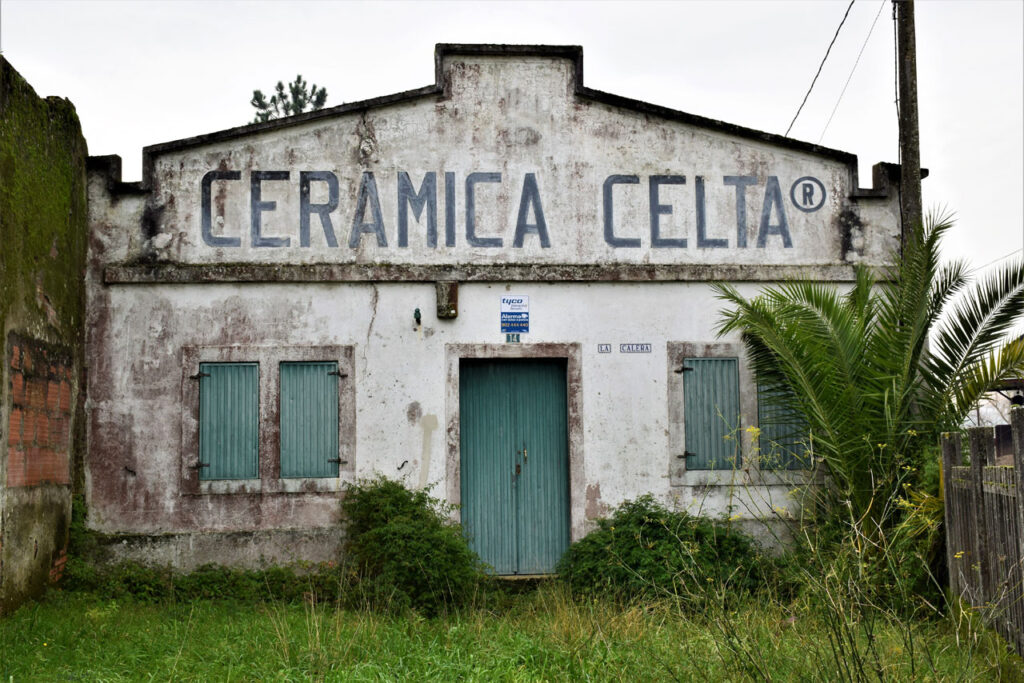
Pontecesures. Clay factory. Crockery
About this heritage
The ceramic industry in Pontecesures was born in 1925, when the first figures began to be produced. With the arrival of the Second Republic, manufacturing reached its peak. The factory was one more victim of the repression that followed and although its activity could continue, its main artists and patrons had to go into exile.
We are talking about Celtic ceramics and its origins, which date back to 1925 and the experience acquired by Eugenio Escuredo in the Sargadelos factory. The Sargadelos pottery was founded in 1749 and achieved great prestige throughout the world.
Unlike Sargadelos, the Cesures factory focuses its figures on local themes, as shown by its collaboration with Asorey, a leading Galician sculptor born in Cambados, who lent his models for the reproduction of figures and designed new ones. The most important was “O Tesouro" (The Treasure), a piece of wood carving that had been awarded at the 1924 National Fine Arts Exhibition, of which versions in different sizes were created.
This piece represents a young Galician woman dressed in a typical costume who returns from a fair with a calf in her arms, an everyday scene in rural Galicia.
The pieces were cooked and then painted by hand. Although the pieces were well received in the Spanish-American market, the factory did not achieve the objectives it had set itself and in 1926 it closed down.
To learn more
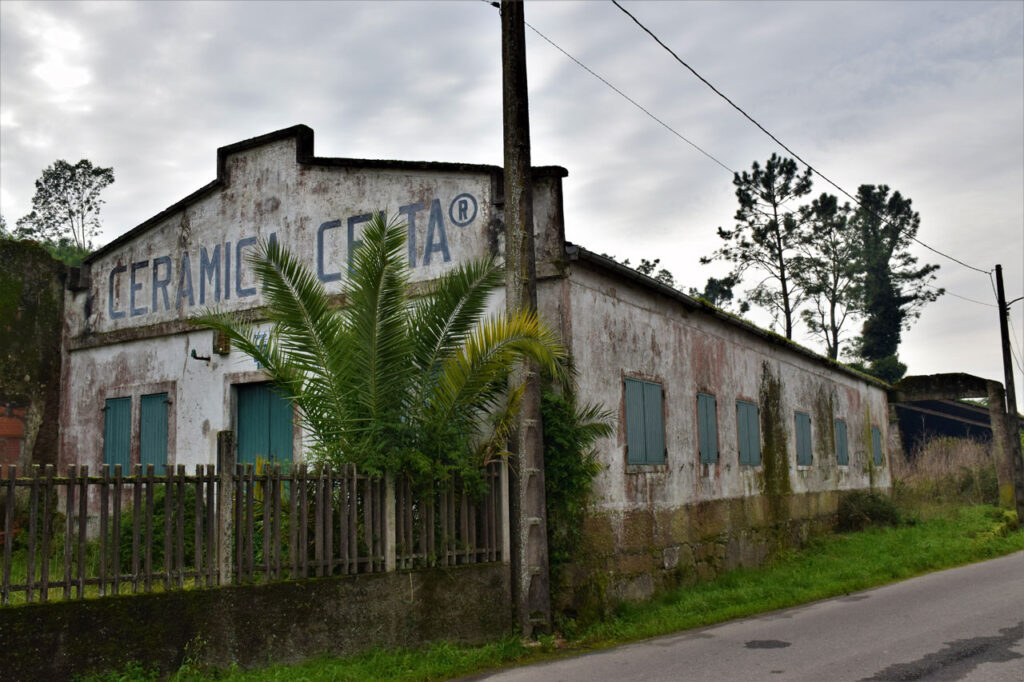
In the same year of the closing, Diéguez Carlés created “Cerámica Celta-La Calera"; in Pontecesures. Production begins and the new glazing technique is introduced, providing a glazed finish that would give it more durability.
The new factory went through difficult moments but it continued working and had the help and support of important Galician plastic artists, who made most of the designs such as Castelao, Asorey, Bonome, Acuña, Maside, Torres, Sobrino and others.
This factory, which is still open today thanks to his heirs, is almost one hundred years old and has so much history that its legacy forces it to take small steps to produce the orders.
Since its origins, Celtic ceramics has contributed to the diffusion of Galician art, since the collaboration of the most important Galician artists from the beginning made their works enter homes in Galicia and the rest of the world.
The pieces manufacturing process today is the same as it was in its beginnings, the pieces are decorated one by one, a job that requires time and skill, the old range of colours that characterised it is still used (yellow, green and intense blue) and the glazing technique,. . . all this means that each piece has to be treated as a unique piece.
It is enough to see the theme of the Celtic Ceramic figures to understand the reason for their success in Latin America. Hórreos (traditional raised granaries) cruceiros (old catholic stone crosses), peasants, fishermen, cows, goats, Rosalía de Castro, Castelao,. . . figures in which surely thousands of Galician emigrants were reflected.
To know it better
Until the end of the 18th century, Galicia was producing earthenware and roof tiles in a traditional and rural way, but at the beginning of the 19th century, industrialisation was the most important factor. Eugenio Escuredo was an entrepreneur from Vigo who came to Baixo Ulla to head a brick factory, but the bricks did not complete his artistic phase. Then, in 1925, he built an oven in O Cantillo, hired a Portuguese craftsman and started with the project of the Pontecesures Artistic Ceramics. Some pieces were sold all over the world, even in Cuba and America, but in 1926, Escuredo decided to abandon his ceramic adventure.
Ramón Diéguez, owner of Caleras del Ulla, appeared and negotiated with him the transfer of the Artistic Ceramics moulds and the workshops were installed in the Port.
Pontecesures is a municipality located in the province of Pontevedra, more specifically in the region of Caldas. Until 1926 it was a parish of the neighbouring municipality of Valga.
Gallery
Location
- Locality
- Pontecesures
- Municipality
- Pontecesures
- Province
- Pontevedra
- Country
- Spain
The asset
- Type
- Factory
- Eco-destination
- Ría de Arousa
- Environment
- Rural
- Relevance
- Regional
How to get there
- Access
- By land
- Distance
- 0 km
The visit
- Accessible
- No
- Parking
- Sí
Coordinates
- Latitud
- 42.72139900
- Longitud
- -8.65095600