


Pontevedra. Old district and wine & sardine tradition
About this heritage
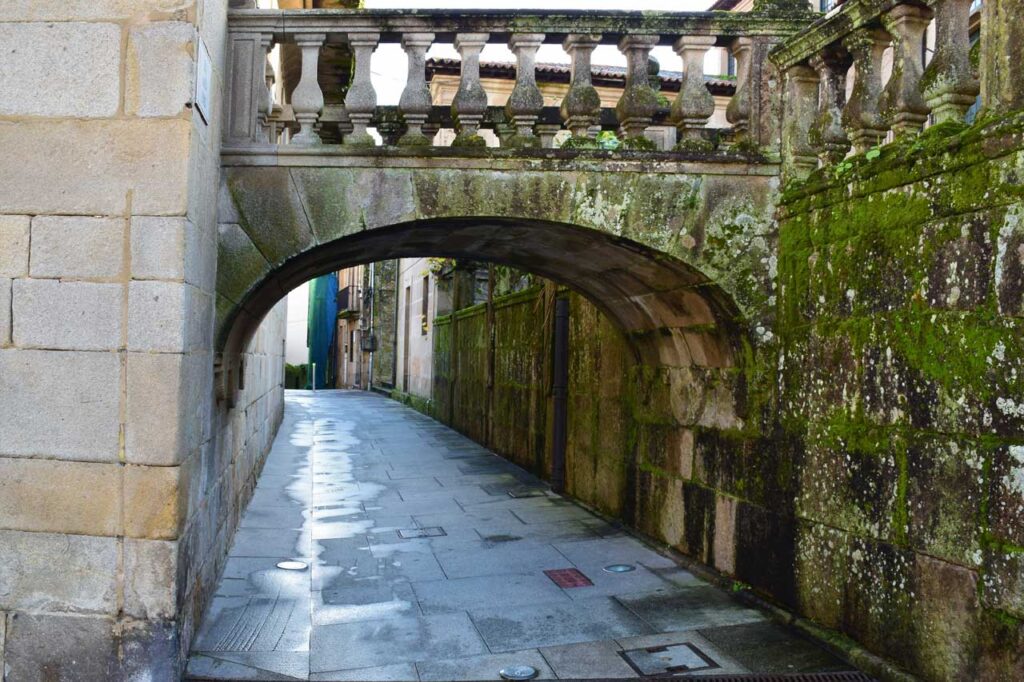
Within the historical centre of Pontevedra there is an old town also called A Moureira which used to be located at the foot of the southern façade of the Basilica of Santa Maria, in one of the highest points of the city. In this neighbourhood lived the guild of the mareantes, the oldest seafarers' guild in Spain. The people who lived there were engaged in both fishing and fish-salting. The seafarers' guild that lived in this seafaring district was the one that financed the construction of the Basilica of Santa María.
There are different types of fishermen's houses in it, as it is located on the banks of the river Lérez. It is made up of narrow streets that contain numerous “Casas de Patin” (house type with independent entrances to the different floors), old fishermen's residences and other typical seafaring houses such as the "terreñas" houses and houses with "sobrado" (double floor huses). This neighbourhood also conserves houses finished off in the shape of a mitre that in the 15th century were called Casas de Outón. In the past the neighbourhood was divided into three areas: the first was known as "A Moureira de arriba" (Upper Moureira) which was situated on the closest side to the bridge; the second area was "Moureira de la barca" (Boat Moureira), closer to Poio and the last was "Moureira de Abajo" (Lower Moureira) which is now called the neighbourhood of San Roque. This neighbourhood gave rise to what was known as the seafaring Pontevedra, one of the richest capitals of Galicia during the Middle Ages.
To learn more
This neighbourhood is located on the banks of the Lérez River, outside the city walls. The name comes from salmoira (“brine”), used in the salting of sardines. For several centuries this seafaring district was the economic engine of the city. In the past the old town was divided into three areas: the first was known as "A Moureira de arriba" (Upper Moureira) which was situated on the closest side to the bridge; the second area was "Moureira de la barca" (Boat Moureira), closer to Poio and the last was "Moureira de Abajo" (Lower Moureira) which is now called San Roque district. Women's work had an important role in this neighbourhood as they worked as washerwomen, cleaning sardines, unloading salt and selling fish in the market.
The most inhabited area was "A Moureira de abaixo" and was mainly dedicated to fishing and related trades such as mending nets and cleaning fish. Some of the most characteristic enclaves in the neighbourhood are: the port of As Corbaceiras where salt, fish and other goods were unloaded; the Punto do Morro where nets were dried; both the Peilán and the Os Gafos washing places where the washerwomen did their work. In this neighbourhood there were also large industries dedicated to the sea, such as the Pazó factory, which was the first foundry in Pontevedra, and the Fonseca family's factory dedicated to wood.
To know it better
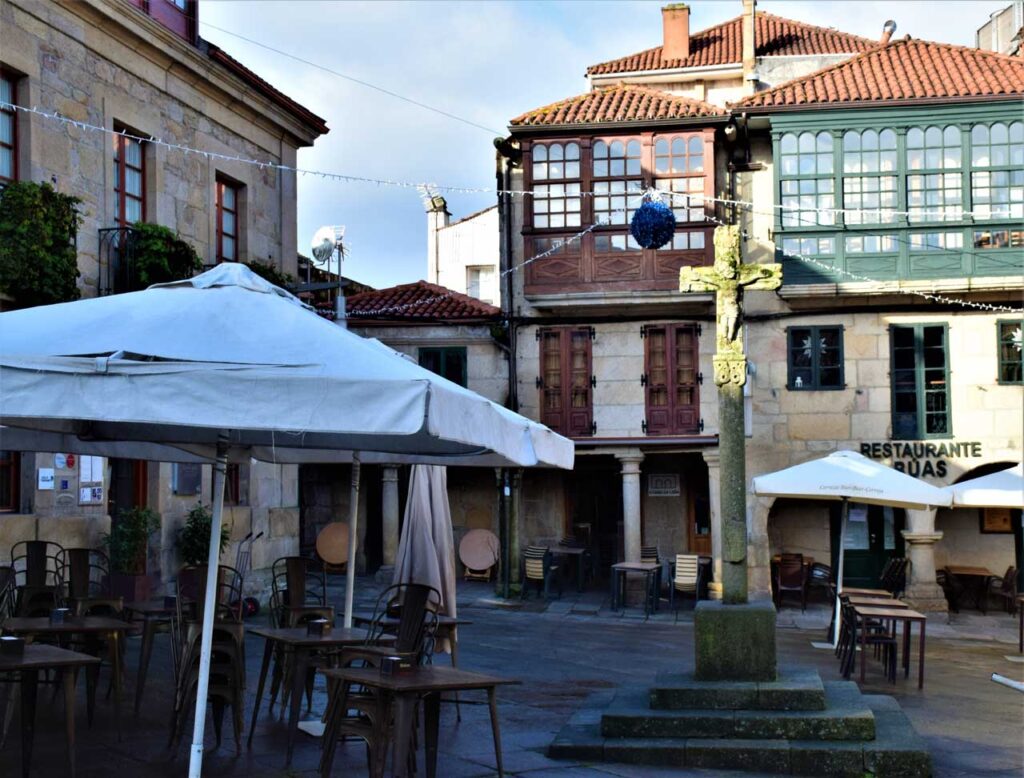
Pontevedra's old town has been transformed over the years and is now one of the best preserved in Galicia. This area has a well-cared for and beautiful architecture that acquires even more value with the weight of its history.
One of the most striking monuments is the Gothic temple of Santo Domingo, dating from the 13th century. Currently, the church´s head is preserved with five polygonal apses, a side wall with a small doorway and a rose window. Some of its pieces are not outdoors and are located in the Museum of Pontevedra.
The province of Pontevedra usually pays certain annual tributes to the tourists who visit the area. In fact, the city council thanks tourism by inviting both visitors and locals to a fresh wine and a tapa of sardines.
Located in the northwest of the Iberian Peninsula, Pontevedra is an administrative, monumental, tourist and a service provider city. A city of art and history which has a monumental area that, after Santiago de Compostela, is the most important in Galicia.
Gallery
Location
- Town
- como la fábrica Pazó que fue la primera fundición de Pontevedra y la de la familia Fonseca dedicada a la madera.", el lavadero de Peilán y el lavadero de Os Gafos donde hacían su labor las lavanderas. En este barrio también se localizaban grandes industrias que se dedicaban al mar
- Municipality
- Pontevedra
- Province
- Pontevedra
- Country
- Spain
The asset
- Type
- Historic-artistic ensemble
- Eco-destination
- Ría de Pontevedra
- Environment
- urban
- Relevance
- Internacional
How to get there
- Access
- By sea By land
- Distance
- 0.000km
The visit
- Visitable
- Yes
- Accessible
- Sí
- Parking
- Sí
- Signposted
- Yes
Coordinates
- Latitud
- 42.43151600
- Longitud
- -8.64428300