


Port of Palmeira. Castelo Viewpoint. The Statue of the Emigrant

About this heritage
Palmeira, officially called San Pedro de Palmeira, is a parish belonging to the municipality of Ribeira in the province of Coruña. It extends to the port, at the bottom of the small inlet, from Cornas Point to Piedra de Grades. The first documented information about the parish dates back to the 13th century. According to that data, the main sustenance of the town was fishing and its commercialization, having salting factories and auxiliary industries that contributed to the economic boom of this town.
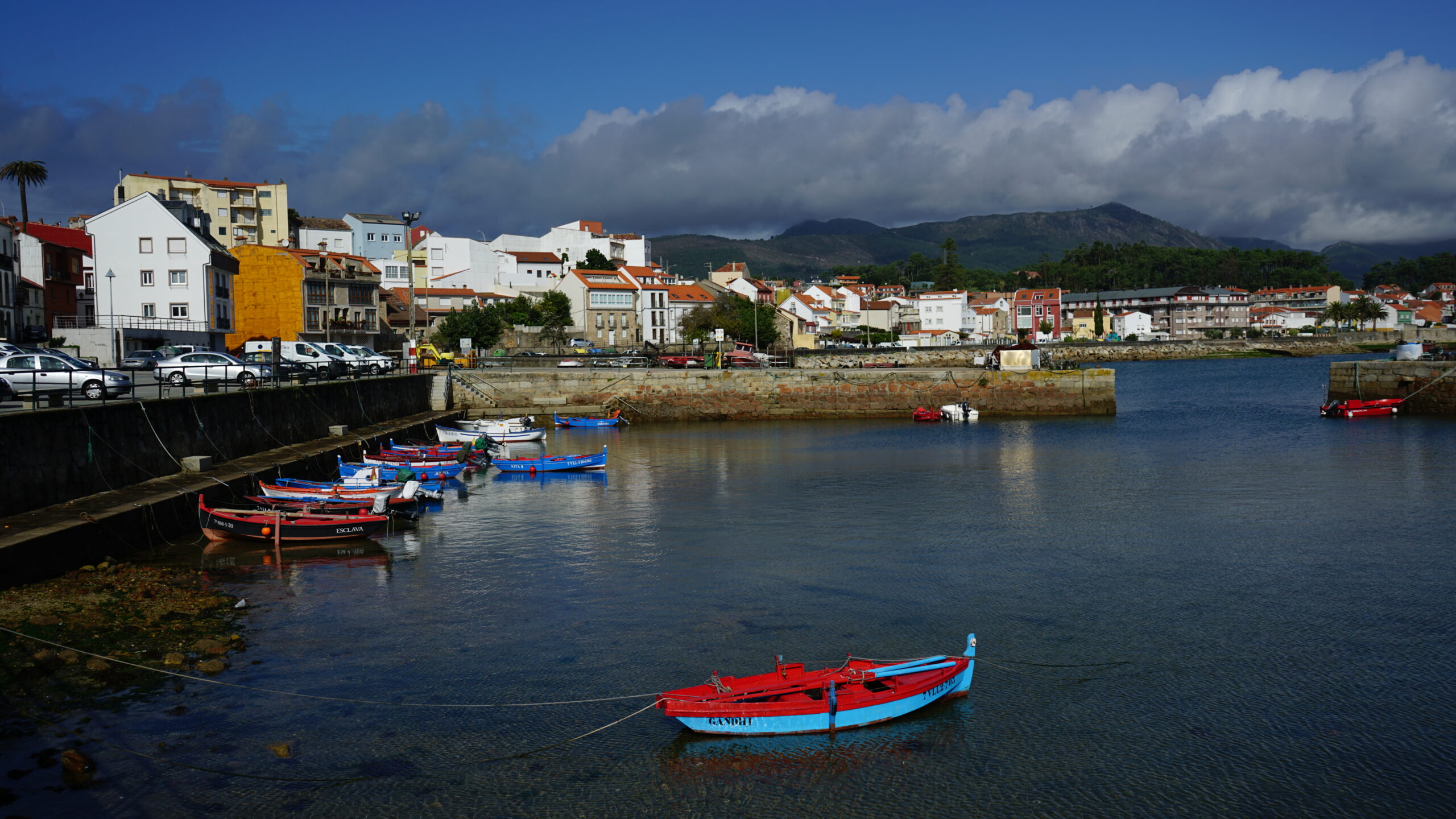
Its official census for the year 2019 was 1,889 inhabitants. Currently, its most notable wealth still comes from fishing. Its port area is a place full of typical Galician houses and narrow streets.
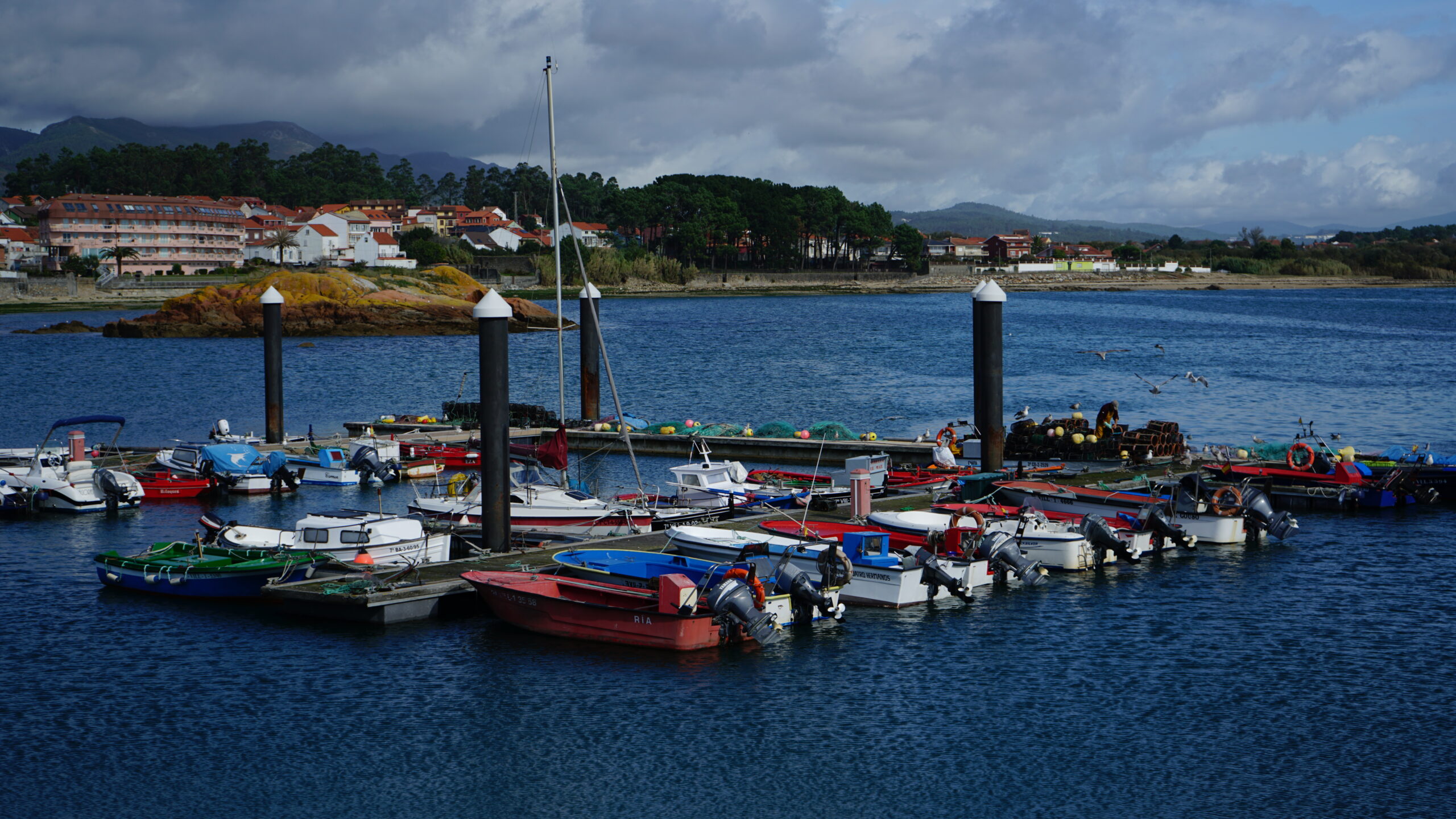
Its port is one of the historical fishing ports in the province of Coruña and the first one to have an artificial dock in the Barbanza region. It is a mooring point for the traditional fishing and shellfish fleets for boats operating along the Arousa estuary. It is close to the Ribeira and Pobra do Caramiñal Ports.
In this area, travelers can find the "Statue of the Emigrant." Located on a rocky elevation of the land, it is a stone sculpture, in which a family is pointing to America. This statue is to honor all the people who had to emigrate to other places to get economic means to support their families. The most significant period of Galician exodus to America took place between 1885 and 1930, accounting for more than 50% of total Spanish emigration.
Palmeira is one of the seafaring villages seen from the sea when taking the "Route of the Sea of Arousa and the Ulla River." A unique maritime-fluvial route to commemorate the arrival by sea to Galicia of the remains of the Saint James the Apostle (Saint James the Great) after his martyrdom in Jerusalem in 44 BC.
To learn more
Palmeira stands out for its beaches integrated into the town center at street level. One of them, the most popular and the largest, "A Corna," counts with one of the many openings in the final area of the port's promenade. This sandbank integrates with the town westbound and nature eastward.
The port of Palmeira is a small shelter seawall in two alignments of 135 meters, which ends in the northeast. Beaconed at its tip, it protects two docks; the one closest to the town is in dry land at low tide. The adjacent one, with a depth between 2 and 1 meter, is at a central dock from which three perpendicular jetties draw. These have a capacity for 50 boats of no more than 7 meters in length. Its occupancy is full of small fishing boats and some small recreational boats.
Palmeira was the first port of the Arousa estuary built in the 13th century. Its fishermen's brotherhood dissolved in 1952, and its members became part of the cooperative (Pósito) of Proba. After almost four decades since its disappearance, the brotherhood resurfaced chaired by Domingo Regueira, as he was responsible for restarting the entity.
Currently, the port maintains almost intact its 18th-century structure. At the beginning of the year 2020, the English architect David Chipperfield presented a project to expand the port and redevelop Palmeira. Among the actions proposed were the organization of traffic and parking, the recovery of its sea roots, and the planning and design of public space.
The main attraction of Palmeira is its port area. There is a monument dedicated to those Galicians, historically, forced to emigrate to other countries to send their families financial support.
In the Palmeira Port, atop of a large rock, is a sculpture known as "the Monument to the Emigrant." Built to commemorate every member of the parish who their only choice was to emigrate; thus, separating many families.
From the top of the rock, travelers can see a panoramic view of Rúa and Arousa Islands, A Pirilla, Corna beach - in the background - and the seafaring town of Palmeira itself, with its Baluarte beach. Everyone can also observe the remains of an old salting factory from the 18th century, the facades of the buildings and traditional granaries (hórreos), and, at the top, the Church of San Pedro.
In the summer of 1994, a group of Palmeira residents, who were part of the "Palmeira Futuro" collective, agreed to raise a monument to pay homage to the immigrants. Then, they held a large meeting, in which they gathered the support of the Sons of Palmeira Society, the Housewives' Association, the retired people's club, the brotherhood, and the representatives of all the political groups. Despite all these, the monument did not become a reality until four years later. On August 14, 1998, the mayor, José Luis Torres Colomer, unveiled the statue: a five-meter sculpture by a Galician sculptor born in the municipality of Fene in Ferrol, Guillermo Feal Otero, considered a great artist of the 20th century, was the artist who took up the baton of the noble tradition of carving the stones. This monument is of granite extracted from Spanish quarries. On the way up, a plaque reads, "The real hero away from us."
To know it better
San Pedro de Palmeira, popularly known as Palmeira, is a parish of about 3,000 inhabitants located in the municipality of Ribeira in the province of Coruña. This seafaring town has very little industry of its own, and therefore, a large part of its inhabitants emigrated to neighboring towns.
The inhabitants of this village, located in the Arousa estuary, are mainly dedicated to the sea and fishing. Around the port are traditional Galician houses full of history. The port also has an incredible promenade to the pier. From it, visitors can enjoy a complete view of the Palmeira houses.
Atop the fishing port, there is a viewpoint with a statue by the sculptor Guillermo Fear Otero called the Statue of the Emigrant. This art piece, dated 1998, is made of stone and created to honor all the people who had to emigrate to other places to get economic means to support their families. A situation inflicted upon many Galicians during that time - facts that should be known by today's society - given the suffering of these families, remaining separated from their loved ones for such a long period.
This statue is at the viewpoint known as "Mirador do Castelo," and, from it, travelers can contemplate a spectacular view of the Rúa Island in Coruña and the Arousa Island in Pontevedra, as well as the town of Palmeira.
Gallery
Location
- Town
- Si
- Municipality
- Ribeira
- Province
- A Coruña
- Country
- Spain
The asset
- Type
- Port
- Eco-destination
- Ría de Arousa
- Environment
- Rural
- Relevance
- Regional
How to get there
- Access
- By sea By land
- Port
- Puerto Palmeira
- Distance
- 0 km
The visit
- Visitable
- Yes
- Accessible
- No
- Parking
- Sí
- Signposted
- Yes
Coordinates
- Latitud
- 42.57943200
- Longitud
- -8.95579500